

Maddy summaryHR 866, the Equal COLA Act, changes how cost-of-living adjustments (COLAs) are calculated for federal retirees under the Federal Employees Retirement System (FERS). It requires that each year's COLA be based on the exact percent change in the price index from the previous year's base quarter, rounded to the nearest 0.1%, effective December 1. This applies to all FERS annuities starting before, on, or after the bill's enactment date, ensuring a standardized calculation method for retirees' annual adjustments.
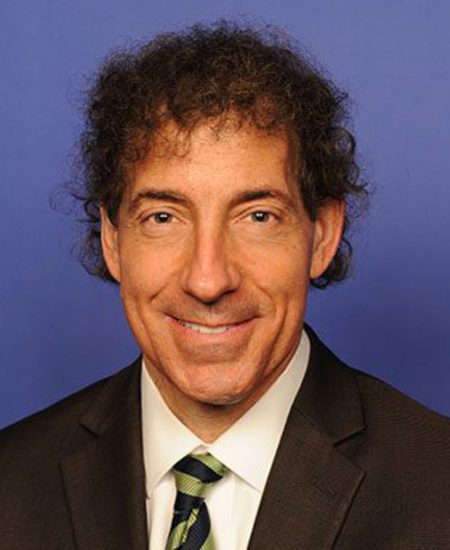
Rep. Jamie Raskin
Sponsored bills
Maddy summaryHR 882, the American Teacher Act, requires states to ensure full-time teachers in public elementary and secondary schools earn at least $60,000 annually (adjusted for inflation), with part-time teachers receiving proportional pay. It provides federal grants to states to fund these salary increases, mandating sustainability plans beyond the 4-year grant period and prioritizing schools in high-poverty areas. The bill also includes cost-of-living adjustments tied to the Consumer Price Index and funds a national campaign to promote teaching as a career. It explicitly states grant funds must supplement existing education budgets without reducing current teacher pay or state loan forgiveness programs.
Maddy summaryThis bill expands paid family and medical leave for federal employees by increasing total entitlement from 12 to 26 weeks annually. It modifies existing laws to cover all federal workers (including those at the GAO, USPS, Library of Congress, and congressional staff), replacing "parental leave" with broader "family and medical leave" and adding 14 additional weeks for qualifying events like childbirth, adoption, or serious health conditions. Employees who already used paid leave under other programs will have their new entitlement reduced by the days already taken. The changes apply immediately to most federal employees, with specific timelines for agencies like the Veterans Affairs Department and District of Columbia courts.
Maddy summaryThe Better Care Better Jobs Act (HR 547) aims to improve access to home and community-based services (HCBS) for Medicaid beneficiaries by providing states with planning grants and enhanced federal funding. States that develop approved HCBS infrastructure improvement plans will receive a 10 percentage point increase in federal Medicaid funding for HCBS services, with additional incentives for self-directed care programs. The bill requires states to address barriers to access, expand workforce development, improve payment rates for direct care workers, and track demographic data on service utilization. It also establishes quality measurement requirements and mandates regular reporting on progress toward improving HCBS access and quality.
Maddy summaryHR 811 transfers command authority over the District of Columbia National Guard from the U.S. President and federal officials to the Mayor of Washington, D.C. The bill amends multiple laws, including the 1889 Act governing the District's militia and titles 10 and 32 of U.S. Code, to replace references to the President, Secretary of the Army, or "commanding general" with the Mayor. This change directly affects how the D.C. National Guard is organized, deployed, and managed, placing the Mayor as the ultimate commander-in-chief. The bill makes no changes to the Guard's missions or funding, only to the chain of command. It aligns D.C. National Guard authority with the District's home rule framework.
Maddy summaryHR 816, the SECURE Firearm Storage Act, requires federally licensed firearms businesses (importers, manufacturers, and dealers) to securely store firearms and transaction records when their premises are closed. It mandates specific methods like locking firearms in fireproof safes or securing them with hardened steel rods through the trigger guard, and storing paper records in locked, fireproof containers. Violations trigger civil penalties ($1,000-$10,000), license suspension for repeat offenses, or revocation for third violations. The law phases in requirements, with paper record storage taking effect 90 days after enactment and firearm storage requirements 1 year later.
Maddy summaryHR 765, the African American History Act, authorizes $2 million annually for the National Museum of African American History and Culture to develop educational resources and programs about African American history. The bill directs the museum to create accessible teaching materials, support teacher professional development, and expand digital content for schools and the public, focusing on contributions, civil rights, and historical contexts. It requires annual reports to Congress and expires in 2028. The program directly supports educators, students, and families in learning about African American history through museums, schools, and online platforms.
This resolution states that the House of Representatives condemns the February 1, 2021, military coup in Burma (Myanmar) and denounces the Burmese military for human rights violations. The resolution calls on the Burmese military to end violence against prodemocracy activists and release political prisoners.
Maddy summaryHR 715, the Bipartisan Background Checks Act of 2023, requires background checks for all firearm transfers between private individuals, not just those through licensed dealers. It mandates that unlicensed sellers must involve a licensed dealer to conduct a background check before transferring a firearm, with exceptions for family transfers (like spouses or parents/children), law enforcement, temporary safety transfers, and certain hunting or range activities. The bill also requires licensed dealers to provide a notice and certification form in both English and Spanish to buyers. It explicitly states it won't create a national gun registry or override state laws on the same topic. The law would take effect 180 days after enactment.
Maddy summaryHR 727 establishes a 12-member National Council on African American History and Culture within the National Endowment for the Humanities (NEH). The Council, appointed by the President with Senate consent, advises the NEH on preserving and celebrating African-American history and culture. Its key duties include evaluating NEH programs, gathering information on cultural trends, developing national policy recommendations, and submitting annual reports to the NEH Chair. The Council terminates 10 years after the bill's enactment, with members serving five-year terms (initially staggered) and receiving partial compensation for their service.