

Maddy summaryThis bill would impose a progressive wealth tax on high-net-worth individuals and certain trusts, targeting those with substantial assets above a defined threshold. The tax would be calculated on the net value of taxable assets exceeding a threshold amount (1,000 times the greater of $50,000 or median household wealth), with rates increasing from 2% to 8% as asset value rises. The bill includes specific provisions for trusts, deceased individuals, non-residents, and expatriates, and would require new information reporting from financial institutions to enforce the tax. It would apply to calendar years beginning after the bill's enactment date. The legislation defines "taxable assets" as all property minus debts, with certain exclusions for assets under $50,000.
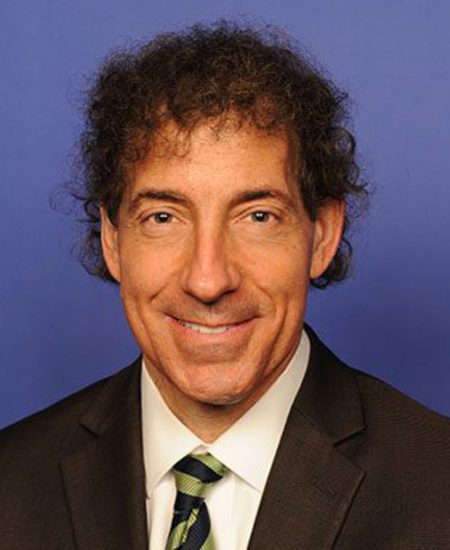
Rep. Jamie Raskin
Sponsored bills
Maddy summaryHR 4893, the Scientific Integrity Act, requires federal agencies that fund, conduct, or oversee scientific research to adopt policies preventing political interference in science. The bill mandates these agencies to prohibit suppression or distortion of research findings, establish Scientific Integrity Officers to enforce policies, and implement training and reporting systems. It directly affects scientists and engineers employed by or contracted with covered agencies (like the EPA or NIH), ensuring their work remains free from political pressure. Key mechanisms include annual public reporting on misconduct complaints, whistleblower protections, and requiring scientific conclusions to be based on evidence, not ideology.
Maddy summaryHR 4870, the Wall Street Tax Act of 2023, imposes a 0.1% tax on most securities transactions occurring on U.S. exchanges or involving U.S. persons. It directly affects financial institutions, brokers, and investors participating in covered transactions like stock, bond, and derivative trades. The tax applies to the fair market value of transactions (excluding initial security issuances and short-term debt under 100 days), with payment responsibility falling on U.S. exchanges, brokers, or U.S. parties depending on the transaction type. Exceptions include certain real property contracts, insurance products, and derivatives used in normal business operations. The tax takes effect for transactions after December 31, 2023.
Shareholder Political Transparency Act of 2023 This bill requires an issuer of securities to disclose information related to expenditures for political activities. Specifically, issuers must disclose quarterly any such expenditure, including by identifying any candidate the expenditure was made in relation to and any trade association or other tax-exempt organization that received dues or other payments that may be used for political activities. Annually, issuers must report on expenditures for political activities made in the previous year over $10,000 and information related to anticipated expenditures for the next year. The Government Accountability Office must report on the effectiveness of the Securities and Exchange Commission's oversight of these reporting and disclosure requirements.
Maddy summaryHR 4889, the Raise the Wage Act of 2023, would gradually increase the federal minimum wage for most workers to $15.50 per hour by 2027, with specific annual targets: $9.50 starting in 2023, rising to $11.00 after one year, $12.50 after two years, and $15.50 after four years. It would also phase out the separate lower minimum wage for tipped employees (starting at $6.00/hour) by aligning their pay with the regular minimum wage by 2028, while requiring employers to let workers keep all tips. The bill includes similar phased increases for workers under 20 and transitions toward fairer wages for workers with disabilities under special certificates, which would sunset after 2028. Future annual increases after 2028 would tie the minimum wage to the median hourly wage of all workers.
Maddy summaryHR 4157, the "Not Just a Number Act," requires the Department of Veterans Affairs (VA) to produce annual reports on veteran suicide rates and their connection to VA healthcare and benefits. The reports must break down suicide rates by age, gender, and race, and examine how engagement with VA services (like Vet Centers, healthcare enrollment, benefits claims, and housing loans) correlates with suicide trends. The bill also mandates a VA toolkit for state/local coroners to improve veteran suicide death reporting, and a study on creating a dedicated VA suicide prevention office. These measures aim to standardize data collection and identify effective prevention strategies, directly affecting VA operations, congressional oversight, and veteran care systems.
Maddy summaryThis bill requires employers to obtain written consent before recording or using employee images (including photos and videos), with specific disclosures about who will access the images, how they'll be used (only for work purposes), and when. It prohibits employers from firing or retaliating against employees who object to violations or report them. Employers must get new written consent if they want to use existing images for a different purpose, and face tiered civil penalties (up to $300,000 for large employers) or lawsuits for damages. The law applies to all employers and independent contractors, with exceptions for security footage or impractical situations like large gatherings.
Uyghur Forced Labor Disclosure Act This bill requires an issuer of securities to publicly disclose whether its supply or production chain involves China's Xinjiang Uyghur Autonomous Region or specified forced labor sources. Issuers must provide documentation of supply and product chain entities and independent verification of such documentation. The Securities and Exchange Commission (SEC) must annually assess and report on compliance with this bill. The Government Accountability Office must periodically report on the effectiveness of the SEC’s oversight of the certification requirements under the bill.
Maddy summaryHR 4663, the Federal Mechanical Insulation Act, defines "mechanical insulation" (insulation around pipes and equipment in federal buildings) as an eligible energy efficiency measure. It requires federal agencies to include mechanical insulation in their required energy and water evaluations, specifically mandating that evaluations identify this insulation as a potential efficiency measure. The bill specifies that such insulation must meet minimum standards under Reference Standard 90.1 to qualify. This change directly affects federal building managers and contractors by formally recognizing mechanical insulation as a standard efficiency option in compliance with existing energy conservation laws.
Maddy summaryHR 4802, the Accountability for Workplace Misconduct Act, requires employers to establish clear, confidential processes for employees to report discrimination, harassment, or retaliation under federal laws like Title VII and the ADA. It mandates employers to investigate claims promptly, inform employees of investigation outcomes, and provide support resources. Crucially, the bill makes nondisclosure clauses in settlement agreements unenforceable if they restrict employees from reporting misconduct to government agencies or Congress, and requires employers to provide a 21-day review period for such agreements. The Equal Employment Opportunity Commission will enforce these requirements and issue compliance rules within 180 days of enactment.