

Maddy summaryThis bill establishes the Chesapeake National Recreation Area as a new unit of the National Park System to preserve and promote public access to the Chesapeake Bay watershed. It defines the Recreation Area's boundaries using a specific map, creates an Advisory Commission with 19 members representing Maryland, Virginia, tribal interests, and youth, and outlines how land acquisition and management will occur through donations, purchases, or partner agreements. The legislation requires coordination with existing programs like Chesapeake Gateways and the Bay Program, while emphasizing conservation of natural, recreational, historical, and cultural resources. It directly affects communities, conservation organizations, and local governments in the Chesapeake Bay watershed by creating a formal structure for managing and expanding public access to Bay resources. The bill sets requirements for cooperative agreements with partner sites and mandates a management plan to coordinate activities with neighboring communities and existing conservation efforts.
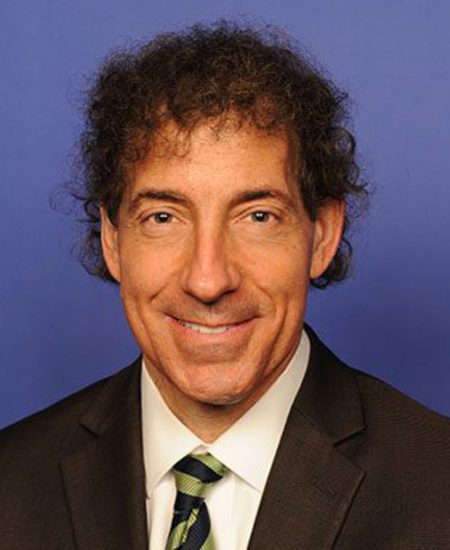
Rep. Jamie Raskin
Sponsored bills
Maddy summaryHR 4987, the Democracy Restoration Act of 2023, would restore voting rights for people with felony convictions who are living in their communities (not incarcerated), directly affecting approximately 4.6 million disenfranchised Americans. The bill requires states to automatically restore voting rights upon completion of sentences, including probation or parole, without requiring payment of fines or fees. It mandates notification to individuals about their restored voting rights and prohibits states from conditioning voting rights on payment of legal financial obligations. The legislation addresses the disproportionate impact of voting restrictions on racial minorities, particularly Black and Latino communities, who face significantly higher rates of disenfranchisement. This bill would apply to all federal elections held on or after its enactment date.
Maddy summaryHR 4963, the Tax Fairness for Workers Act, would restore tax deductions for certain employee expenses. It creates an above-the-line deduction for union dues and expenses paid by wage-earning employees, and allows miscellaneous itemized deductions for other work-related expenses (like uniforms or supplies) that were previously disallowed after 2017 tax law changes. These provisions directly affect employees who pay union dues or incur qualifying job-related costs. The bill amends specific sections of the Internal Revenue Code to make these deductions available for taxable years beginning after December 31, 2022. It does not change tax rates or provide new benefits, only reinstating previously eliminated deductions for eligible workers.
Maddy summaryThe Rebuild America's Schools Act of 2023 creates a $20 billion annual federal grant program to fund long-term improvements to public school facilities across the United States. It requires states to prioritize school districts serving high-poverty students (with high percentages of students eligible for free/reduced lunch) and those with deteriorating infrastructure, while mandating that recipient schools develop 10-year facilities master plans. The bill specifies that funds must be used for construction, renovation, and modernization projects that improve energy efficiency, address environmental health hazards (including lead, asbestos, and poor air quality), and ensure school safety, while requiring the use of American-made materials for construction projects.
Chyna Gibson Stop the Transgender Murder Epidemic Act of 2023 or the Chyna Gibson STME Act of 2023 This bill establishes a commission to address various issues facing gender-nonconforming, gender-expansive, and transgender women of color. The commission must be comprised of 13 members who are qualified based on their education, training, activism, or experience, particularly in the field of transgender studies and human rights. The commission may hold hearings and must report its findings and recommendations to Congress no later than 18 months after its first meeting.
Maddy summaryThe PLANT Act (Peas, Legumes, And Nuts Today Act) creates new support systems for plant-based food producers by amending agricultural programs to include plant protein products like peas, legumes, and mushrooms. It increases marketing loan rates for certain commodities (including mushrooms at $1.16 per pound), defines "plant protein products" for the first time, and establishes an Office of Plant-Based Foods and Innovative Production. The bill authorizes $25 million annually for fiscal years 2024-2028 to fund research, business development, and market expansion for plant-based foods through programs like the Plant-Based Food Innovation Initiatives. It directly affects farmers growing plant-based ingredients, food processors, and rural communities working with these products. The legislation provides concrete policy changes to support the growing plant-based food industry through defined programs and dedicated funding.
Maddy summaryThe Break the Cycle of Violence Act establishes federal grants to fund community-based violence intervention programs in areas disproportionately affected by gun violence, particularly communities of color. It authorizes $300 million for 2024, increasing to $700 million annually through 2031, for evidence-informed strategies including trauma-responsive care, violence interruption, and economic opportunities for opportunity youth (ages 16-25 not in school or employment). The bill requires grantees to implement culturally competent services targeting individuals at high risk of violence or victimization, with a focus on reducing gun violence without contributing to mass incarceration. It creates a National Community Violence Response Center to coordinate data collection, research, and best practices for community violence prevention. The legislation also includes provisions for job training and workforce development programs through the Department of Labor to connect opportunity youth with in-demand occupations.
Maddy summaryHR 5025 establishes the National Office of New Americans within the Executive Office of the President to coordinate federal efforts supporting immigrant and refugee integration. The Office, led by a presidentially appointed Director, aims to improve access to English language programs, workforce development, citizenship pathways, and education for immigrants, refugees, and their children. Key mechanisms include creating three Deputy Director roles (Citizenship, Workforce, Children's Integration), forming a Federal Initiative with cabinet secretaries to coordinate agency responses, and requiring biannual reports to Congress on integration progress and policy impacts. The bill directly affects federal agencies, state/local governments, and the immigrant/refugee communities they serve by standardizing and enhancing integration support across government programs.
Maddy summaryThis bill establishes new federal requirements for employers to prevent heat-related illness and injury among workers. It mandates that employers provide safe work environments by implementing specific measures, including access to cool water, scheduled rest breaks in shaded areas, employer-paid cooling equipment, and training for employees and supervisors on recognizing heat illness symptoms. The Secretary of Labor must create these standards within one year, requiring employers in high-heat occupations (like construction, agriculture, and outdoor labor) to adopt engineering controls, administrative schedules, and health protocols. Key provisions include ensuring hydration, rest, and language-accessible training, while preserving existing safety protections and allowing for updates as scientific evidence evolves.
Maddy summaryThis bill amends the Higher Education Act to provide Pell Grant flexibility for students with disabilities. It allows students whose institution determines a reduced course load is appropriate (due to a disability covered under the Americans with Disabilities Act) to count that reduced load (or 5 credits, whichever is greater) as full-time enrollment for calculating their Pell Grant amount. The change applies only to the grant calculation itself, not to semester eligibility rules. This directly affects qualifying students with disabilities enrolled in postsecondary education who require part-time schedules due to their disability.