

Maddy summaryThe Humane Cosmetics Act of 2023 bans cosmetic animal testing in the United States, prohibiting companies from conducting or contracting such testing after its enactment (effective 1 year later). It also bans selling or transporting cosmetics developed using animal testing conducted after that date within U.S. interstate commerce. The law directly affects cosmetic manufacturers, retailers, and suppliers operating in the U.S. market, requiring them to use non-animal testing methods for safety evaluations. Exceptions exist for foreign regulatory requirements or when no alternative testing methods are available for specific ingredients.
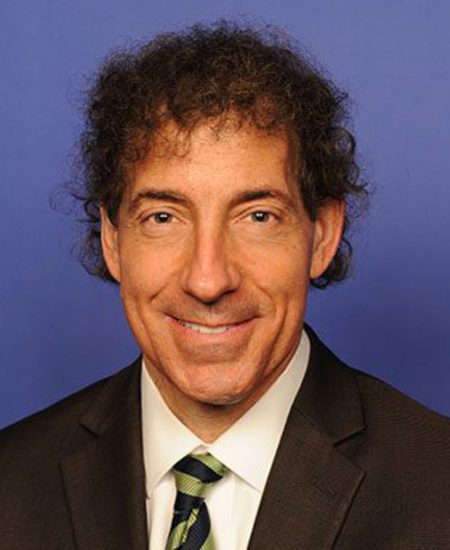
Rep. Jamie Raskin
Sponsored bills
Maddy summaryThe No Tax Breaks for Union Busting Act would deny tax deductions for employers who attempt to influence employees' decisions about union activities, including unfair labor practices like firing workers for organizing or using captive audience meetings. It targets expenses related to union-busting tactics, such as consulting fees and other costs used to sway workers' opinions about collective bargaining. Employers would need to report these expenses on tax returns and would no longer be able to deduct them from taxable income. The bill aims to prevent employers from using tax-deductible expenses to influence union elections, aligning with existing rules that deny tax deductions for political spending. It would apply to expenses incurred in taxable years beginning 240 days after enactment.
Tax Simplification for Americans Abroad Act This bill directs the Internal Revenue Service to make available a new tax form for certain U.S. citizens living abroad. The form shall allow such individuals to demonstrate nonresidence, and declare foreign income, foreign taxes paid, and U.S. source income from retirement, pension and social security benefits. The bill also expands the types of income allowed as foreign earned income for purposes of the foreign earned income tax exclusion and sets forth requirements for reporting foreign financial assets.
Maddy summaryHR 5433, the Child Care Stabilization Act, provides $16 billion annually from 2024 to 2028 to stabilize the child care sector through grants administered by the Health and Human Services Secretary. It directly affects licensed child care providers by offering stable funding to cover operating costs, while supporting higher wages for early educators without raising family fees. Key provisions include expanding access to high-quality, affordable care - especially for infants/toddlers, rural communities, and children with disabilities - and addressing shortages in underserved areas. The funding builds on existing American Rescue Plan resources, aiming to strengthen the child care workforce and increase available options for working families.
Maddy summaryHR 5428, the No Tax Breaks for Union Busting (NTBUB) Act, prevents employers from deducting certain expenses related to influencing workers' decisions about union representation. It targets spending on tactics like anti-union meetings, workplace surveillance, or consultants during organizing campaigns, making these costs non-deductible for tax purposes. Employers must report such expenses on their tax returns, including details about the activities and amounts spent. The bill aims to remove tax incentives for employer interference in union elections, aligning with federal labor law protections for workers' collective bargaining rights.
Maddy summaryHRES 492 is a congressional resolution condemning the Iranian government's systematic persecution of the Baha'i minority, which directly affects Baha'is in Iran facing arrests, property confiscation, and imprisonment. The resolution specifically calls for Iran to immediately release Baha'is detained for their faith, end state-sponsored hate propaganda against them, and reverse discriminatory policies denying equal access to education, employment, and religious freedom. It urges the U.S. President and Secretary of State to demand Iran’s compliance with international human rights treaties and to use existing sanctions authorities (under the 2010 and 2012 Iran sanctions laws) against officials responsible for these abuses. The resolution does not impose new legal requirements but serves as a formal U.S. government statement of condemnation and a call for diplomatic and sanctions action.
Maddy summaryThis bill would prevent government shutdowns by automatically continuing federal funding at the previous year's level if Congress fails to pass annual budget bills by October 1. It requires Congress to prioritize budget legislation over other matters during funding gaps, with only limited exceptions for true emergencies like national security threats. All federal programs and agencies would operate using prior-year funding rates until a new budget is enacted, applying broadly across the government unless specific exemptions exist under current law. The bill does not create new spending but changes the process to avoid shutdowns by default.
Maddy summaryHR 5322, the Time Off to Vote Act, requires most private employers (with 25+ employees) to provide two consecutive hours of paid leave for employees to vote in federal elections. Employers must grant this leave upon request, can schedule it during early voting periods if permitted by state law, and cannot include lunch breaks in the leave period. The bill prohibits retaliation against employees who take this leave and ensures it does not affect accrued employment benefits. Violations could result in civil penalties up to $10,000 per offense, enforced by the Department of Labor.
Voters on the Move Registration Act of 2023 This bill requires the Consumer Financial Protection Bureau to develop, and specified agencies to distribute, a statement providing individuals with information on how to register to vote and their voting rights. This information must be provided to individuals upon their participation in certain rental assistance programs or application for certain residential mortgages.
Maddy summaryHR 5293, the Youth Voting Rights Act, would improve voting access for young people aged 18-29 through several concrete changes. The bill requires public colleges and universities to serve as voter registration agencies, establishes pre-registration for 16-year-olds, mandates on-campus polling locations for all institutions of higher education, and prohibits age-based restrictions on voting by mail. It also requires states to accept student ID cards as valid voter identification and provides grants to states for youth voter engagement programs. The bill would collect data on voting trends by age to help identify barriers to youth participation. These changes aim to address systemic barriers that have led to lower youth voter turnout and higher ballot rejection rates among young voters.