

Maddy summaryThe VET Extension Act of 2024 extends educational benefits under the Post-9/11 GI Bill for two specific groups. It provides up to 15 additional months (or the equivalent time spent in remedial courses) for veterans who have exhausted their benefits but need extra time to complete their degree due to remedial coursework. It also allows service members to transfer educational benefits to dependents at any time after they acquire dependents, rather than requiring them to have dependents at the time of the initial election. These changes directly affect veterans pursuing degrees and service members seeking to share benefits with family members later.
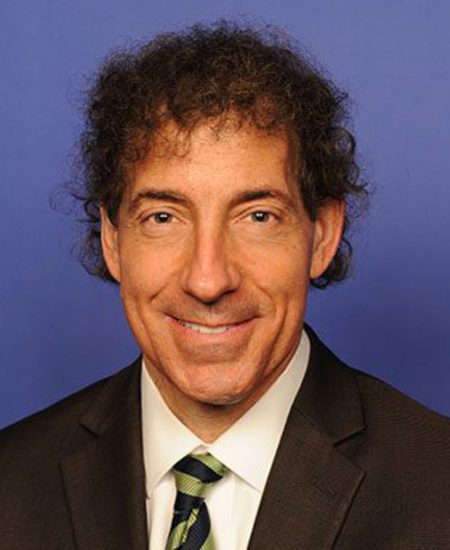
Rep. Jamie Raskin
Sponsored bills
Maddy summaryThe Love Lives On Act of 2023 modifies benefits for surviving spouses of military veterans and service members. It removes an expiration date on the Marine Gunnery Sergeant John David Fry Scholarship for surviving spouses, ensures remarriage doesn't automatically end eligibility for veterans' dependency and indemnity compensation, and expands access to commissary and exchange privileges for remarried surviving spouses. The bill also clarifies that remarried widows or widowers whose subsequent marriage ended (due to death, divorce, or annulment) can still be considered dependents under TRICARE. These changes directly affect surviving spouses of veterans and military members who have remarried or are considering remarriage, providing more consistent benefits regardless of marital status.
Maddy summaryHR 1083, the Caring for Survivors Act of 2023, increases financial support for surviving spouses of veterans. It amends Title 38 to raise dependency and indemnity compensation from a fixed $1,154 to 55% of the monthly compensation rate under section 1114(j), effective six months after enactment. The bill also modifies eligibility for survivors of veterans who died before 1993, ensuring they receive the greater of their current benefit or the new calculation. Additionally, it reduces the required continuous service rating period for survivors from 10 years to five years when a veteran was totally disabled at death. These changes directly affect surviving spouses, particularly those with veterans who died prior to 1993.
Maddy summaryThis bill establishes a new Government Spending Oversight Committee to monitor how federal funds are spent, specifically focusing on money allocated through major pandemic relief and other significant spending acts like the CARES Act, American Rescue Plan, and Inflation Reduction Act. The committee, composed of various agency Inspectors General, will work to prevent fraud, waste, and mismanagement by conducting audits, analyzing data, and providing reports to Congress. It will create a public website to increase transparency about how these funds are used and require agencies to report on implementing the committee's recommendations. The committee will operate under specific rules for subpoena authority and information sharing, with a requirement to submit biannual reports to Congress. The committee is scheduled to begin operations on September 30, 2025.
Baltimore Bridge Response Invests and Delivers Global Economic Relief Act or the Baltimore BRIDGE Relief Act This bill allows for full federal funding (i.e., 100% federal cost-share) for emergency relief funds to respond to damage caused by the cargo ship Dali to the Francis Scott Key Bridge, including reconstruction of that bridge and its approaches. The Francis Scott Key Bridge is located in Baltimore City, Baltimore County, and Anne Arundel County, Maryland. This bill takes effect as if enacted on March 26, 2024.
Maddy summaryThis bill corrects retirement benefits for certain U.S. Customs and Border Protection (CBP) officers hired between July 2008. It specifically affects individuals who received a tentative job offer before July 6, 2008, but began duty as officers on or after that date. The bill ensures these officers receive retroactive retirement pay adjustments and exemption from mandatory retirement age rules, as if they had been classified as officers on July 6, 2008. The Department of Homeland Security must identify eligible officers within 120 days and coordinate with the Office of Personnel Management to implement these changes, while the Government Accountability Office will review CBP’s hiring practices related to these benefits.
Maddy summaryThe STAGE Act establishes a federal grant program to support professional nonprofit theaters. Eligible theaters (nonprofits producing live performances with fair wages, 3+ years of programming, and financial need or community focus) can receive grants covering payroll, facility repairs (prioritizing accessibility), marketing, and workforce training. Grants max out at $16 million per entity or 20% of its prior year's expenses, with $1 billion annually allocated for 2024-2028. The bill also mandates a federal study on sustaining the nonprofit arts sector, including input from artists and community stakeholders.
Maddy summaryThis bill requires federal agencies to include specific equity goals in their planning documents. Agencies must set at least one goal (or 20% of total goals, whichever is greater) focused on improving services for underserved communities and individuals, defined as groups systematically denied full participation in economic, social, and civic life. Agencies must also consult with community groups, local governments, and research partners when developing these plans. The law amends existing planning requirements under Titles 5 and 31 of the U.S. Code to implement these changes.
Maddy summaryThis bill requires each federal agency to establish an Equity Advisory Team with at least 10 specific agency roles represented, including leadership from civil rights, data, human capital, and policy teams. It creates an Equity Subcommittee within the Performance Improvement Council to coordinate equitable service delivery guidance across agencies and share best practices. The bill also mandates that Chief Data Officers ensure agencies follow equitable data collection and use standards, and establishes an Equitable Data Working Group to report quarterly on achieving equity in federal data practices. These provisions directly affect all federal agencies by requiring new internal structures and reporting on equitable operations.
Maddy summaryHR 7795, the ProTECT Act of 2024, bans trophy hunting and importing trophies of threatened wildlife species in the U.S. and prohibits issuing permits for such activities. It amends the Endangered Species Act to extend existing protections - previously only covering endangered species - to threatened species, making it unlawful to take or import trophies (including parts or derivatives) of these species. The bill defines "trophy" broadly to cover whole animals, parts, or processed items obtained under hunting authorization, aiming to prevent legal trade from masking illegal wildlife trafficking.