

Maddy summaryThe Unhoused Voter Opportunity Through Elections Act (HR 5294) protects voting rights for people experiencing homelessness by prohibiting states from denying voting access based on living in a "nontraditional abode" like shelters, public spaces, or locations where someone is considered homeless under federal law. Key provisions require election officials to make ballot drop boxes accessible to unhoused individuals, accept written attestations of residence instead of traditional proof, allow homeless shelters to be used as voting addresses, and mandate outreach to shelters about registration deadlines and election dates. The bill also creates a grant program to fund mobile voting centers and direct outreach services specifically for unhoused individuals. These changes would directly affect homeless individuals and election officials across all states, implementing concrete policy changes to improve voting access for a population often excluded from the electoral process.
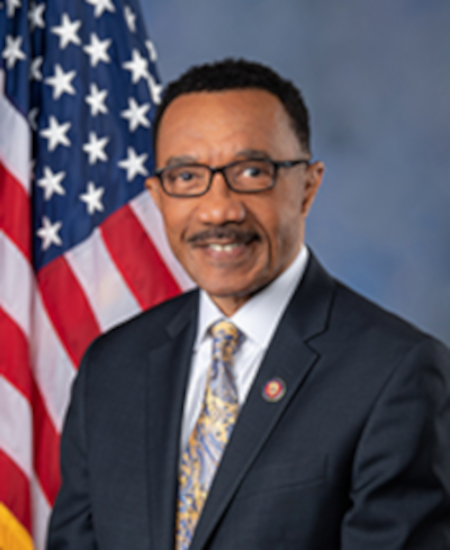
Rep. Kweisi Mfume
Sponsored bills
Maddy summaryHR 5295, the Expanding the VOTE Act, modifies Section 203 of the Voting Rights Act to expand language access for voters. It requires states and localities to provide voting materials (including ballots and instructions) in the language of covered language minority groups, with new provisions for American Indian and Alaska Native languages requiring tribal government consultation for unwritten languages. The bill creates $15 million in grants to help jurisdictions provide voting materials in languages that don’t currently trigger Section 203 coverage, while mandating continued provision for those groups in future elections. It also directs a study to evaluate lowering population thresholds for language protections and expanding the definition of covered languages.
Maddy summaryHRES 661 is a symbolic resolution honoring the 60th anniversary of the 1963 March on Washington for Jobs and Freedom. It calls on Congress to address the unmet demands of the marchers, specifically decent housing, voting rights, and a fair wage. As a non-binding resolution, it does not create new laws but serves to commemorate the event and renew focus on these longstanding civil rights goals.
Maddy summaryThis bill removes certain pay adjustments from federal pay cap calculations. It excludes annual pay adjustments under Section 5303 and locality-based pay adjustments under Section 5304 when determining if an employee's total pay exceeds maximum limits. This directly affects federal civilian employees, administrative law judges, and military personnel by preventing these adjustments from counting toward pay caps. As a result, employees may reach higher pay levels without triggering cap restrictions, addressing pay compression concerns.
Assault Weapons Excise Act This bill imposes an additional 1000% excise tax on large capacity ammunition feeding devices and semiautomatic assault weapons. It exempts from such additional tax devices and weapons acquired by the United States or by a state or local government.
Maddy summaryHJRES 84 designates August 20 as "Slavery Remembrance Day" to commemorate the arrival of the first enslaved Africans in what is now Virginia on August 20, 1619. The resolution urges the President to issue an annual proclamation encouraging Americans to observe the day with ceremonies and activities reflecting on slavery's history. It specifically honors 21 Black Congress members from the Reconstruction Era as honorary cosponsors and calls for acknowledging the enduring impacts of slavery. As a symbolic resolution, it does not create new laws or directly affect any group beyond establishing an annual observance.
Maddy summary# Summary of the "Protecting Our Democracy Act" This comprehensive legislation aims to strengthen democratic processes, increase government transparency, and prevent foreign interference in elections. Key provisions include: ## Ethics and Transparency - **Ethics Pledge**: Requires all appointees to sign an ethics pledge committing to: - Ban on gifts from registered lobbyists - 2-year revolving door ban (prohibiting participation in matters related to former employers) - Golden parachute ban (no special payments from former employers) - Commitment to decision-making based on public interest - **Tax Transparency**: Requires presidential and vice presidential candidates to disclose 10 years of tax returns, with sitting presidents submitting returns within 30 days of enactment ## Campaign Finance and Foreign Interference - **Foreign Contact Reporting**: Requires political committees to report any contact with "covered foreign nationals" within 1 week - **Enhanced Penalties**: Criminal penalties of up to $1 million and 5 years in prison for violations - **Online Advertising Rules** ("Honest Ads Act"): - Requires clear disclosure of who paid for political ads online - Mandates machine-readable public databases of political ads - Requires visible sponsor identification that remains when ads are shared - Defines "qualified political advertisements" to include various online formats ## Preventing Patronage Systems - Limits exceptions to competitive service for federal positions - Restricts transferring positions between competitive and excepted service - Requires employee consent for position transfers ## Use of Federal Property - Prohibits holding national political conventions on federal property - Requires publicly available visitor records at White House and other official locations (with privacy exceptions) The legislation establishes detailed definitions, reporting requirements, and enforcement mechanisms across multiple agencies, with the goal of increasing transparency, preventing foreign interference, and ensuring ethical conduct in government service.
Maddy summaryHRES 633 is a resolution expressing Congress's approval for the 70th anniversary celebration of the Small Business Administration (SBA) and recognizing entrepreneurs and job creators for their contributions to the U.S. economy. It does not create new laws, provide funding, or impose obligations; it is a symbolic gesture acknowledging the SBA's role since its founding in 1953 and the economic impact of small businesses. The resolution highlights that small businesses account for 99.9% of U.S. businesses, employ nearly half of all workers, and have created 12.9 million net new jobs over 25 years. This is a non-binding, commemorative measure with no direct policy changes or affected parties beyond the acknowledgment itself.
Maddy summaryThis bill requires the Attorney General to publish an annual public report detailing the Bureau of Alcohol, Tobacco, Firearms, and Explosives' (ATF) inspections of gun dealers, including the number of inspections, serious violations found (such as illegal transfers or record falsification), and actions taken like license revocations. The report must include specific data points - such as the number of licenses revoked or not renewed, reasons for not revoking licenses, and geographic breakdowns - and be posted online. It also mandates a Government Accountability Office (GAO) study examining ATF's enforcement of firearm license rules, focusing on systemic issues, geographic enforcement differences, and outcomes of license revocation processes. The bill increases transparency around gun dealer oversight without changing legal requirements for dealers.
Maddy summaryThis bill establishes the Chesapeake National Recreation Area as a new unit of the National Park System to preserve and promote public access to the Chesapeake Bay watershed. It defines the Recreation Area's boundaries using a specific map, creates an Advisory Commission with 19 members representing Maryland, Virginia, tribal interests, and youth, and outlines how land acquisition and management will occur through donations, purchases, or partner agreements. The legislation requires coordination with existing programs like Chesapeake Gateways and the Bay Program, while emphasizing conservation of natural, recreational, historical, and cultural resources. It directly affects communities, conservation organizations, and local governments in the Chesapeake Bay watershed by creating a formal structure for managing and expanding public access to Bay resources. The bill sets requirements for cooperative agreements with partner sites and mandates a management plan to coordinate activities with neighboring communities and existing conservation efforts.