

Maddy summaryHR 653, the Transition-to-Success Mentoring Act, creates a federal grant program to fund school-based mentoring programs for middle school students transitioning to high school. It directly affects at-risk students in high-poverty, high-crime, rural, or high-violence school areas, requiring eligible school districts or community partnerships to assign each student a "success coach." Key provisions mandate coaches to develop individualized plans with students and parents, meet monthly to track academic/career goals, provide quarterly progress reviews, and connect students to college/career opportunities. The bill also requires grantees to report on student outcomes like attendance, academic progress, disciplinary issues, and social-emotional development, with detailed training requirements for coaches covering trauma-informed practices and disability inclusion.
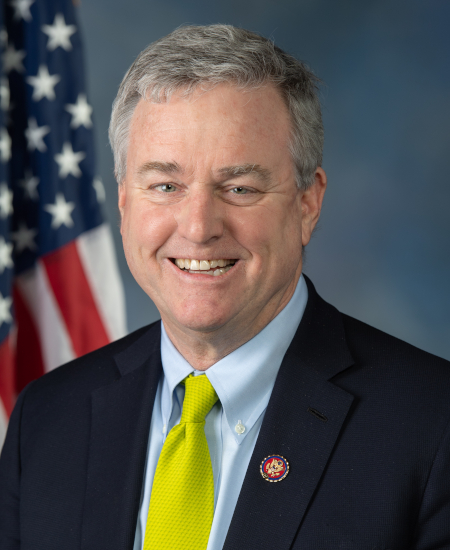
Rep. David J. Trone
Sponsored bills
Maddy summaryThis bill prohibits the possession, sale, or transfer of most large-capacity ammunition magazines (holding more than 15 rounds) for the general public, while exempting law enforcement officers (including campus security officers), retired officers, and certain licensed entities like nuclear facility security. It requires new magazines manufactured after enactment to have serial numbers and manufacturing dates, and allows federal grant funds to support buy-back programs for these devices. Existing owners of such magazines lawfully possessed before the law's enactment are exempt from the prohibition. The law applies to devices not already covered under current exemptions for law enforcement, nuclear security, and retired officers.
Maddy summaryThis bill amends the U.S. Code to expand appeal rights for certain postal employees. It allows non-unionized postal workers in supervisory, professional, technical, clerical, administrative, or managerial roles (covered under the Executive and Administrative Schedule) to directly appeal personnel decisions to the Merit Systems Protection Board (MSPB). Previously, these employees may have lacked this specific appeal path. The change clarifies their eligibility under Section 1005(a)(4)(A)(ii)(I) of Title 39, U.S. Code, ensuring they can seek MSPB review for employment-related disputes.
Maddy summaryThis bill requires the U.S. Postal Service to provide written proposals to supervisors' organizations 60 days before pay/benefit decisions expire or after new collective bargaining agreements are reached. It directly affects postal supervisors and managers covered by collective bargaining agreements regarding their pay policies, schedules, and fringe benefits. The key mechanism establishes clear timelines for negotiations and mandates that any dispute resolution panel must issue a binding final decision within 15 days of receiving input from both parties. This aims to streamline the process for resolving pay and benefits disputes between the Postal Service and supervisory staff organizations.
Booster Seat Safety Act This bill addresses labeling requirements and testing standards for booster seats used in motor vehicles. Specifically, the bill requires labels on booster seats to include the minimum recommended age (4 years) and weight (40 pounds) for a child to use the seat. It also requires that a label on a car seat or combination car seat list the maximum weight and height limits of the seat, as well as a recommendation to continue using the seat until the child exceeds the listed limits. Additionally, the National Highway Traffic Safety Administration (NHTSA) must either establish a minimum height recommendation for booster seats or a method for manufacturers to use to determine a minimum height recommendation. Once the minimum height or method is established, booster seat labels must also contain the minimum height recommendation. The NHTSA must also establish a standard for side-impact crash tests for booster seats and provide guidelines for creating a testing dummy that approximates a six-year old child for such crash tests. Further, the NHTSA must study systems for tethering child restraint systems in vehicles and make recommendations about using or modifying tether systems to maximize child safety.
Maddy summaryThe HEAL Act (HR 603) requires the U.S. Holocaust Memorial Museum Director to study how public elementary and secondary schools teach about the Holocaust and related antisemitism. The study will examine curriculum requirements, teaching methods (like project-based learning), instructional materials, and assessment approaches across states and school districts. It specifically analyzes whether Holocaust education is mandatory, optional, or integrated across subjects, and how schools address antisemitism and genocide prevention. The resulting report, due within 180 days of the study or three years after enactment, will inform Congress but does not change current school policies. This is a data-gathering measure, not a policy mandate.
Maddy summaryThe Buy Low and Sell High Act establishes an Economic Petroleum Reserve of up to 350 million barrels of crude oil, to be purchased domestically at a maximum price of $60 per barrel. It creates Strategic Refined Petroleum Product Reserves for gasoline and diesel across different districts with specific storage requirements, and authorizes sales when certain price conditions are met. The bill restricts exports of petroleum products to countries like China, Russia, and Iran, and requires Federal agencies to gradually increase the percentage of alternative fuel vehicles in their fleets, with specific targets for light- and medium/heavy-duty vehicles. It also provides funding for state transportation electrification plans and assistance for refineries in Western Hemisphere countries to increase crude oil refining capacity, while increasing the Northeast Home Heating Oil Reserve capacity from 2 million to 4 million barrels.
Maddy summaryHCONRES 7 is a symbolic resolution passed by the U.S. House of Representatives that commends Iranian protesters - particularly women - who have risked safety to demonstrate against the Iranian regime's human rights abuses, including the mandatory hijab law and violent crackdowns following Mahsa Amini's death. It condemns the regime's use of violence (reportedly killing over 450 protesters) and detention of activists, while urging the Biden Administration to impose additional human rights sanctions on officials involved in repression and support internet freedom tools to bypass Iranian censorship. The resolution makes no binding policy changes but formally expresses congressional support for protesters' demands for freedom, justice, and an end to discriminatory laws targeting women. It does not directly affect any U.S. laws or policies but serves as a statement of U.S. position.
Maddy summaryThis bill adjusts federal employee pay rates for 2024. It increases basic pay for all federal workers under statutory pay systems and prevailing rate systems by 4.7%, and raises locality pay adjustments by 4.0%. These changes directly affect all federal employees covered by the specified pay systems, including those in wage areas and under sections 5348/5349 of Title 5. The bill implements these raises without altering existing pay system structures or requirements.
Maddy summaryHRES 59 is a non-binding resolution recognizing January 2023 as "National Mentoring Month." It formally acknowledges the value of mentoring relationships for youth development, highlighting how mentors support academic achievement, career exploration, and mental well-being. The resolution encourages expanding quality mentoring programs nationwide but does not create new laws or allocate funding. It directly affects all young people in the U.S. by raising public awareness of mentoring's benefits and urging collaboration among communities, schools, and organizations to address the "mentoring gap" where one in three youth lacks a supportive adult outside their home.