

Maddy summaryHR 3606 (FLUENT Act) creates a federal grant program to expand family literacy services for English language learner families, targeting caregivers with limited English proficiency. It authorizes $50 million annually (2024-2028) for grants up to $1 million each to organizations providing research-based programs that include interactive caregiver-child literacy activities, adult education, and school collaboration. The program requires grantees to improve children's English language skills, primary language literacy, and caregivers' ability to support education, with measurable outcomes tracked across seven key areas. It prioritizes "hardest-to-reach" families and mandates services for children under age 8 with caregivers aged 16+.
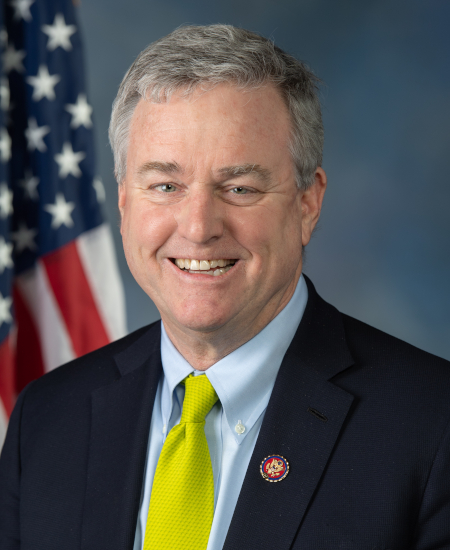
Rep. David J. Trone
Sponsored bills
Maddy summaryHR 3605, the Reaching English Learners Act, creates a new federal grant program to improve teacher preparation for educators working with English learners. The bill authorizes competitive grants to partnerships between colleges and school districts (high-need local educational agencies or early childhood programs) to develop or strengthen teacher training programs. These grants fund evidence-based strategies like bilingual education and dual-language instruction, clinical classroom experiences with English learners, and training on supporting students with disabilities who are English learners. Partners must contribute 50% of costs from non-Federal sources and track outcomes like teacher certification rates and employment in high-need schools. The program aims to ensure future teachers meet state requirements to effectively support English learners in early childhood, elementary, and secondary education.
Maddy summaryThis bill prohibits corporal punishment (such as spanking or paddling) in all schools receiving federal funding, directly affecting students, school personnel, and school administrators. It requires schools to notify parents within 24 hours if corporal punishment occurs and establishes enforcement through civil lawsuits by students/parents, Attorney General actions, and Office for Civil Rights oversight. The bill mandates states to submit school climate reports and develop training programs on positive behavioral interventions to reduce exclusionary discipline practices that disproportionately affect students of color, students with disabilities, and other marginalized groups. It creates a grant program to help schools implement these approaches, with priority given to schools with high suspension rates and disciplinary actions. The bill does not apply to private schools or home schools that don't receive federal funding.
Maddy summaryThis resolution (HRES 436) symbolically designates the week of May 22-26, 2023, as "Educator Mental Health Awareness Week" to highlight mental health challenges faced by teachers and school staff. It directly addresses educators, citing pandemic-era data showing high rates of depression, anxiety, and stress among teachers compared to the general population. The resolution expresses support for recognizing educator well-being as critical to student success but does not create new policies, funding, or enforceable requirements. As a non-binding resolution, it serves solely as a symbolic gesture to promote awareness.
This resolution encourages the U.S. Holocaust Memorial Museum to continue its work in educating the public about the dangers of antisemitism and the origins of the Holocaust, congratulates those responsible for the creation of the museum, condemns antisemitism, supports educational and community-based programs that counter antisemitism and hate, and supports the designation of a U.S. Holocaust Memorial Museum Day.
Maddy summaryThis bill would designate approximately 1.7 million acres of public land in Utah's Colorado Plateau and Great Basin regions as wilderness areas, protecting them from development while preserving traditional uses by Indigenous communities. It establishes specific wilderness areas across Utah's red rock canyons, including the Great Basin Wilderness Areas, Grand Staircase-Escalante Wilderness Areas, and others, with detailed acreage for each designated zone. The bill includes administrative provisions for managing these areas, such as maintaining existing livestock grazing rights, setting road setbacks to protect wilderness character, and reserving water rights for the wilderness areas. This legislation directly affects how the Bureau of Land Management administers public lands in Utah and defines the boundaries for public use of these designated wilderness areas.
Maddy summaryHRES 425 is a non-binding House resolution designating July 19, 2023, as "Glioblastoma Awareness Day" to increase public recognition of glioblastoma, an aggressive brain cancer. It directly supports patients, caregivers, and families affected by the disease, which has a low 5-year survival rate (6.9%) and no effective screening methods. The resolution encourages greater public awareness, honors those impacted by the disease, and urges continued research investments, including through the Glioblastoma Therapeutics Network. It does not create new laws or alter funding but serves as a symbolic statement to advance understanding and support for glioblastoma research.
Maddy summaryHR 3548, the Pursuing Equity in Mental Health Act, aims to reduce mental health disparities for racial and ethnic minority groups by directing federal funding and policy changes. It increases annual grants for primary/behavioral health services to $60 million in 2023 and $80 million yearly through 2029, prioritizing entities serving minority communities. The bill requires the NIH to study mental health disparities within 9 months and mandates new training for mental health professionals (including social work and psychiatry) on culturally appropriate care. Additionally, it funds a $15 million annual outreach strategy to combat stigma and improve access to care, requiring materials tailored to cultural and language needs of minority groups.
Maddy summaryHR 3523, the Perinatal Workforce Act, provides $15 million annually from 2024 to 2028 to expand and diversify maternity care providers. It directs HHS to issue guidance for states on recruiting diverse providers (including midwives, nurses, and community health workers) and requires grant recipients to prioritize students from racial/ethnic minority groups, implement bias training, and target health professional shortage areas. The bill also mandates annual reporting on workforce diversity and outcomes, and requires a GAO report assessing barriers to equitable access in maternal healthcare. This legislation directly affects hospitals, nursing schools, midwifery programs, and insurers by funding targeted workforce development to address racial disparities in maternal care.
Maddy summaryThis bill requires that AM radio receivers be included as standard equipment in all new motor vehicles (such as cars and trucks) sold in the United States, with a rule to be issued by the Department of Transportation within one year. The rule must ensure AM radio is easily accessible on the dashboard and allows manufacturers to use digital AM radio technology instead of traditional AM. During the one-year period between the bill's enactment and the rule's effective date, manufacturers must clearly label vehicles without AM radio. The bill also directs a study to evaluate whether an alternative system could deliver emergency alerts as reliably as AM radio across the country, especially during crises.