

Maddy summaryThis bill amends the Supplemental Nutrition Assistance Program (SNAP) to exclude income earned through specific job training programs from being counted toward household income limits. It adds a new provision (paragraph 20) that excludes earnings from vocational rehabilitation programs, refugee employment programs, and other defined training initiatives. This change directly affects SNAP households where members participate in these programs, as the income from such participation will no longer reduce their food assistance benefits. The policy update simplifies eligibility by ensuring these earnings do not trigger benefit reductions under SNAP rules.
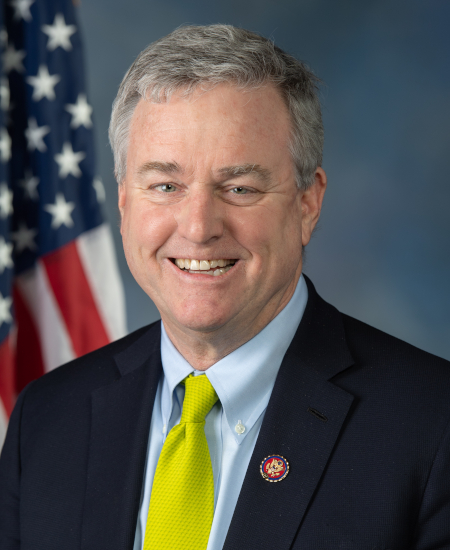
Rep. David J. Trone
Sponsored bills
Maddy summaryThe Closing the Meal Gap Act of 2023 amends the Food and Nutrition Act to update how SNAP (Supplemental Nutrition Assistance Program) benefits are calculated. It replaces the "thrifty food plan" with a "low-cost food plan" based on a specific 4-person family diet, requiring the government to reevaluate this plan by 2029 and every 5 years after. The bill also updates medical expense deductions, eliminates time limits on benefits, and allows Puerto Rico to join SNAP with specific transition requirements. These changes directly affect SNAP recipients, particularly in Puerto Rico, Hawaii, and Alaska, by adjusting benefit calculations to better reflect current food costs.
Maddy summaryHR 3036, the Increased TSP Access Act of 2023, amends conservation program rules to expand access to third-party providers (TSPs) who offer technical assistance to farmers on conservation practices. It creates new pathways for non-Federal entities like agricultural cooperatives or professional associations to certify TSPs, streamlines certification processes (requiring Secretary review within 10 business days), and sets payment rates for TSPs equivalent to government-provided technical assistance. The bill mandates public reporting on certification numbers, payment details, and a target utilization rate for TSPs to improve conservation program delivery. It directly affects farmers participating in USDA conservation programs by increasing options for technical support and requiring transparency in how TSPs are certified and compensated.
Maddy summaryHRES 459 is a resolution expressing the House of Representatives' support for designating June 2, 2023, as "National Gun Violence Awareness Day" and June 2023 as "National Gun Violence Awareness Month." It encourages the public to wear orange, promote gun safety awareness, and discuss community safety measures during this time, particularly highlighting the summer months when gun violence often increases. The resolution references statistics on gun violence deaths and pays tribute to victims like Hadiya Pendleton, but does not create new laws or impose requirements.
Maddy summaryHR 3776, the Family Stability and Opportunity Vouchers Act of 2023, creates a new housing voucher program targeting families with young children facing instability. It provides up to 50,000 incremental vouchers annually (2024-2029) for families who either have a child under 6, will welcome a minor child within 300 days, and are homeless, unstably housed, living in high-poverty areas, or at risk of displacement from neighborhoods with high-performing schools. Public housing agencies receiving funds must offer mobility services to help these families relocate to areas with quality schools or childcare, without requiring participation as a voucher condition. The bill defines key terms like "opportunity area for children" and mandates evidence-based services to support family transitions. This policy directly affects low-income families with young children in unstable housing situations seeking better educational opportunities.
Maddy summaryHR 3752, the Parity Enforcement Act of 2023, strengthens enforcement of mental health and substance use disorder parity requirements in health insurance. It amends ERISA to expand civil penalties for group health plans and insurance issuers that fail to meet parity standards, specifically adding "parity in mental health and substance use disorder benefits" to existing violation categories. The bill clarifies that plan administrators and issuers can be held accountable for violations under Section 712 of the law, and adjusts enforcement procedures to ensure parity violations are addressed separately. These changes apply to health plans for years starting one year after the bill's enactment.
Maddy summaryHRES 432 is a non-binding House resolution designating May as "Sex Ed For All Month" to promote inclusive, comprehensive sex education. It encourages schools, governments, and health organizations to adopt evidence-based programs that are medically accurate, culturally responsive, and inclusive of LGBTQ+ youth and racial/ethnic minorities. The resolution specifically recommends curricula covering consent, sexual health, and equity while discouraging programs that withhold critical information or perpetuate stereotypes. As a symbolic resolution, it does not create new laws but aims to influence policy discussions around youth sexual health access.
Maddy summaryHRES 434 is a non-binding resolution declaring a mental health crisis among U.S. youth, citing statistics like 49.5% of adolescents experiencing mental health disorders and a 30% rise in emergency visits for youth during the pandemic. It urges states and schools to improve educator training, expand on-campus mental health resources, remove harmful practices (such as risk assessment teams disproportionately affecting students of color), and address barriers for undocumented and low-income students. The resolution also emphasizes combating stigma, integrating mental and physical health care, and reaching high-risk communities with better resources. As a declaration - not a law - it expresses congressional support for historic federal investments in youth mental health care but does not create new policy.
Maddy summaryThe HERO Act creates a national data system to track suicides among public safety officers (including police, firefighters, and EMTs) and requires annual reports broken down by age, gender, occupation, and status (volunteer, career, etc.). It establishes grants for peer-led mental health support programs within fire departments and EMS agencies, where trained fellow responders provide confidential counseling. The bill also mandates development of educational resources for mental health professionals on first responder-specific stressors and evidence-based PTSD treatment strategies. All data collection and reporting include strict privacy protections to prevent misuse of information for denying survivor benefits.
Maddy summaryHR 3713 creates federal grants to fund comprehensive school-based mental health programs for students in grades K-12, including those in Bureau of Indian Education schools. It requires partnerships between schools and community mental health providers to deliver trauma-informed, culturally appropriate services addressing suicide risk, grief, violence, and trauma exposure. The bill authorizes $300 million annually (2024-2027) for these programs, mandating privacy protections under HIPAA and FERPA, and requires annual reporting on program effectiveness.