

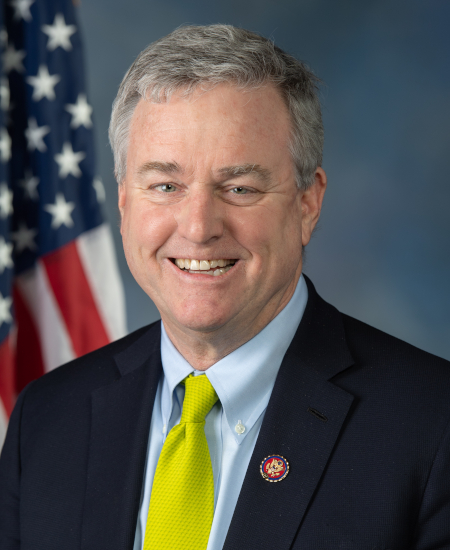
Photo of David J. Trone
D United States House · District 6 · Maryland

Rep. David J. Trone

Compare
Total votes
2,168
all sessions
Attendance
92%
175 missed
Lower than 96% of chamber peers
With party
97%
of cast votes
Higher than 78% of chamber peers
Bipartisan score
2%
crosses aisle rarely
Lower than 76% of chamber peers
Sponsored
1,817
bills & resolutions
Higher than 97% of chamber peers
Committees
0
assignments
1,817 bills and resolutions

Sponsored bills

Total
1,817
Primary
75
Co-sponsor
1,742
This page
1,817
matching current filters
Co-sponsor HRES 1248
In committee · United States House · Co-sponsor
Recognizing the impact the stigmatization of menstruation has on the lives of women, girls, and people who menstruate, and expressing support for the designation of the month of May as "National Menstrual Health Awareness Month".

Maddy summaryHRES 1248 is a symbolic resolution recognizing the harmful impact of menstruation stigma on women, girls, and people who menstruate. It supports designating May as "National Menstrual Health Awareness Month" to promote normalization of menstruation, improve access to education and resources, and address menstrual health disparities. The resolution does not create new laws or funding but aims to raise public awareness and encourage efforts to advance menstrual health equity.

In committee May 24, 2024 1 co-sponsor
Co-sponsor HRES 1242
In committee · United States House · Co-sponsor
Prioritizing mental health to the same degree as physical health to address the epidemics of suicide and drug overdose in the United States.

Maddy summaryHRES 1242 is a congressional resolution calling for equal prioritization of mental health care alongside physical health to address the U.S. suicide and drug overdose crises. It urges enforcement of existing mental health parity laws in insurance coverage and aims to reduce stigma through public awareness. The resolution supports the 2024 National Strategy for Suicide Prevention and recommends increased funding for mental health workforce development, medication-assisted treatment, culturally appropriate services, and school-based mental health resources. As a non-binding resolution, it expresses congressional support for these measures without creating new laws.

In committee May 24, 2024 1 co-sponsor
Co-sponsor HR 619
In committee · United States House · Co-sponsor
NAPA Reauthorization Act

Maddy summaryThis bill reauthorizes the National Alzheimer's Project Act through 2035 (extending the previous deadline of 2025) and adds new requirements to promote healthy aging and reduce Alzheimer’s risk factors. It mandates the program to provide information on healthy behaviors that may lower cognitive decline risk and expands the advisory group to include representatives from agencies like the Department of Justice, FEMA, and Social Security Administration, plus experts with diverse clinical trial experience. The bill directly affects Alzheimer’s research, care programs, and the federal advisory group overseeing national efforts. Key changes include requiring annual evaluations instead of initial ones and adding a focus on reducing health disparities in Alzheimer’s initiatives.

In committee May 24, 2024 1 co-sponsor
Co-sponsor HRES 1255
In committee · United States House · Co-sponsor
Calling upon all Americans on this Memorial Day, 2024, to honor the men and women of the Armed Forces who have died in the pursuit of freedom and peace.

Maddy summaryHRES 1255 is a non-binding House resolution introduced on May 23, 2024, that calls on all Americans to observe Memorial Day 2024 as a day of remembrance for military personnel who died in service. The resolution specifically honors "the men and women of the Armed Forces who have died in the pursuit of freedom and peace" and urges the public to demonstrate appreciation for their sacrifices. It does not create new laws or policies but serves as a symbolic expression of national gratitude, emphasizing respect for those who died while defending democratic values. The resolution was co-sponsored by multiple House members and aligns with the traditional observance of Memorial Day.

In committee May 23, 2024 1 co-sponsor
Co-sponsor HR 895
In committee · United States House · Co-sponsor
Combating Organized Retail Crime Act of 2023

Maddy summaryHR 895, the Combating Organized Retail Crime Act of 2023, expands federal law to better prosecute organized retail theft by amending sections 2314 and 2315 of Title 18. It clarifies that crimes involving stolen goods valued at $5,000 or more over 12 months - including retail theft - can be prosecuted under existing federal statutes, and broadens definitions to include goods taken via "any facility of interstate or foreign commerce." The bill also creates a new Organized Retail Crime Coordination Center within Homeland Security, requiring it to coordinate federal, state, and local law enforcement efforts, share threat information with retailers, and produce annual public reports on trends. This directly affects law enforcement agencies, retailers, and criminal justice systems by standardizing prosecution thresholds and enhancing interagency collaboration.

In committee May 23, 2024 1 co-sponsor
Co-sponsor HR 8451
In committee · United States House · Co-sponsor
BUILD Act

Maddy summaryThe BUILD Act creates a federal grant program to fund economic development projects led by universities located in economically distressed communities. It targets institutions in areas where median household income is at least 25% below state or national averages, as defined by specific income thresholds. Universities receive planning grants (up to $100,000 annually for 2 years) to develop projects, followed by implementation grants (minimum $25 million, maximum $50 million over 5 years) for approved initiatives like renovating community-accessible buildings, establishing small business support programs, building broadband infrastructure, or creating health clinics. These projects must directly benefit the surrounding distressed community and are restricted to eligible institutions meeting the bill's criteria.

In committee May 20, 2024 1 co-sponsor
Co-sponsor HR 8415
In committee · United States House · Co-sponsor
Strengthening Cybersecurity in Health Care Act

Maddy summaryHR 8415, the Strengthening Cybersecurity in Health Care Act, requires the Department of Health and Human Services (HHS) Inspector General to conduct regular cybersecurity evaluations every two years. These evaluations use security testing to assess how systems handling sensitive health data - like Medicare numbers and patient safety systems - could be compromised. The bill mandates that HHS submit reports to Congress on updating cybersecurity practices and the Inspector General must report on funding use and needed legislative changes for ongoing evaluations. This directly affects HHS operations and the security of patient data across the healthcare system. The law aims to proactively identify and address vulnerabilities in critical health information systems.

In committee May 17, 2024 1 co-sponsor
Co-sponsor HR 8323
In committee · United States House · Co-sponsor
Comprehensive Addiction Resources Emergency Act of 2024

Maddy summary# Summary of Legislative Text This is a comprehensive legislative proposal focused on addressing substance use disorder through public health approaches, with significant funding and program requirements. Key elements include: 1. **Major Funding Programs:** - **Subtitle A (Local Grants):** $3.0 billion annually (2024-2033) for local entities to provide prevention, treatment, and recovery services - **Subtitle B (State/Regional Grants):** $4.6 billion annually (2024-2033) for state-level programs - **Subtitle C (Other Grants):** $1.0 billion annually (2024-2033) for specific entities and underserved populations - **Subtitle D (Innovation/Training):** $1.5 billion annually (2024-2033) for training, research, and capacity building 2. **Key Program Requirements:** - Mandates for evidence-based treatment services across multiple levels of care - Requirements for cultural competency, particularly for Native American communities - Specific focus on harm reduction, prevention, and recovery support - Provisions for naloxone distribution and overdose reversal programs 3. **Regulatory Changes:** - New certification requirements for covered manufacturers, distributors, and dispensers of Schedule II controlled substances - Penalties for failure to submit certifications or submitting false certifications - Creation of a "Comprehensive Addiction Resources Fund" for penalty revenues 4. **Focus Areas:** - Prevention services (including trauma-informed approaches) - Early intervention services - Recovery support services - Harm reduction programs - Workforce development for treatment providers - Special attention to underserved populations (rural communities, racial minorities, formerly incarcerated individuals) 5. **Funding Priorities:** - 10% of funds for Native American communities - Specific requirements for cultural competency and language access - Mandated data collection and reporting systems This legislation represents a significant shift toward public health approaches to substance use disorder, emphasizing prevention, treatment, and recovery support rather than punitive measures, with substantial funding commitments over a decade.

In committee May 17, 2024 1 co-sponsor
Co-sponsor HR 8426
In committee · United States House · Co-sponsor
Public Service Freedom to Negotiate Act of 2024

Maddy summaryThe Public Service Freedom to Negotiate Act of 2024 establishes federal minimum standards for collective bargaining rights for public employees and supervisory employees. The Federal Labor Relations Authority will determine if each state's laws "substantially provide" for these rights, and if not, federal standards will apply to that state. These standards include the right to self-organization, collective bargaining, recognition of labor organizations, and procedures for resolving disputes. The bill preserves existing collective bargaining agreements and excludes certain employee categories like emergency services workers from some provisions.

In committee May 16, 2024 1 co-sponsor
Co-sponsor HR 681
In committee · United States House · Co-sponsor
READ Act Reauthorization Act of 2023

Maddy summaryThe READ Act Reauthorization Act of 2023 extends the authorization period for the Reinforcing Education Accountability in Development Act (commonly known as the READ Act) from five to ten fiscal years. This change allows U.S. international education programs, administered by agencies like USAID, to operate without annual reauthorization for a longer period. The bill directly affects programs providing educational support in developing countries, such as teacher training and literacy initiatives. The key mechanism is amending Section 4(a) of the existing law to adjust the funding duration, ensuring continued program stability.

In committee May 16, 2024 1 co-sponsor
Showing 191 to 200 of 1,817 bills
Previous 1 … 19 20 21 … 182 Next