

My Body, My Data Act of 2022 This bill establishes protections, subject to certain limits, for personal reproductive or sexual health information. This includes information relating to past, present, or future surgeries or procedures, such as the termination of a pregnancy. Specifically, commercial entities, including individuals, nonprofits, and common carriers, may not collect, retain, use, or disclose personal reproductive or sexual health information except (1) with the express written consent of the individual to whom such information relates, or (2) as is strictly necessary to provide a requested product or service. Commercial entities also must provide individuals with access to, and a reasonable mechanism to delete, any of their reproductive or sexual health information upon request. Further, commercial entities must maintain and publish a privacy policy describing their practices with respect to such information. The bill's provisions do not apply to entities that are subject to certain existing health-related privacy regulations, such as the privacy regulations issued under the Health Insurance Portability and Accountability Act of 1996. Additionally, the provisions do not apply to the disclosure of personal reproductive or sexual health information for the publication of newsworthy information of legitimate public concern. The bill provides for enforcement by the Federal Trade Commission and by private civil actions.
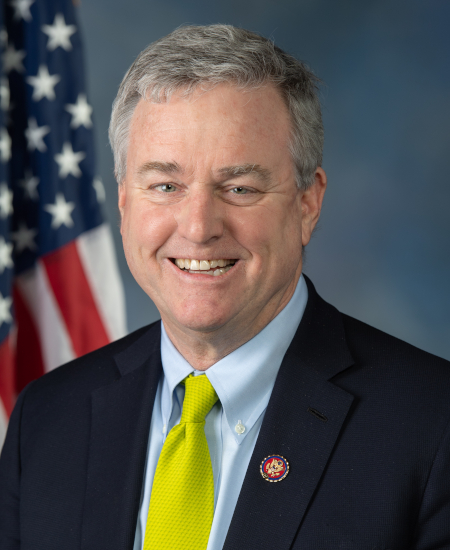
Rep. David J. Trone
Sponsored bills
Restoring Hope for Mental Health and Well-Being Act of 2022 This bill reauthorizes through FY2027, expands, and modifies programs, grants, and activities that focus on mental and behavioral health. Specifically, the bill reauthorizes and modifies the Comprehensive Community Mental Health Services for Children with Serious Emotional Disturbances Program, the Community Mental Health Services Block Grant, the Substance Abuse Prevention and Treatment Block Grant, the Pediatric Mental Health Care Access Grant, the National Suicide Prevention Lifeline program, grants related to suicide prevention, and grants to support the behavioral health workforce. Additionally, the bill expands access to opioid and other substance use disorder prevention, treatment, and recovery support services. For example, the bill (1) eliminates a provision that generally requires individuals to be addicted to opioids for at least a year before being admitted to an opioid treatment program, and (2) promotes access to high-quality recovery housing. Other matters addressed by the bill include coordination of federal efforts related to behavioral health; maternal mental health and substance use disorders; prevention and treatment of mental and behavioral health issues for veterans, members of the Armed Forces, first responders, tribal populations, and other specified groups; best practices for a crisis response continuum of care; eating disorders; school-based mental health services; coverage of mental and behavioral health care through Medicaid and the Children's Health Insurance Program, including for juveniles in public institutions; oversight of pharmacy benefit managers; compliance with federal mental health parity requirements, including by self-funded, nonfederal insurance plans; and integration of behavioral health in primary care settings.
Advanced Research Project s Agency-Health Act or the ARPA-H Act This bill establishes within the Department of Health and Human Services (HHS) the Advanced Research Projects Agency-Health to accelerate health and medical innovation by investing in high-risk, high-reward research. The bill also establishes a committee to advise on agency activities. HHS must transfer all authorities, functions, funds, and personnel from a similar entity within the National Institutes of Health to a new, independent agency. Additionally, the President must appoint a director to lead the agency. The director may submit testimony and recommendations concerning the agency to Congress without review or approval by other federal officers or agencies. The director must appoint personnel to administer the agency's research programs, including by selecting projects to support and making recommendations about terminating or continuing projects. The agency may use grants, prize competitions, and a variety of other mechanisms to support the research projects. The agency's budget is separate from that of HHS. The agency must coordinate with the Food and Drug Administration and the Centers for Medicare & Medicaid Services to expedite development and coverage of high-need cures. Additionally, the agency may partner with other public and private entities (e.g., institutions of higher education and patient advocacy organizations). The bill also requires the agency to develop and periodically update a strategic plan and annually report on its activities. Furthermore, (1) the National Academies of Sciences, Engineering, and Medicine must evaluate the agency's performance; and (2) the Government Accountability Office must review the research portfolio of HHS and its components, including the new agency.
Save America’s Forgotten Equines Act of 2021 or the SAFE Act of 2021 This bill prohibits the transporting, receiving, possessing, purchasing, selling, or donation by a person of an equine (e.g., horse) that the person has reason to believe will be slaughtered for human consumption.
Reproductive Health Information for Veterans Act This bill requires the Department of Veterans Affairs to provide abortion counseling to a veteran who has an unwanted pregnancy.
This concurrent resolution permits the Greater Washington Soap Box Derby Association to sponsor soap box derby races on the Capitol grounds on June 18, 2022.
This resolution condemns human rights violations and violations of international religious freedom in India, including those targeting Muslims, Christians, Sikhs, Dalits, Adivasis, and other religious and cultural minorities. The resolution also calls on the Department of State to designate India as a country of particular concern under the International Religious Freedom Act of 1998 and the Frank R. Wolf International Religious Freedom Act of 2016.
This resolution celebrates the 50th anniversary of the Federal Pell Grant program and expresses support for the designation of National Federal Pell Grant Day.
HBCU Research, Innovation, Security, and Excellence Act This bill directs the Department of Defense (DOD) to establish a pilot program to increase capacity for historically Black colleges and universities (HBCUs) that are designated as high research activity status to achieve and maintain very high research activity status. High research activity status (known as R2 status) and very high research activity status (known as R1 status) are classifications by the Carnegie Classification of Institutions of Higher Education. DOD must award grants to support research activities in the areas of science, technology, engineering, or mathematics (STEM) and critical technologies. DOD may expand the program to other HBCUs beyond those that are classified as high research activity status if DOD determines that the program can support such an expansion. DOD must annually establish a list of research areas for STEM and critical technologies for which grant applicants may seek funding.
Fair Warning Act of 2022 This bill bars an employer from ordering a site closing or mass layoff until 90 calendar days after the employer has served written notice of such an order to (1) each representative of the affected employees as of the time of the notice or each affected employee, (2) the Department of Labor and the governor of the state where the site closing or mass layoff is to occur, and (3) the state or entity designated by the state to carry out rapid response activities.