American Family Act of 2021 This bill modifies the child tax credit to (1) make the credit fully refundable, (2) increase the amount of the credit and allow an additional credit for children who are under six years of age, (3) require the amount of the credit to be adjusted annually for inflation, and (4) require the Department of the Treasury to establish a program for making advance payments of the credit on a monthly basis.
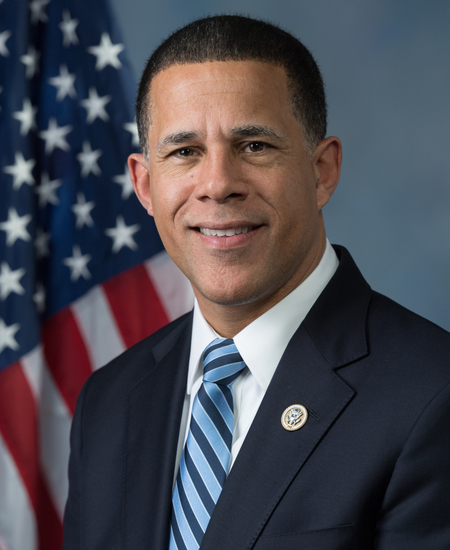
Rep. Anthony G. Brown
Sponsored bills
This resolution expresses the sense of the House of Representatives that the U.S. Postal Service should continue door delivery for all customers.
This resolution (1) encourages all individuals in the United States during Black History Month to celebrate U.S. history and the important accomplishments and contributions of African Americans, and (2) expresses appreciation for the contributions of and sacrifices made by the soldiers of the Women's Army Corps assigned to the 6888th Central Postal Directory Battalion during World War II.
Gym Mitigation and Survival Act of 2021 or the GYMS Act of 2021 This bill establishes a grant program to provide economic support to eligible fitness facilities in response to the COVID-19 (i.e., coronavirus disease 2019) pandemic. Specifically, the bill authorizes the Small Business Administration to make initial and supplemental grants to privately owned fitness facilities that primarily provide health or fitness services and that do not offer golf, hunting, sailing, or riding facilities. The total amount of grant funds for a recipient may not exceed $25 million, and the recipient must use these funds for payroll costs, rent or mortgage obligations, and other ordinary and necessary business expenses.
Barriers to Suicide Act of 20 21 This bill requires the Department of Transportation (DOT) to establish a program to facilitate the installation of evidence-based suicide deterrents on bridges, including suicide prevention nets and barriers. DOT may award competitive grants to states and local governments to carry out the program. The Government Accountability Office must conduct a study to identify the types of structures, other than bridges, that attract a high number of individuals attempting suicide-by-jumping and the types of nets or barriers that are effective at reducing such suicides.
Delivering COVID-19 Vaccinations to All Regions and Vulnerable Communities Act of 2021 or the COVID-19 Delivery Act This bill directs the Federal Emergency Management Agency (FEMA), the Department of Health and Human Services (HHS), and the Centers for Disease Control and Prevention (CDC) to support COVID-19 (i.e., coronavirus disease 2019) vaccination programs. At the request of a state or local government, FEMA must coordinate vaccination efforts. Specifically, FEMA must manage vaccine deliveries, set up vaccination centers, design communication systems and software applications, and develop a public education program on vaccine safety and availability. Additionally, HHS must carry out a program to increase vaccination rates to achieve herd immunity. As part of this program, HHS must temporarily collect data on COVID-19 vaccine administrations. Data collected under this program is subject to relevant privacy protections that apply to other health data. HHS must report on its activities on a daily or weekly basis. The CDC must also report on the effectiveness of state and local COVID-19 vaccination programs.

This resolution supports the designation of Career and Technical Education Month to celebrate career and technical education across the United States.
Real Economic Support That Acknowledges Unique Restaurant Assistance Needed To Survive Act of 2021 or the RESTAURANTS Act of 2021 This bill temporarily establishes and provides funding for the Restaurant Revitalization Fund, from which the Department of the Treasury shall make grants to eligible food and beverage purveyors to cover specified costs such as payroll, operational expenses, and paid sick leave. For the grant program's initial period, Treasury must (1) prioritize awarding grants to marginalized and underrepresented communities, and (2) only award grants to eligible food and beverage purveyors with annual revenues of less than $1.5 million in 2019. For tax purposes, grant amounts are excluded from the recipient's gross income. An entity that received a loan under the Paycheck Protection Program established to support small businesses in response to COVID-19 (i.e., coronavirus disease 2019) may not apply for or use a restaurant revitalization grant for the same expenses for which the entity received the paycheck protection loan. Further, a grant applicant may request an additional amount to cover the cost of providing 10 days of paid sick leave to its employees. Treasury must report a list of grant recipients with the amount each recipient received, as well as demographics and other specified information.
Family and Medical Insurance Leave Act or the FAMILY Act This bill entitles every employee to a family and medical leave insurance (FMLI) monthly benefit payment of two-thirds of the employee's regular pay, limited to a maximum of $4,000, for not more than 60 days of qualified caregiving. The bill establishes the Office of Paid Family and Medical Leave within the Social Security Administration to administer the FMLI program. An FMLI benefit payment must be coordinated with any periodic benefits received under a state or local temporary disability insurance or family leave program. The bill imposes a tax on employers, employees, and self-employed individuals to fund FMLI benefits. It also establishes the Federal Family and Medical Leave Insurance Trust Fund to hold tax revenues.
Metro Accountability and Investment Act This bill reauthorizes for FY2022-FY2031 authority for the Department of Transportation (DOT) to provide grants to the Washington Metropolitan Area Transit Authority (WMATA) to finance in part the capital and preventive maintenance projects included in its Capital Improvement Program. It conditions the availability of funds, in part, on the WMATA Board of Directors certifying to DOT that it has adopted and will keep certain resolutions in effect for the entire funding period, including (1) establishing an independent budget authority, procurement authority, and hiring authority for its Office of the General Inspector; (2) ensuring its Inspector General (IG) can obtain legal advice from a counsel reporting directly to the IG; (3) requiring the IG to submit recommendations for corrective action to the General Manager and the Board of Directors of WMATA; (4) requiring the IG to publish such recommendations on its website; (5) requiring the WMATA Board of Directors to provide written notification to Congress at least 30 days in advance of the removal of an IG; and (6) prohibiting the WMATA Board of Directors from removing its Inspector General without a 30-day written notification that documents specific reasons for removal, including an abuse of authority.