

TSA Security Threat Assessment Application Modernization Act This bill requires the Transportation Security Administration (TSA) to standardize the enrollment and renewal system for individuals applying for or renewing multiple TSA Security Threat Assessment programs, including the Transportation Worker Identification Credential, Hazardous Materials Endorsement, and TSA PreCheck programs. The standardization shall permit an individual to (1) enroll at a TSA-designated universal enrollment center once and use the application for one of such programs to enroll in two or more of such programs,with specified exceptions for those applying for or renewing enrollment in more than one program at different times; (2) apply successful, valid clearance results from a TSA Security Threat Assessment to satisfy vetting requirements for participation in any related program without additional cost; and (3) undergo a streamlined and expeditious renewal process. Additionally, the TSA must publish on its website information relating to the standardization of the enrollment system.
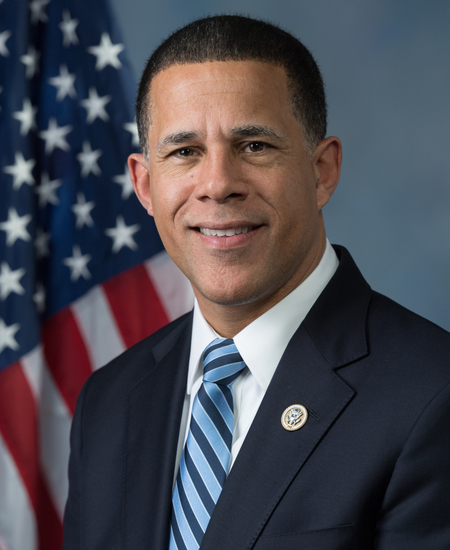
Rep. Anthony G. Brown
Sponsored bills
This resolution expresses support for the goals and ideals of Endometriosis Awareness Month. Endometriosis is a painful condition in which the tissue that normally lines the inside of the uterus grows outside the uterus.
This resolution expresses support for the goals and ideals of Korean American Day and honors the 119th anniversary of the arrival of the first Korean immigrants to the United States.
Federal Adjustment of Income Rates Act or the FAIR Act This bill modifies pay rates for federal employees in 2023. Specifically, the bill increases rates under the statutory pay systems and for prevailing rate employees by 4.1% and increases locality pay by 1%.
PrEP Access and Coverage Act This bill requires private health insurance plans to cover prescription drugs that prevent HIV, including related screenings, diagnostic procedures, administrative fees, and clinical follow-ups, without any cost-sharing obligation for the plan holder. Further, insurance plans must not impose any preauthorization requirement for this coverage. These coverage requirements also apply to public health insurance programs, including Medicare, Medicaid, and the Children's Health Insurance Program. Additionally, the bill prohibits denying, limiting, or qualifying coverage or increasing premiums for disability insurance, long-term care insurance, or life insurance policies based on an individual taking medication for HIV prevention. The bill further requires the Department of Health and Human Services to award grants to states, or directly to eligible local organizations, to provide uninsured individuals and underinsured individuals access to prescription drugs and related services that prevent HIV. The Centers for Disease Control and Prevention also must develop a public awareness campaign that focuses efforts in communities with a high need for HIV prevention treatment.
Cures 2.0 Act This bill addresses pandemic preparedness and public health issues, caregiver and patient engagement, drug development, insurance coverage, and biomedical research. The Department of Health and Human Services (HHS) must undertake research and other activities concerning COVID-19 and develop a strategy for future pandemics and declared emergencies. Additionally, the bill specifies actions to combat antimicrobial resistance. HHS may award grants for caregiver training. The bill also addresses diversity in clinical trials, collecting patient experience data during clinical trials, and coverage for care related to participation in specified clinical trials. The bill modifies the timeframe and requires additional guidance relating to expedited approval of certain breakthrough drugs, devices, or products. It also establishes two intercenter institutes within the Food and Drug Administration (FDA) focused on particular diseases that meet specified criteria. The bill also addresses (1) coverage in Medicare, Medicaid, and the Children's Health Insurance Program for telehealth, genetic and genomic testing, and other services; (2) electronic prescribing standards for Medicare drug benefits; and (3) access to Medicare and Medicaid claims data by certain registries. Furthermore, the bill prohibits the use of geographic tracking or biometrics in Medicaid electronic visit verification systems. The bill establishes the Advanced Research Projects Agency for Health (ARPA-H) within the National Institutes of Health to accelerate biomedical research and innovation through grants, contracts, cash prizes, and other means. The FDA may work with ARPA-H to expedite the development of medical products through specified activities.
Accelerating Access to Critical Therapies for ALS Act This bill establishes grant programs to address neurodegenerative diseases, such as amyotrophic lateral sclerosis (also known as ALS or Lou Gehrig's disease), and contains other related provisions. The Department of Health and Human Services (HHS) shall award grants to eligible entities for scientific research utilizing data from expanded access to investigational ALS treatments for individuals who are not otherwise eligible for clinical trials. The Food and Drug Administration (FDA) shall award grants to public and private entities to cover the costs of research and development of drugs that diagnose or treat ALS and other rare neurodegenerative diseases. HHS shall also establish the Public-Private Partnership for Neurodegenerative Diseases between the National Institutes of Health, the FDA, and at least one eligible entity (generally, an institution of higher education or a nonprofit organization). The partnership shall support the development and regulatory review of drugs that address ALS and other rare neurodegenerative diseases. The FDA shall publish on its website a five-year action plan for fostering the development of drugs that improve or extend the lives of people living with rare neurodegenerative diseases. The Government Accountability Office must report to Congress about the grants provided under this bill, including an analysis of the impact of such grants on research and development of treatments for ALS.
Responsible Education Mitigating Options and Technical Extensions Act or the REMOTE Act This act addresses the administration of certain Department of Veterans Affairs (VA) educational assistance benefits. First, the act extends through June 1, 2022, certain adjustments for veterans' education benefits that were put in place due to COVID-19. The act allows the VA to waive the requirement that an educational institution verify the enrollment of a student utilizing VA educational assistance if the VA determines the institution uses a flat rate tuition and fee structure that would make the use of a second verification unnecessary. The act provides an exception from the imposition of specified disciplinary actions (e.g., suspending course and program approval) in situations where an educational institution provides a commission, bonus, or other incentive payment to entities engaged in student recruiting or admission activities related to recruiting foreign students who reside in foreign countries and are ineligible for federal student assistance. Additionally, the act generally exempts from certain requirements and restrictions imposed by the VA or a state approving agency educational institutions (1) located in foreign countries, or (2) that provide information regarding the costs of a program of education using a form or template developed by the Department of Education. The act also exempts educational institutions located in foreign countries from (1) having records and accounts that pertain to an individual who is not receiving VA educational assistance examined by government representatives, and (2) furnishing certain information related to tests that require payment. The act authorizes the VA, in certain circumstances, to provide educational assistance (including a housing stipend) to veterans or eligible persons who are in their last academic period (e.g., semester) of a program of education and are pursuing the program on less than a half-time basis. Specifically, such assistance may be provided if the number of credits the person needs to complete the program of education is less than the number of credits that would constitute enrollment on more than a half-time basis for that last academic period and the person (1) is enrolled in or has completed every course offered by the program of education during that academic period, and (2) enrolls in an additional course that is not required for the program of education to reach enrollment on a more than a half-time basis. The act extends certain loan fee rates through January 14, 2031, under the VA's home loan program. Finally, the act removes the cap on the number of full-time VA employees who provide equal employment opportunity counseling.
Combating International Islamophobia Act This bill establishes within the Department of State the Office to Monitor and Combat Islamophobia and addresses related issues. The office shall monitor and combat acts of Islamophobia and Islamophobic incitement in foreign countries. The bill establishes the position of Special Envoy for Monitoring and Combating Islamophobia, who shall head the office. The bill also requires certain existing annual reports to Congress about human rights and religious freedom in foreign countries to include information about Islamophobia, such as information about (1) acts of physical violence or harassment of Muslim people, (2) instances of propaganda in government and nongovernment media that attempt to justify or promote hatred or incite violence against Muslim people, and (3) actions taken by a country's government to respond to such acts. The office shall coordinate and assist in preparing these portions of the reports. No funds made available pursuant to the bill may be used to promote or endorse a boycott, divestment, and sanctions movement ideology (i.e., economic measures against Israel or Israel-related individuals or organizations) or used to promote or endorse a Muslim ban.
African American History Act This bill authorizes the National Museum of African American History and Culture to carry out educational programs and related activities. Such activities include developing and making available accurate, relevant, and accessible resources to promote the understanding of African American history; and expanding the collection acquisition and collection access processes, including conservation and digitization. The museum may also develop and maintain on its website content designated for educators, students, and families to improve their awareness and understanding of African American history.