

Maddy summaryHR 1083, the Caring for Survivors Act of 2023, increases financial support for surviving spouses of veterans. It amends Title 38 to raise dependency and indemnity compensation from a fixed $1,154 to 55% of the monthly compensation rate under section 1114(j), effective six months after enactment. The bill also modifies eligibility for survivors of veterans who died before 1993, ensuring they receive the greater of their current benefit or the new calculation. Additionally, it reduces the required continuous service rating period for survivors from 10 years to five years when a veteran was totally disabled at death. These changes directly affect surviving spouses, particularly those with veterans who died prior to 1993.
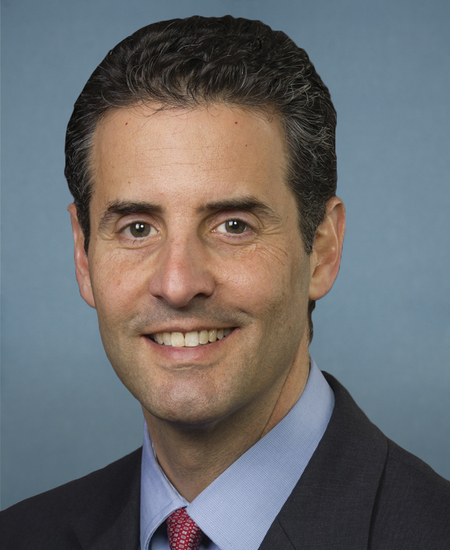
Rep. John P. Sarbanes
Sponsored bills
Baltimore Bridge Response Invests and Delivers Global Economic Relief Act or the Baltimore BRIDGE Relief Act This bill allows for full federal funding (i.e., 100% federal cost-share) for emergency relief funds to respond to damage caused by the cargo ship Dali to the Francis Scott Key Bridge, including reconstruction of that bridge and its approaches. The Francis Scott Key Bridge is located in Baltimore City, Baltimore County, and Anne Arundel County, Maryland. This bill takes effect as if enacted on March 26, 2024.
Maddy summaryThis bill reauthorizes and enhances NOAA's Chesapeake Bay Office to strengthen science-based management of the Bay ecosystem. It establishes new programs for integrated coastal monitoring (collecting data on water quality and habitats), expands school-based education initiatives for students and teachers, and funds habitat restoration projects targeting species like oysters, blue crabs, and submerged vegetation. The bill authorizes $17 million in fiscal year 2024, increasing to $22.6 million by 2027, and requires biennial reports to Congress on progress. These provisions directly support NOAA's work with the Chesapeake Executive Council, state agencies, and educational institutions to advance the Chesapeake Bay Program's goals.
Maddy summaryHR 7808, the EARLY Minds Act, amends the Public Health Service Act to require states receiving federal mental health funds to include evidence-based prevention and early intervention strategies for children and adolescents in their state plans. It allows states to use up to 5% of their annual mental health allotment to support these programs, which aim to prevent, delay, or reduce the severity of mental health issues before they become serious. States must report biennially to Congress by 2025 on the programs they implement, including demographics served, outcomes like reduced care access delays, and how programs lessen the onset of serious mental illness. The bill directly affects states administering federal mental health funds and targets youth populations aged 0-18.
This resolution congratulates the people of Greece as they celebrate the 203rd anniversary of the War of Greek Independence. The resolution also expresses support for the principles of democracy, human rights, and the rule of law to which the people of the United States and Greece are committed.
Maddy summaryHR 7787, the Federal Labor-Management Partnership Act of 2024, establishes a Federal Labor-Management Partnership Council to improve collaboration between federal agencies and employee representatives. The Council, composed of agency leaders, labor union representatives, and federal management officials, advises the President and supports local labor-management committees across executive branch agencies. The bill requires agencies to create these committees, provide training in dispute resolution techniques, and allow employee representatives pre-decisional input on workplace matters - without requiring bargaining over non-negotiable issues. This applies to all executive branch agencies and covered legislative branch entities like the Capitol Police and GAO, focusing on concrete procedural changes to enhance workplace partnerships.
Maddy summaryHR 7634, the Plastic Pellet Free Waters Act, prohibits plastic pellets and pre-production plastic materials from being discharged into water through wastewater, spills, or runoff from specific facilities. It directly affects plastic polymer production facilities, plastic molding and forming facilities, and any point source (like packaging or transport operations) handling plastic pellets. The bill requires the EPA to issue a final rule within 60 days of enactment banning these discharges and updating all relevant wastewater, stormwater, and performance standards in permits and regulations. This creates a legal requirement for facilities to prevent plastic pellet pollution in waterways, targeting a major source of ocean plastic pollution.
Maddy summaryThis concurrent resolution (HCONRES 97) recognizes the gender wage gap, noting that women working full-time earn 84 cents for every dollar earned by men. It highlights racial disparities (e.g., Latinas earn 57 cents, Black women 69 cents) and the economic impact of the gap, including $965 billion in annual lost wages for women. As a symbolic resolution, it does not create new laws or policies but formally acknowledges the issue and reaffirms Congress’s commitment to addressing wage inequality.
Maddy summaryHRES 1074 is a symbolic House resolution reaffirming congressional support for a two-state solution to the Israel-Palestine conflict. It explicitly states the House supports Israel's right to exist as a Jewish, democratic state and recognizes Palestinians' right to sovereignty through a separate state. The resolution identifies a two-state solution as the best path to lasting peace and condemns efforts opposing this approach. As a non-binding resolution, it does not create new law or policy but formally expresses the House's position on this issue. It was introduced by multiple House members on March 12, 2024.
Maddy summaryThis bill extends the funding deadline for the Chesapeake WILD program from 2025 to 2030 under the America's Conservation Enhancement Act. It directly affects conservation projects in the Chesapeake Bay watershed by ensuring continued federal support for habitat restoration and wildlife management efforts. The key change is simply updating the program's expiration year in the law, without altering its scope or funding levels. This procedural update maintains existing conservation work without introducing new requirements.