

Comprehensive Paid Leave for Federal Employees Act This bill provides paid family and medical leave to federal employees. Currently, federal employees are entitled to 12 weeks of administrative leave for one or more of the following reasons: (1) the birth of a child, (2) the adoption or foster care of a child, (3) the care of an immediate family member with a serious health condition, (4) inability to work due to a serious health condition, and (5) exigencies relating to an immediate family member's active duty service in the Armed Forces. However, of these reasons, employees are entitled to paid administrative leave only in connection with the birth, adoption, or foster care of a child (i.e., parental leave). The bill provides 12 weeks of paid administrative leave for any of these reasons, and specifies that this leave is in addition to any annual or sick leave to which employees are entitled.
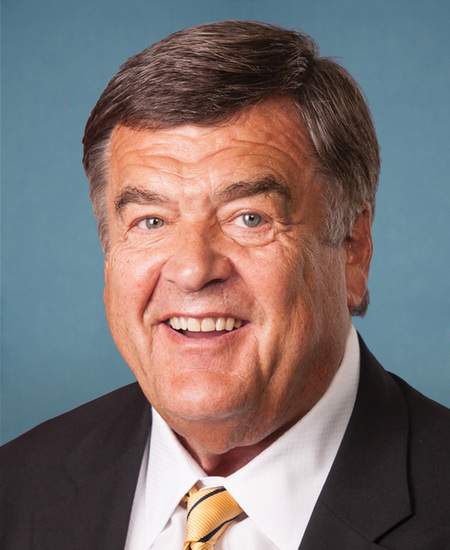
Rep. C. A. Dutch Ruppersberger
Sponsored bills
Social Determinants Accelerator Act of 2021 This bill establishes the Social Determinants Accelerator Interagency Council to increase coordination among health and social service programs and provide technical assistance to increase the impact of such programs. The council must also assist the Centers for Medicare & Medicaid Services to award up to 25 grants to state, local, or tribal health or human services agencies for social determinants accelerator plans. These plans must address at least one health and one social outcome for a specified target population.
Veterans Burn Pits Exposure Recognition Act of 2021 This bill requires the Department of Veterans Affairs (VA) to concede, for the purposes of health care benefits and wartime disability compensation, that a veteran was exposed to certain toxic substances, chemicals, and hazards from burn pits if such veteran served on active duty in a covered location during a specified time frame (unless there is affirmative evidence to establish that the veteran was not exposed during such service). A burn pit is an area used for burning solid waste in open air without equipment. Specifically, the bill covers the following locations and corresponding time periods: Iraq between August 2, 1990, and February 28, 1991, as well as from March 19, 2003, until burn pits are no longer used in this location; Somalia and Southwest Asia (including Kuwait, Saudi Arabia, Oman, and Qatar) from August 2, 1990, until burn pits are no longer used in these locations; and Afghanistan, Syria, Jordan, Egypt, Lebanon, Yemen, Uzbekistan, the Philippines, and Djibouti from September 11, 2001, until burn pits are no longer used in these locations. Under the bill, if an exposed veteran submits insufficient evidence to establish a service-connection for purposes of disability compensation, the VA shall provide a medical examination and request a medical opinion regarding a causal link between the disability and a toxin, chemical, or hazard.
This resolution expresses support for the designation of Journeyman Lineworkers Recognition Day. (A journeyman lineworker is a person who builds and maintains electrical power systems.)
Preserving Rules Ordered for The Entities Covered Through 340B Act of 2021 or the PROTECT 340B Act of 2021 This bill prohibits pharmacy benefit managers (PBMs) and health insurance plans from discriminating against health providers participating in the 340B drug pricing program, including pharmacies contracted with such providers to dispense 340B drugs. The 340B program allows certain providers to receive covered outpatient drugs at reduced prices from manufacturers. Specifically, PBMs and insurance plans may not reimburse 340B participants at a lower rate than other entities not participating in the program; impose differing terms (such as fees, charge-backs, or audits) on 340B participants; interfere with an individual's choice to receive drugs from a 340B participant; require 340B participants to identify which drugs fall within the program; or refuse to contract with a 340B participant on the basis that they utilize the program. Violations of this bill are subject to a civil penalty of not more than $5,000 per violation per day. These prohibitions also apply to prescription drug (Part D) sponsors under Medicare. The bill also provides for a process to prevent duplicate 340B drug discounts to states under Medicaid.
Global Health Security Act of 2021 This bill directs the United States to implement a strategy to strengthen global health security, including by requiring the President to create the Global Health Security Agenda Interagency Review Council to implement the Global Health Security Agenda. The agenda is an initiative launched by nearly 30 nations to address global infectious disease threats. The council's responsibilities include (1) providing policy recommendations on agenda-related goals, objectives, implementation, and other international efforts to strengthen pandemic preparedness and response; (2) helping federal agencies with implementation; and (3) reviewing the progress and challenges in achieving U.S. commitments, including assistance to help other countries meet agenda targets. The bill also directs the federal agencies involved with the agenda to prioritize its implementation and to take certain steps to achieve that goal. The President shall coordinate a strategy for responding to global health security emergencies and submit a report on the implementation of this strategy. Additionally, the Department of State should seek to enter into negotiations with donors, relevant United Nations agencies, and other multilateral stakeholders to establish a Fund for Global Health Security and Pandemic Preparedness that (1) closes gaps in global health security and pandemic preparedness; and (2) builds capacity in eligible partner countries related to global health security, infectious disease control, and pandemic preparedness. The fund should provide grants, technical assistance, and innovative funding mechanisms to achieve its purposes.
Safe Schools Improvement Act of 2021 This bill requires states to direct their local educational agencies (LEAs) to establish policies that prevent and prohibit bullying and harassment of elementary and secondary school students. In particular, these policies must prohibit bullying and harassment based on race, color, national origin, sex, sexual orientation, gender identity, disability, or religion. Further, LEAs must provide (1) students, parents, and educational professionals with annual notice of the conduct prohibited in their disciplinary policies; (2) students and parents with grievance procedures that target such conduct; and (3) the public with annual data on the incidence and frequency of that conduct at the school and LEA level. The Department of Education must conduct and report on an independent biennial evaluation of programs and policies to combat bullying and harassment in elementary and secondary schools. The National Center for Education Statistics must collect state data to determine the incidence and frequency of the conduct prohibited by LEA disciplinary policies.
Medicare Dental, Vision, and Hearing Benefit Act of 2021 This bill provides for Medicare coverage of dental, vision, and hearing care. Coverage includes (1) routine dental cleanings and exams, basic and major dental services, emergency dental care, and dentures; (2) routine eye exams, eyeglasses, and contact lenses; and (3) routine hearing exams, hearing aids, and exams for hearing aids. With respect to such care, the bill establishes special payment rules, limitations, and coinsurance requirements.
Supply Chain Vulnerability Assessment Act of 2021 This bill requires the Office of the Director of National Intelligence and the Central Intelligence Agency to jointly report to Congress on vulnerabilities in supply chains that are critical to U.S. national security, economic security, or public health. The report shall also contain recommendations for addressing those vulnerabilities.
Federal Retirement Fairness Act This bill modifies the federal civilian service that is creditable service under the Federal Employees Retirement System (FERS). Specifically, it expands the nondeduction service that may be creditable under FERS. Nondeduction service is federal service where an employee's pay is not subject to retirement deductions (e.g., service under a temporary appointment). Currently, nondeduction service performed before January 1, 1989, is creditable under FERS so long as a deposit is made into the retirement fund to cover the period of nondeduction service. This bill allows nondeduction service performed on or after January 1, 1989, to be creditable under FERS so long as a deposit is made into the retirement fund.