9/11 Responder and Survivor Health Funding Correction Act This bill increases funding for and otherwise modifies a federal program that provides medical monitoring and treatment to responders and survivors who suffer from health conditions related to the September 11, 2001, attacks on the World Trade Center. Among the changes, the bill allows certain health care providers other than physicians to determine whether an individual's health condition is related to the attacks, and it establishes a research program to study the impacts of the attacks on health and educational outcomes of individuals who were 21 years of age or younger when the attacks occurred.
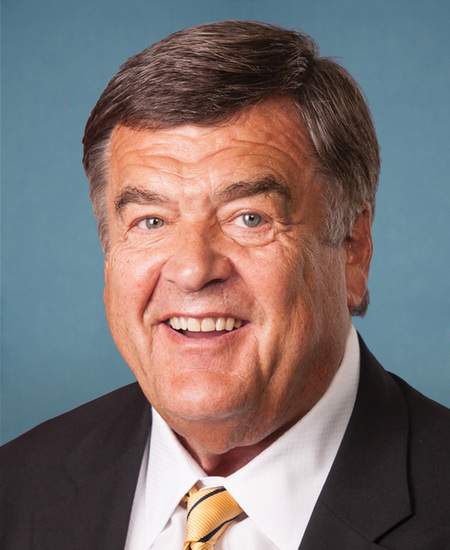
Rep. C. A. Dutch Ruppersberger
Sponsored bills
This resolution recognizes the 75th anniversary of the Fulbright Program, which promotes international goodwill through the exchange of students in the fields of education, culture, and science.
This concurrent resolution recognizes the disparity in wages paid to Black women and its impact on women, families, and the nation, and reaffirms Congress' support for ensuring equal pay and closing the gender wage gap.
Equal Pay for Equal Work Act This bill establishes the National Equal Pay Enforcement Task Force to improve enforcement of equal pay laws.
Medical Device Nonvisual Accessibility Act of 2021 This bill requires certain medical devices with a digital interface to meet nonvisual accessibility standards established by the Food and Drug Administration (FDA). Specifically, the FDA must establish regulations to require a Class II or Class III medical device with a digital interface to provide a blind or low-vision user access to the same services and information, and generally the same ease of use, as provided to a user who is not low-vision or blind. (The FDA classifies medical devices in three classes. Class I devices are low-risk, Class II devices are moderate-risk, and Class III devices are high-risk.) A Class II or Class III medical device that does not meet the nonvisual accessibility standards established under this bill may not be sold.
National Foundation on Fitness, Sports, & Nutrition Act or the NFFSN Act This bill permits the National Foundation on Fitness, Sports, and Nutrition to receive federal funds upon meeting grant eligibility requirements and revises procedures for the appointment of board members. The board shall consist of at least nine members and may amend the bylaws of the foundation to increase the number of members.
Saving America's Pollinators Act of 2021 This bill addresses the use of certain pesticides and the health and status of native bees and other pollinators. First, the bill requires the Environmental Protection Agency (EPA) to establish a Pollinator Protection Board to develop an independent review process for pesticides that pose a threat to pollinators and their habitats. All active ingredients and pesticide products that contain one or more specified neonicotinoid pesticides must be deemed to generally cause unreasonable adverse effects to the environment. Under the bill, the registration of all uses of neonicotinoid pesticides must be immediately and permanently canceled. The EPA must revoke any tolerance or exemption that allows the presence of a neonicotinoid pesticide, or any pesticide chemical residue that results from neonicotinoid pesticide use, in or on food. The continued sale or use of existing stocks of neonicotinoid pesticides is prohibited, and the EPA may not register any such pesticides under the Federal Insecticide, Fungicide and Rodenticide Act. The bill requires the Department of the Interior, the EPA, and the Department of Agriculture to coordinate monitoring activities and report on the health and population status of native bees and other pollinators. Finally, a state or federal agency may be granted an exemption to use neonicotinoid pesticides if the board votes that use of the pesticide is warranted (1) in an emergency situation to avert significant risk to threatened or endangered species, (2) to quarantine invasive species, or (3) to protect public health.
Closing the Meal Gap Act of 202 1 This bill revises the requirements for calculating Supplemental Nutrition Assistance Program (SNAP) benefits. The bill increases the minimum SNAP benefit and requires benefits to be calculated using the value of a low-cost food plan. The Department of Agriculture (USDA) must determine the requirements for the low-cost food plan, which is the diet required to feed a family of four, consisting of a man and a woman 19-50 years of age, a child 6-8 years of age, and a child 9-11 years of age. USDA must (1) reevaluate and publish the market baskets of the plan by January 1, 2027, and every five years thereafter, based on current food prices, food composition data, consumption patterns, and dietary guidance; and (2) make adjustments to the plan to account for household size, changes in the cost of the diet, and the costs of food in specified areas. The bill modifies the requirements for calculating household income to determine SNAP eligibility by (1) authorizing a standard medical expense deduction for households containing an elderly or disabled member, and (2) eliminating the cap on the excess shelter expense deduction. The bill eliminates certain work requirements for SNAP. The requirements apply to able-bodied adults who are ages 18-49 and have no dependent children. The bill allows Puerto Rico, American Samoa, and the Northern Mariana Islands to participate in SNAP. Currently, the three territories receive block grants instead of participating in SNAP.
Averting Loss of Life and Injury by Expediting SIVs Act of 2021 or the Allies Act of 2021 This bill increases the number of special immigrant visas available to qualified Afghan nationals who worked for the U.S. government or the North Atlantic Treaty Organization (NATO) missions in Afghanistan. The bill also relaxes certain qualifications for such visas. Specifically, this bill makes available an additional 8,000 visas for principal aliens under this special visa program, to be available until all such visas have been issued. (The numerical limitations in this program apply only to the principal alien who applies for the visa, not to any accompanying spouse or child.) Under this bill, an alien may qualify based on a credible basis for concern about the possibility of an ongoing serious threat in Afghanistan due to their work with the U.S. government or a NATO mission, where currently the alien must have experienced such a threat. The bill also eliminates a requirement for each applicant to submit a credible sworn statement describing that threat. Furthermore, for an applicant qualifying for a visa by performing duties for U.S. military personnel stationed with a NATO mission, this bill eliminates a requirement that the duties performed qualify as sensitive and trusted duties. If an alien submits a visa application that included an accompanying spouse or child but the alien passes away before the application is granted, the surviving spouse or child shall remain eligible to receive a visa under that application. Currently, a surviving spouse or child retains eligibility only if the application was approved before the alien passed away.
State and Local Cybersecurity Improvement Act This bill requires the Cybersecurity and Infrastructure Security Agency (CISA) to establish the State and Local Cybersecurity Grant Program to address cybersecurity risks and threats to the information systems of state, local, or tribal organizations. Eligible grant applicants (i.e., states and certain Indian tribes) must submit a cybersecurity plan—to be approved by CISA as a condition of disbursement—that describes how the applicant will use the funds to address cybersecurity risks and threats to their information systems. Grant funds must be used to implement, develop, or revise the applicant's cybersecurity plan or to assist with activities that address imminent cybersecurity risks or threats. CISA must establish a State and Local Cybersecurity Resilience Committee to provide state, local, and tribal stakeholder expertise, situational awareness, and recommendations to CISA on how to address cybersecurity risks and threats. CISA must develop and maintain a resource guide for state, local, tribal, and territorial government officials to assist with identifying, preparing for, detecting, protecting against, responding to, and recovering from cybersecurity risks, threats, and incidents. In addition, CISA must develop and make publicly available a Homeland Security Strategy to Improve the Cybersecurity of State, Local, Tribal, and Territorial Governments. Finally, CISA must assess the feasibility of implementing a short-term rotational program to detail approved state, local, tribal, and territorial government employees to CISA in cyber workforce positions.