

Partner with Korea Act This bill creates an E-4 treaty trader visa category for up to 15,000 nationals of South Korea each fiscal year who are coming to the United States solely to perform specialty occupation services, subject to various requirements. The 15,000 limit shall only apply to principal recipients of such visas and not their accompanying spouses or children. (A specialty occupation is one that requires the theoretical and practical application of highly specialized knowledge and a bachelor's degree or higher.)
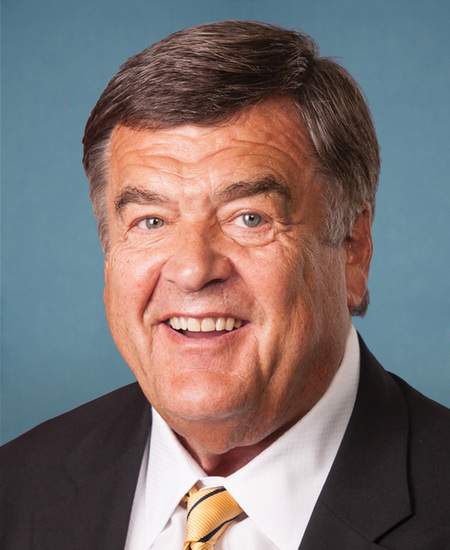
Rep. C. A. Dutch Ruppersberger
Sponsored bills
Maddy summaryHR 2845, the Enhancing K-12 Cybersecurity Act, creates a centralized School Cybersecurity Information Exchange website managed by CISA to provide K-12 schools, school districts, and state education agencies with tailored cybersecurity resources, best practices, and funding opportunities. It establishes a voluntary registry for schools to report cyber incidents (like ransomware attacks) and requires CISA to publish annual, anonymized reports on incident trends. The bill also funds a K-12 Cybersecurity Technology Improvement Program to deploy protective tools, offer training, and prevent threats, with $10 million authorized annually for 2024-2025. This directly supports schools in strengthening digital security for students and staff, focusing on practical, accessible solutions rather than legislative changes.
Maddy summaryHR 1788, the "Goldie’s Act," strengthens USDA enforcement of the Animal Welfare Act. It requires annual inspections of all regulated animal businesses (like dealers, research facilities, and exhibitors) and mandates immediate, humane confiscation of animals suffering due to violations, while prohibiting owners from destroying animals during this process. The bill increases civil penalties to $10,000 per violation, requires hearing panels including veterinarians, and mandates that penalties consider business size and violation severity. It also requires USDA to share violation records with local animal control within 24 hours.
Maddy summaryThe Water Affordability, Transparency, Equity, and Reliability Act of 2023 establishes a new trust fund funded by increasing the corporate tax rate from 21% to 24.5% to support water infrastructure and affordability programs. It allocates funds to clean water programs (42%), safe drinking water funding (42.5%), household water wells (1%), colonias assistance (0.5%), Indian health services (3%), and water operator job training (0.5%). The bill requires the EPA to conduct a study and submit a report on water affordability, discrimination in water services, public participation in regionalization, and data collection related to service disconnections. It includes specific provisions for colonias, household water wells, and job training programs for water system operators to improve water access and equity.
This resolution condemns the deliberate gas attacks on schoolgirls in Iran (up to 7,000 schoolgirls were poisoned in at least 290 attacks, according to human rights groups) and Iran's suppression of individuals participating in demonstrations. The resolution also urges the United States to initiate a formal process for an independent investigation and to work with the United Nations in investigating the gas attacks on schoolgirls in Iran.
Maddy summaryHR 2788, the AIM Act, permanently extends a tax provision allowing businesses to deduct certain depreciation, amortization, or depletion costs when calculating their business interest expense limits. This change directly affects businesses that calculate business interest deductions under the Internal Revenue Code. The bill removes the previous expiration date (for taxable years beginning before January 1, 2022), making the deduction rule permanent for all future taxable years. It does not alter the underlying tax rules but ensures the specific deduction method remains available indefinitely.
Maddy summaryThe No Child Left Inside Act of 2023 provides federal funding to states for implementing environmental literacy plans in K-12 education. It authorizes grants for states to support partnerships between schools and environmental organizations to create outdoor learning opportunities, integrate environmental education into curricula, and provide teacher professional development. The bill prioritizes funding for high-need schools and requires states to develop plans that include field experiences, assessment of student environmental literacy, and strategies to improve academic achievement. A separate pilot program funds residential outdoor school programs that connect classroom learning to real-world environmental experiences. States receiving funds must report annually on program implementation and outcomes to ensure accountability.
American Innovation and R&D Competitiveness Act of 2023 This bill eliminates the five-year amortization requirement for research and experimental expenditures, thus allowing continued expensing of such expenditures in the taxable years in which they are incurred.
Maddy summaryHR 2725, the "Do No Harm Act," amends the Religious Freedom Restoration Act (RFRA) to clarify that RFRA does not apply when federal laws protect against discrimination or promote equal opportunity. It specifically exempts protections under the Civil Rights Act, Americans with Disabilities Act, workplace benefits like leave, child labor safeguards, and healthcare access from RFRA challenges. The bill also clarifies that RFRA does not block private lawsuits between individuals, applying only to cases involving government entities. This amendment ensures that existing federal civil rights and workplace protections remain enforceable under RFRA.
Maddy summaryThe Latonya Reeves Freedom Act of 2023 strengthens the Americans with Disabilities Act's requirement that individuals with disabilities receive long-term services and supports in community settings rather than institutions. It defines "community-based" services to include specific housing options where individuals with disabilities can live independently with maximum control over their lives, including access to integrated housing, employment, and community participation. The bill requires states to develop transition plans to move people from institutional settings to community-based services within 12 years, with measurable annual targets for reducing institutionalization. It establishes enforcement mechanisms through the Department of Justice and Department of Health and Human Services to ensure compliance with these requirements.