

Maddy summaryThe Puppy Protection Act of 2023 sets new standards for businesses that sell dogs (dealers), directly affecting pet stores and breeders operating under the Animal Welfare Act. It requires specific housing with space allowances based on dog size (e.g., 12-30 square feet per dog), temperature control (45-85°F), clean food twice daily, and daily exercise or socialization with humans/dogs for at least 30 minutes. The bill also mandates annual veterinary exams including dental care, strict breeding limits (e.g., age restrictions, maximum 2 litters in 18 months), and efforts to place retired breeding dogs in homes instead of selling them to other breeders. Regulations must be finalized within 18 months of enactment.
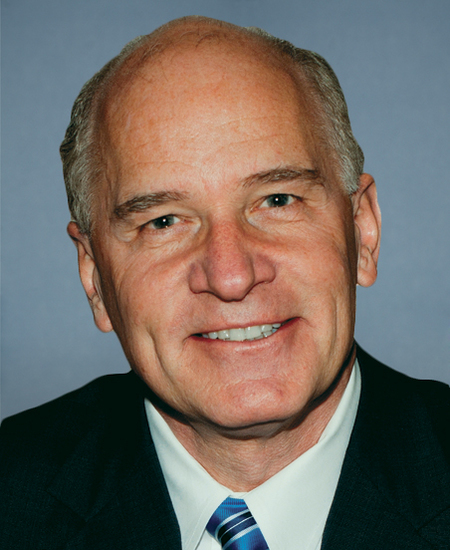
Rep. William R. Keating
Sponsored bills
This resolution expresses support for the International Criminal Court arrest warrant issued for Vladimir Putin, President of Russia, and Maria Lvova-Belova, Russian Commissioner for Children's Rights, for war crimes related to unlawful deportation of children from occupied areas of Ukraine. Expressing outrage at the actions of Russia in removing children from their homes in occupied Ukraine and forcibly integrating them into Russian society, the resolution calls for Russia to immediately return all deported Ukrainian children back to their homes in Ukraine.
Maddy summaryHR 2665 delays Medicaid payment reductions for safety net hospitals by two years, changing the effective date from 2024 to 2026 under Section 1923(f)(7)(A) of the Social Security Act. This bill directly affects hospitals that serve high numbers of low-income and uninsured patients, providing them with additional time before facing reduced federal Medicaid payments. The key mechanism is a technical amendment to existing law, postponing an already scheduled payment adjustment without altering funding levels or eligibility. As a procedural bill, it does not create new programs or change hospital requirements.
Maddy summaryThis bill allows the Department of Veterans Affairs (VA) to use existing funds more flexibly to assist homeless veterans and veterans in HUD housing programs. It authorizes the VA to provide immediate needs like food, shelter, transportation for appointments, and communication devices (e.g., phones, tablets) to support veterans' stability and health. The law expands how VA funds can be applied beyond traditional housing assistance, focusing on urgent, practical support. It directly affects homeless veterans and those in HUD's housing assistance program by enabling faster, more adaptable aid. The bill amends existing VA law to improve responsiveness to veterans' immediate survival and health needs.
Maddy summaryHR 2413, the Dental Care for Veterans Act, reclassifies dental care as standard medical services under the VA's existing benefits structure, eliminating prior restrictions that treated dental care separately. It modifies how dental appliances are procured and establishes a phased eligibility timeline: veterans already eligible for dental benefits gain immediate access, while others qualify over 1-4 years based on their current benefit status. The bill affects all veterans currently covered under VA dental programs, changing their access to care without creating new funding. Key provisions streamline dental service delivery under Title 38, aligning it with other medical benefits.
Maddy summaryThe Coastal Seaweed Farm Act of 2023 requires the Secretaries of Agriculture and Commerce to conduct a two-year study on coastal seaweed farming's environmental, economic, and community impacts, including best practices for sustainability, ecosystem protection, and consultation with Indigenous groups. It establishes an Indigenous Seaweed Farming Fund to provide grants for seaweed farming projects by federally recognized Tribes, Native entities, and Indigenous communities, with restrictions to prevent harm to commercial fisheries. The bill also mandates regulations to ensure seaweed farming operations maximize marine ecosystem benefits while minimizing adverse effects, and allocates $3 million annually for the study and regulations, plus $20 million annually for the grant program. This legislation directly affects Tribal communities, coastal ecosystems, and future seaweed farming operations through concrete policy requirements.
Tax Filer Voter Registration Act or the Filer Voter Act This bill treats certain tax return preparers as voter registration agencies. Specifically, the bill requires tax return preparers who prepare at least 100 individual tax returns in a taxable year to provide voter registration application forms to their customers. The form must be made available by (1) displaying copies of the form in the preparer's office for customers who receive in-person services, and (2) providing a hyperlink to the form for customers who receive online services. The bill also outlines the responsibilities of the Department of the Treasury to enable certified volunteer tax preparers to meet the requirements of the bill.
Maddy summaryHR 2630, the Safe Step Act, requires group health plans and health insurance issuers to establish a clear, transparent process for patients or their doctors to request exceptions to medication step therapy protocols. These protocols typically force patients to try cheaper drugs first before covering more expensive alternatives. The bill mandates that plans must approve exceptions when prior treatments failed, delay would cause serious harm, a treatment is unsafe, or a patient is stable on a previously approved drug, with strict 72-hour (or 24-hour in emergencies) decision timelines. It also requires plans to publish the exception process online and limit documentation requests to only necessary medical information. This law directly affects health insurers, employers offering health plans, and patients using step therapy for prescription drugs.
Maddy summaryHJRES 54 proposes a constitutional amendment stating that only natural persons (human beings) have rights protected by the U.S. Constitution, explicitly denying constitutional rights to corporations, limited liability companies, and other artificial entities. It would require governments to regulate or restrict corporate political contributions and spending to ensure equal access to elections, mandate public disclosure of all political spending, and clarify that campaign finance rules do not violate the First Amendment. This amendment directly affects corporations and other artificial entities by removing their constitutional standing in legal challenges and subjecting their political activities to stricter government oversight. If passed, it would fundamentally change how corporations interact with election laws and constitutional protections, though it preserves press freedom under Section 3. The bill is a proposed amendment requiring ratification by 3/4 of state legislatures to become part of the Constitution.
Maddy summaryThis bill allows Medicaid coverage for incarcerated individuals during the 30 days preceding their release from public institutions. It directly affects people transitioning from prisons or jails back into communities by extending health coverage during this critical period. The key mechanism amends the Social Security Act to remove a Medicaid exclusion for this 30-day window. Additionally, it requires an 18-month report analyzing correctional healthcare standards, current discharge practices, and the potential impact of this coverage extension on post-release health access.