

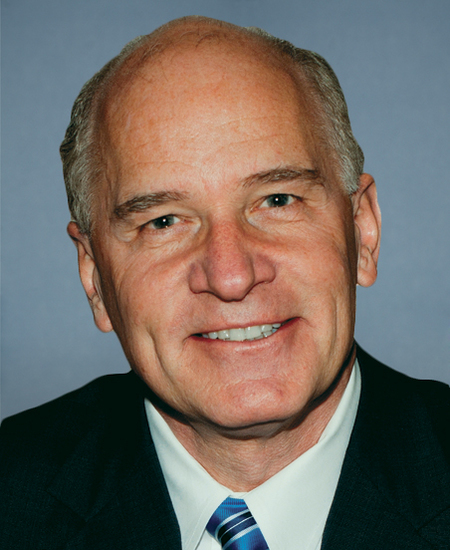
Photo of William R. Keating
D United States House · District 9 · Massachusetts On the 2026 ballot

Rep. William R. Keating

Compare
Total votes
2,837
all sessions
Attendance
97%
83 missed
Lower than 78% of chamber peers
With party
98%
of cast votes
Near the chamber average
Bipartisan score
1%
crosses aisle rarely
Near the chamber average
Sponsored
1,252
bills & resolutions
Near the chamber average
Committees
6
assignments
1,252 bills and resolutions

Sponsored bills

Total
1,252
Primary
77
Co-sponsor
1,175
This page
1,252
matching current filters
Co-sponsor HR 2803
In committee · United States House · Co-sponsor
Armenian Genocide Education Act

Maddy summaryThe Armenian Genocide Education Act (HR 2803) establishes a Library of Congress program to support U.S. schools in teaching about the Armenian Genocide of 1915-1923. The program will develop educational resources, provide teacher training, and maintain an online resource center to help schools incorporate accurate historical information into curricula. It prioritizes schools without existing Armenian Genocide education programs, with $2 million authorized annually for five years. The Librarian of Congress will report yearly on the program’s activities to Congress.

In committee Apr 24, 2023 1 co-sponsor
Co-sponsor HR 2552
In committee · United States House · Co-sponsor
Community Broadband Act of 2023

Maddy summaryThe Community Broadband Act of 2023 removes state-level legal barriers that prevent local governments, cooperatives, or public-private partnerships from building or operating broadband networks. It prohibits states from banning or effectively blocking these entities from providing advanced internet services to residents or businesses. The bill requires public entities to treat all broadband providers fairly under local rules, without favoring their own services or affiliated companies. It specifically defines "public providers" (like cities or counties) and "cooperatively organized providers" (like member-owned co-ops) to clarify who this law protects. The law does not fund new networks but ensures existing state laws cannot block community-led broadband projects.

In committee Apr 21, 2023 1 co-sponsor
Co-sponsor HR 2548
In committee · United States House · Co-sponsor
Public Safety Officer Concussion and Traumatic Brain Injury Health Act of 2023

Maddy summaryThis bill requires the CDC to collect and publicly share information about concussions and brain injuries affecting public safety officers (including police, firefighters, and emergency responders). It directs the CDC to update its website with this information and develop targeted resources for medical professionals, employers, mental health providers, and families. The CDC must also consult with these groups to ensure the information meets their needs and support the creation of model treatment guidelines through grants. The law aims to improve diagnosis, treatment, and prevention strategies for brain injuries in this workforce.

In committee Apr 21, 2023 1 co-sponsor
Co-sponsor HRES 315
In committee · United States House · Co-sponsor
Expressing support for honoring Earth Day, and for other purposes.

This resolution urges (1) the President to issue a proclamation recognizing Earth Day; and (2) governments and people to continue building upon the Paris Agreement and other efforts to ensure that future generations inherit a livable, sustainable, and ecologically rich planet.

In committee Apr 20, 2023 1 co-sponsor
Co-sponsor HR 2763
In committee · United States House · Co-sponsor
PROTECT 911 Act

Providing Resources and Occupational Training for Emotional Crisis and Trauma in 911 Act or the PROTECT 911 Act This bill establishes a grant program, and requires the Department of Health and Human Services (HHS) to develop resources, for addressing mental health conditions among public safety telecommunicators. These include 9-1-1 operators and other public safety personnel who are responsible for responding to requests for emergency assistance. Specifically, HHS must award grants to state, local, and regional emergency communications centers or nonprofits for behavioral health and wellness programs to prevent and mitigate job-related mental health issues among public safety telecommunicators. Additionally, HHS must develop and disseminate (1) best practices for identifying, preventing, and treating post-traumatic stress disorder among public safety telecommunicators; and (2) resources for educating mental health professionals about the workplace culture of, stressors and challenges experienced by, and therapies for treating mental health issues common to public safety telecommunicators.

In committee Apr 20, 2023 1 co-sponsor
Co-sponsor HR 2784
In committee · United States House · Co-sponsor
No Child Left Inside Act of 2023

Maddy summaryThe No Child Left Inside Act of 2023 provides federal funding to states for implementing environmental literacy plans in K-12 education. It authorizes grants for states to support partnerships between schools and environmental organizations to create outdoor learning opportunities, integrate environmental education into curricula, and provide teacher professional development. The bill prioritizes funding for high-need schools and requires states to develop plans that include field experiences, assessment of student environmental literacy, and strategies to improve academic achievement. A separate pilot program funds residential outdoor school programs that connect classroom learning to real-world environmental experiences. States receiving funds must report annually on program implementation and outcomes to ensure accountability.

In committee Apr 20, 2023 1 co-sponsor
Co-sponsor HR 2673
In committee · United States House · Co-sponsor
American Innovation and R&D Competitiveness Act of 2023

American Innovation and R&D Competitiveness Act of 2023 This bill eliminates the five-year amortization requirement for research and experimental expenditures, thus allowing continued expensing of such expenditures in the taxable years in which they are incurred.

In committee Apr 20, 2023 1 co-sponsor
Co-sponsor HRES 269
In committee · United States House · Co-sponsor
Recognizing that it is the duty of the Federal Government to develop and implement a Transgender Bill of Rights to protect and codify the rights of transgender and nonbinary people under the law and ensure their access to medical care, shelter, safety, and economic security.

Maddy summaryHRES 269 is a non-binding resolution passed by the U.S. House of Representatives on March 30, 2023. It recognizes the federal government's duty to develop and implement a Transgender Bill of Rights to protect transgender and nonbinary people. The resolution outlines key provisions, including ensuring access to gender-affirming medical care, ending discrimination in employment and housing, and improving legal recognition of gender identity on government documents. It also calls for addressing systemic barriers in education, safety, and economic security faced by transgender and nonbinary individuals.

In committee Apr 19, 2023 1 co-sponsor
Co-sponsor HR 2725
In committee · United States House · Co-sponsor
Do No Harm Act

Maddy summaryHR 2725, the "Do No Harm Act," amends the Religious Freedom Restoration Act (RFRA) to clarify that RFRA does not apply when federal laws protect against discrimination or promote equal opportunity. It specifically exempts protections under the Civil Rights Act, Americans with Disabilities Act, workplace benefits like leave, child labor safeguards, and healthcare access from RFRA challenges. The bill also clarifies that RFRA does not block private lawsuits between individuals, applying only to cases involving government entities. This amendment ensures that existing federal civil rights and workplace protections remain enforceable under RFRA.

In committee Apr 19, 2023 1 co-sponsor
Co-sponsor HR 2708
In committee · United States House · Co-sponsor
Latonya Reeves Freedom Act of 2023

Maddy summaryThe Latonya Reeves Freedom Act of 2023 strengthens the Americans with Disabilities Act's requirement that individuals with disabilities receive long-term services and supports in community settings rather than institutions. It defines "community-based" services to include specific housing options where individuals with disabilities can live independently with maximum control over their lives, including access to integrated housing, employment, and community participation. The bill requires states to develop transition plans to move people from institutional settings to community-based services within 12 years, with measurable annual targets for reducing institutionalization. It establishes enforcement mechanisms through the Department of Justice and Department of Health and Human Services to ensure compliance with these requirements.

In committee Apr 19, 2023 1 co-sponsor
Showing 691 to 700 of 1,252 bills
Previous 1 … 69 70 71 … 126 Next