

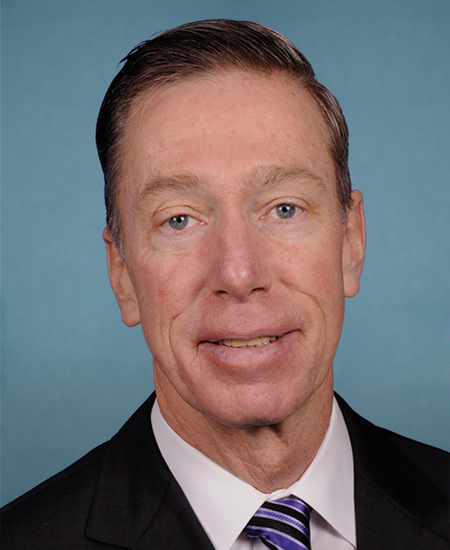
Photo of Stephen F. Lynch
D United States House · District 8 · Massachusetts On the 2026 ballot

Rep. Stephen F. Lynch

Compare
Total votes
2,837
all sessions
Attendance
98%
68 missed
Lower than 81% of chamber peers
With party
97%
of cast votes
Near the chamber average
Bipartisan score
2%
crosses aisle rarely
Near the chamber average
Sponsored
1,646
bills & resolutions
Higher than 84% of chamber peers
Committees
7
assignments
1,646 bills and resolutions

Sponsored bills

Total
1,646
Primary
61
Co-sponsor
1,585
This page
1,646
matching current filters
Co-sponsor HR 6375
In committee · United States House · Co-sponsor
21st Century STEM for Girls and Underrepresented Minorities Act

Maddy summaryThis bill creates federal grants to support STEM education programs for girls and underrepresented minorities in K-12 schools. It directs $250,000 annually per grant to school districts serving high-poverty communities (with at least 40% students eligible for free/reduced lunch) to fund specific activities like after-school STEM programs, teacher training on reducing bias, mentorship, parental engagement, and summer camps. The grants require schools to track student participation and academic progress in STEM through annual evaluations. The program aims to increase opportunities for these students to develop skills and pursue STEM careers, while ensuring funds supplement - rather than replace - existing resources.

In committee Dec 3, 2025 1 co-sponsor
Co-sponsor HRES 856
In committee · United States House · Co-sponsor
Expressing the sense of the House of Representatives that the United States Department of Agriculture should use its contingency funds and interchange authority to finance the supplemental nutrition assistance program.

Maddy summaryHRES 856 is a non-binding resolution expressing the House of Representatives' view that the U.S. Department of Agriculture (USDA) should use its existing contingency funds and interchange authority to fund the Supplemental Nutrition Assistance Program (SNAP) for November 2025. The resolution cites that the USDA holds over $5 billion in contingency funds set aside for emergencies and has legal authority under the Department of Agriculture Organic Act to transfer funds between nutrition programs to maintain SNAP benefits. This would directly support approximately 42 million people relying on SNAP, including 16 million children, 8 million seniors, 4 million people with disabilities, and 1.2 million veterans, preventing disruption during a potential funding gap. The resolution does not create new law but urges the administration to use existing resources to ensure continued food assistance.

In committee Dec 2, 2025 1 co-sponsor
Co-sponsor HR 6358
In committee · United States House · Co-sponsor
Veteran Education Empowerment Act

Maddy summaryHR 6358, the Veteran Education Empowerment Act, creates a federal grant program to help colleges establish or improve dedicated Student Veteran Centers. These centers provide veterans, active-duty service members, and their families with lounge space, benefits counseling, academic support, and mental health services. Institutions must serve significant numbers of veterans and have sustainability plans to qualify for grants, with funding capped at $500,000 per institution over four years. The bill directly affects colleges serving veterans and aims to address challenges like isolation and transition difficulties through centralized campus support.

In committee Dec 2, 2025 1 co-sponsor
Co-sponsor HR 1262
Passed · United States House · Co-sponsor
Mikaela Naylon Give Kids a Chance Act

Give Kids a Chance Act of 2025 This bill expands the Food and Drug Administration’s (FDA’s) authority with respect to research on rare pediatric diseases, including by permitting the FDA to take enforcement action against drug sponsors that fail to satisfy pediatric study requirements and by reauthorizing programs that support pediatric research.  Specifically, the bill modifies requirements relating to molecularly targeted pediatric cancer investigations to permit research on new drugs in combination with active ingredients that have already been approved, provided certain conditions are met; permits the FDA to take enforcement action against drug sponsors that fail to comply with pediatric study requirements, if such sponsors demonstrated a lack of due diligence in satisfying the requirement; renews the FDA’s authority to award priority review vouchers to sponsors of new products intended to treat rare pediatric diseases through September 30, 2029; and reauthorizes through FY2027 certain funding for the National Institutes of Health to support priority pediatric research.  The bill also provides statutory authority for the FDA’s interpretation of the orphan drug exclusivity period. The bill specifies, consistent with FDA regulations, that the seven-year market exclusivity period for drugs for rare diseases or conditions (i.e., orphan drugs) prohibits the approval of the same drug for the same approved use or indication with respect to the disease or condition. (In Catalyst Pharmaceuticals, Inc. v. Becerra , a court rejected the FDA’s interpretation and held that orphan drug exclusivity extends to all uses or indications for the disease or condition.)

Passed Dec 2, 2025 1 co-sponsor
Co-sponsor HR 5652
In committee · United States House · Co-sponsor
Wildfire Recovery Act

Maddy summaryHR 5652, the Wildfire Recovery Act, increases federal reimbursement for wildfire response by setting a minimum 75% federal cost share under Section 420 of the Stafford Act, directly benefiting states, local governments, and Tribal governments that deploy firefighting resources. It requires FEMA to develop rules within three years to determine when the federal share could exceed 75% based on a state's financial impact from wildfires. The bill also updates FEMA policy to allow reimbursement for predeployment of fire assets (like crews or equipment) before a fire occurs. These changes aim to provide more predictable and timely federal support for wildfire recovery efforts.

In committee Dec 1, 2025 1 co-sponsor
Co-sponsor HR 6270
In committee · United States House · Co-sponsor
Modular Housing Production Act

Maddy summaryThis bill requires the Secretary of Housing and Urban Development to review Federal Housing Administration (FHA) construction financing programs for barriers preventing modular home developers from participating. The review will identify issues like payment timing during construction (draw schedules) and recommend changes to simplify access. Within one year, HUD must publish a report with these findings and potential policy adjustments. If changes are recommended, HUD would then propose a new payment schedule for modular home projects through a public comment process. The bill does not immediately change programs but sets a process to address existing obstacles for developers of modular homes.

In committee Nov 21, 2025 1 co-sponsor
Primary HR 6269
In committee · United States House · Lead sponsor
Modular Housing Production Act

Maddy summaryHR 6269, the Modular Housing Production Act, requires the Secretary of Housing and Urban Development to review Federal Housing Administration (FHA) construction financing programs to identify barriers preventing modular home developers from participating. The review will examine issues like payment schedules during construction and administrative processes, with a report due within one year of the bill’s enactment. The bill also authorizes a grant to study a standardized coding system for modular homes to improve design, construction, and financing coordination. This legislation directly affects modular home developers seeking FHA financing, aiming to streamline their access to federal housing programs. It does not change existing laws but sets a process for potential future policy adjustments.

In committee Nov 21, 2025 0 co-sponsors
Co-sponsor HR 6280
In committee · United States House · Co-sponsor
Access to Genetic Counselor Services Act of 2025

Maddy summaryThis bill expands Medicare coverage to include genetic counseling services provided by licensed or certified genetic counselors, effective January 1, 2027. It defines "covered genetic counseling services" as those furnished by qualified counselors under state law or certification, with payments set at 80% of the lesser of the actual charge or 85% of the physician fee schedule. Medicare beneficiaries seeking genetic counseling will gain access to these services through covered providers, while preventing balance billing for these specific services. The bill does not restrict physicians from billing for similar services under existing Medicare rules.

In committee Nov 21, 2025 1 co-sponsor
Co-sponsor HRES 899
In committee · United States House · Co-sponsor
Supporting the goals and principles of Transgender Day of Remembrance by recognizing the epidemic of violence toward transgender people and memorializing the lives lost this year.

Maddy summaryHRES 899 is a symbolic House resolution recognizing the Transgender Day of Remembrance and memorializing transgender people killed by violence in 2024-2025. It directly affects transgender individuals, particularly transgender women of color, by acknowledging the epidemic of violence against them - citing 27 U.S. victims (including names like Rick Alastor Newman and Kyla Jane Walker) and 241 global cases in 2025. The resolution’s key provisions include formally recognizing the violence epidemic, memorializing specific lives lost, and affirming the need for solutions to protect transgender people. It does not create new laws but expresses congressional support for addressing systemic violence and discrimination faced by transgender communities.

In committee Nov 20, 2025 1 co-sponsor
Co-sponsor HR 6181
In committee · United States House · Co-sponsor
John Lewis Every Child Deserves a Family Act

Maddy summaryHR 6181, the John Lewis Every Child Deserves a Family Act, prohibits child welfare agencies receiving federal funds from discriminating against children, youth, or prospective foster/adoptive parents based on religion, sex (including sexual orientation and gender identity), or marital status. It directly affects LGBTQ youth in foster care - overrepresented at 30% of the system - who face higher risks of trauma, group home placements, and suicide attempts compared to non-LGBTQ peers. Key provisions require agencies to collect data on sexual orientation and gender identity, establish a National Resource Center for LGBTQ youth support, provide cultural competency training, and eliminate discriminatory practices. The law aims to improve safety, permanency, and placement stability by expanding access to family-based care and ensuring equitable services for all children in the system.

In committee Nov 20, 2025 1 co-sponsor
Showing 181 to 190 of 1,646 bills
Previous 1 … 18 19 20 … 165 Next