

Maddy summaryHR 8732, the Domestic Workers Bill of Rights Act, would establish new labor protections for domestic workers including nannies, housekeepers, and caregivers who work in private homes. The bill requires written agreements between employers and domestic employees, provides earned sick days, ensures fair scheduling practices, and prohibits unfair wage deductions for cash shortages or communications. It also creates a Domestic Employee Standards Board to recommend workplace standards and establishes a National Domestic Employee Hotline for assistance. The bill specifically targets domestic workers who have historically been excluded from labor protections under the Fair Labor Standards Act and Civil Rights Act, benefiting an estimated 2.2 million domestic workers in the U.S. who are disproportionately women of color and immigrants.
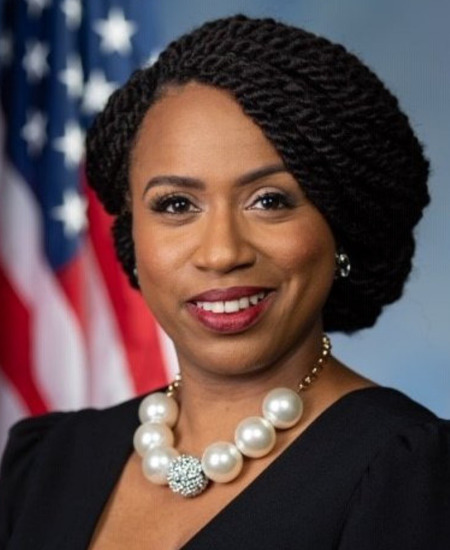
Rep. Ayanna Pressley
Sponsored bills
Maddy summaryHRES 1273 designates a day in May 2024 as "Disability Reproductive Equity Day" to raise awareness about reproductive rights barriers faced by people with disabilities. The resolution highlights historical and ongoing issues like forced sterilization laws, accessibility gaps in healthcare, and higher rates of sexual violence, while referencing existing protections under the Rehabilitation Act, ADA, and Affordable Care Act. It does not create new laws but calls for greater attention to ensuring people with disabilities can exercise reproductive autonomy. This resolution directly affects millions of people with disabilities, particularly women, people of color with disabilities, and those with low incomes, who face systemic barriers in reproductive healthcare.
Maddy summaryThe George Floyd Justice in Policing Act of 2024 establishes a National Police Misconduct Registry to track complaints and disciplinary actions against officers, requiring all federal, state, and local law enforcement agencies to report use-of-force incidents with racial, gender, and age data. It bans chokeholds and carotid holds in police encounters, prohibits no-knock warrants in drug cases, and reforms qualified immunity to make it harder for officers to avoid accountability for misconduct. The bill mandates body cameras for federal officers, requires independent investigations of officer-involved shootings, and creates new data collection systems to monitor racial profiling and use-of-force patterns. It also includes provisions for civilian oversight boards, improved officer training on de-escalation and implicit bias, and restrictions on military equipment transfers to local police departments. This law affects all law enforcement agencies receiving federal funding under programs like Byrne and COPS grants.
Maddy summaryHR 8552, the *Protect Democracy From Criminal Corporations Act*, prohibits corporations convicted of certain felonies involving dishonesty (like conspiracy under 18 U.S.C. §371) or those entering agreements requiring $1 million+ payments to make political contributions, independent expenditures, or electioneering communications. It defines "criminal corporations" as those with such convictions or specific settlement agreements, banning their political spending for 10 years after conviction or agreement. The bill amends the Federal Election Campaign Act to enforce this prohibition, directly affecting corporations meeting these criteria. It applies to all federal, state, and local election-related political activity during the 10-year ban period.
Maddy summaryHR 8485, the "No Foreign Emoluments Without Congressional Consent Act," prohibits senior federal officials - including the President, Vice President, Cabinet members, Members of Congress, and high-level presidential staff - from accepting foreign payments (such as from foreign governments or entities controlled by them) without prior congressional approval. It requires officials to submit detailed written notices to the Office of Government Ethics before accepting such payments, triggering a 90-day congressional review period during which Congress must approve via a specific concurrent resolution. The bill covers payments received during official service and for two years after leaving office, with strict penalties including civil fines up to $5,000 plus the payment's value or criminal charges for violations. Excluded are standard gifts or decorations under existing law and certain large investment entities meeting specific SEC criteria.
Maddy summaryHRES 1241 is a non-binding House resolution calling for the U.S. Congress to establish the "Louverture Investment Plan," a proposed 10-year, $50 billion development program to rebuild Haiti. The resolution outlines key components including supporting democratic governance and free elections, rebuilding infrastructure (healthcare, roads, power), promoting economic growth through agriculture and small businesses, improving healthcare and education access, and enhancing disaster resilience. It specifically emphasizes designing the program in consultation with Haitian-led communities and the Haitian diaspora. The resolution does not create new law but urges Congress to act on this comprehensive development approach to address Haiti’s ongoing crisis.
Maddy summaryThis bill creates a federal grant program to cancel eligible medical debt owed to hospitals by patients. Hospitals can apply for competitive grants to eliminate debt for low-income patients, prioritizing safety-net hospitals serving emergency care patients with debt under 15 months old. It also establishes new rules requiring clear billing statements, banning interest on overdue medical bills, and restricting credit reporting of medical debt. The program aims to reduce financial barriers for patients while expanding to other providers within two years. Patients with specific medical debt types - like emergency care costs from uninsured or low-income individuals - would directly benefit from these changes.
Maddy summary# Summary of Legislative Text This is a comprehensive legislative proposal focused on addressing substance use disorder through public health approaches, with significant funding and program requirements. Key elements include: 1. **Major Funding Programs:** - **Subtitle A (Local Grants):** $3.0 billion annually (2024-2033) for local entities to provide prevention, treatment, and recovery services - **Subtitle B (State/Regional Grants):** $4.6 billion annually (2024-2033) for state-level programs - **Subtitle C (Other Grants):** $1.0 billion annually (2024-2033) for specific entities and underserved populations - **Subtitle D (Innovation/Training):** $1.5 billion annually (2024-2033) for training, research, and capacity building 2. **Key Program Requirements:** - Mandates for evidence-based treatment services across multiple levels of care - Requirements for cultural competency, particularly for Native American communities - Specific focus on harm reduction, prevention, and recovery support - Provisions for naloxone distribution and overdose reversal programs 3. **Regulatory Changes:** - New certification requirements for covered manufacturers, distributors, and dispensers of Schedule II controlled substances - Penalties for failure to submit certifications or submitting false certifications - Creation of a "Comprehensive Addiction Resources Fund" for penalty revenues 4. **Focus Areas:** - Prevention services (including trauma-informed approaches) - Early intervention services - Recovery support services - Harm reduction programs - Workforce development for treatment providers - Special attention to underserved populations (rural communities, racial minorities, formerly incarcerated individuals) 5. **Funding Priorities:** - 10% of funds for Native American communities - Specific requirements for cultural competency and language access - Mandated data collection and reporting systems This legislation represents a significant shift toward public health approaches to substance use disorder, emphasizing prevention, treatment, and recovery support rather than punitive measures, with substantial funding commitments over a decade.
Mamas First Act This bill requires state Medicaid programs to cover doula and midwife services, including prenatal, delivery, and postpartum services, in a variety of settings.
Maddy summaryThis symbolic resolution (HRES 1231) recognizes the Nakba - the 1948 displacement of Palestinians - as a historical event and ongoing process, affirming U.S. support for Palestinian refugee rights under UN Resolution 194 and the Universal Declaration of Human Rights. It urges the U.S. government to commemorate the Nakba, reject denial of Palestinian rights, support UNRWA services for refugees, and promote public education about the refugee crisis. As a non-binding resolution, it does not change U.S. policy but expresses congressional sentiment. The resolution directly affects how the U.S. government may frame discussions on Palestinian rights and refugee issues.