

Maddy summaryHRES 1397 is a non-binding congressional resolution expressing support for designating July as "Disability Pride Month" in the United States. It highlights that 61 million American adults and over 3 million children live with disabilities, notes the anniversary of the Americans with Disabilities Act (ADA) on July 26, 1990, and acknowledges ongoing discrimination risks faced by people with disabilities. The resolution calls on the public, organizations, and affected individuals to observe Disability Pride Month through celebrations and to actively prevent exclusion and discrimination against people with disabilities. It does not create new laws or funding but formally recognizes the contributions of the disability community and aligns with existing annual observances. This resolution directly supports the disability community and encourages nationwide participation in promoting inclusion.
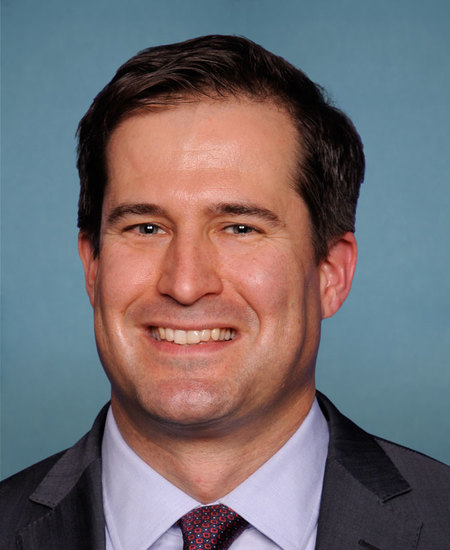
Rep. Seth Moulton
Sponsored bills
Maddy summaryThe SIMPLE Act creates automatic enrollment in income-driven repayment plans for federal student loan borrowers who are delinquent on payments or rehabilitating defaulted loans. The Department of Education would use IRS tax return information (with borrower approval) to determine income and family size, then automatically enroll eligible borrowers in the lowest-cost repayment plan available. Borrowers would receive detailed notifications about their repayment options, including monthly payment amounts based on their income, and could opt out of automatic enrollment or update their information. The bill applies to borrowers of "covered loans" as defined in the Higher Education Act, and would take effect for the 2026-2027 award year.
Maddy summaryThis bill requires Transportation Security Officers to complete annual, specialized training focused on assisting passengers with disabilities, separate from general security training. It expands access to expedited security screening for passengers with disabilities or medical conditions, including in dedicated lanes. Most significantly, it establishes free enrollment in the TSA PreCheck program for veterans who lost a limb, became paralyzed, or have permanent blindness requiring mobility aids (verified through VA care), with TSA and the Department of Veterans Affairs coordinating outreach and implementation.
Maddy summaryThis bill permanently removes a 2026 expiration date for a tax exclusion allowing employers to pay employees' student loans through educational assistance programs without those payments being counted as taxable income. It directly affects employees who receive employer-sponsored student loan repayment assistance and employers offering such programs. The key provision amends the Internal Revenue Code to make this tax exclusion permanent, applying to all future payments made after the bill's enactment. This change simplifies the tax treatment for both employers and employees participating in these student loan repayment programs.
Maddy summaryHRES 1381 is a symbolic resolution that commemorates the United States Olympic and Paralympic Teams' historical achievements, including over 5,300 total medals across past Games. It expresses congressional support for U.S. athletes competing in the 2024 Summer Olympics and Paralympics in Paris, France, and commends the Government of France for hosting the events. The resolution also commits to ensuring a safe environment for the 2028 Los Angeles Olympic and Paralympic Games. As a non-binding expression of support, it does not create new laws or allocate funds.
Maddy summaryThe SAFE Act establishes a national strategy to protect fish, wildlife, and plants from climate change impacts by requiring federal agencies to integrate climate adaptation into their conservation plans. It creates a Working Group to develop and update a National Strategy, establishes a Climate Adaptation Science Center Network for scientific support, and mandates that states develop their own adaptation plans to receive federal funding. The bill directly affects federal agencies, state governments, Indian Tribes, and Native Hawaiian organizations, emphasizing collaboration and incorporation of traditional ecological knowledge. Key mechanisms include regular review of the National Strategy, requirements for state adaptation plans addressing climate impacts on ecosystems, and coordination across different government levels. This legislation focuses on concrete policy changes to enhance ecosystem resilience to climate change effects like extreme weather, habitat loss, and species migration.
Maddy summaryHR 9104, the Access to Birth Control Act, requires pharmacies that normally stock contraception to provide birth control or related medications without delay if in stock, or immediately offer alternatives like referrals to other pharmacies or expedited orders if unavailable. It prohibits pharmacists from intimidating customers, misrepresenting availability, breaching confidentiality, or refusing to fill valid prescriptions for birth control. Pharmacies violating these rules face civil penalties up to $1,000 per day or private lawsuits. The law specifically applies to pharmacies that routinely carry contraception and excludes cases where a valid prescription is missing or payment cannot be made. It aims to address documented refusals to dispense birth control, particularly following the Dobbs decision.
Maddy summaryThis bill extends the deadline for veterans to apply for authorization after receiving emergency care at non-VA facilities. It requires the VA to consider such care authorized if veterans (or their representatives) submit an application within a deadline set by the VA - but this deadline cannot be earlier than 72 hours after discharge. The change directly affects veterans needing emergency medical treatment outside VA facilities, simplifying the process for documenting care. The key provision modifies 38 U.S.C. §1703(a)(3)(B) to provide a minimum 72-hour window for submission, reducing administrative barriers. The bill applies to emergency admissions occurring on or after its enactment date.
Maddy summaryHR 9051, the Compassionate Assault Response and Empathy Act of 2024, requires state, tribal, and local law enforcement agencies to implement trauma-informed training for officers handling sexual assault cases. The bill provides federal grants to fund this training, mandating at least eight hours for new officers during academy training and four hours annually for existing officers. Training must focus on preventing retraumatization, supporting victims, and include diverse trainers with inclusive representation. Agencies must report annually to Congress on grant usage and program effectiveness, with the Department of Health and Human Services maintaining an online directory of qualified trainers.
Maddy summaryThe Railroad Safety Enhancement Act of 2024 establishes new safety requirements for high-hazard trains carrying hazardous materials, including speed limits of 50 mph (40 mph in urban areas) for trains with 20 or more flammable liquid tank cars. The bill requires rail carriers to provide real-time electronic train consist information to emergency responders and State emergency commissions, including details about hazardous materials being transported, routes, and emergency response contacts. It mandates railroads to develop and regularly update hazardous materials emergency response plans, with triennial reviews by the Federal Railroad Administration. The act also phases out older tank cars by December 2027, requiring all tank cars to meet DOT-117 specifications for flammable liquids, and increases civil penalties for rail safety violations up to $5 million.