

Maddy summaryThe CREATE AI Act of 2023 establishes a National Artificial Intelligence Research Resource (NAIRR) to improve access to AI research tools, computational resources, data, and educational materials for researchers and students across the United States. The NAIRR will provide computational resources, curated datasets, educational tools, and access to AI testbeds, with special emphasis on supporting groups historically underrepresented in STEM fields. Governed by a Steering Subcommittee chaired by the Director of the Office of Science and Technology Policy and managed by a Program Management Office within the National Science Foundation, the NAIRR includes specific requirements for ethical AI development, privacy protections, and security measures. The resource will be accessible to researchers at U.S. institutions of higher education, nonprofits, government agencies, and certain businesses, with priority given to projects addressing privacy, ethics, civil rights, and AI safety.
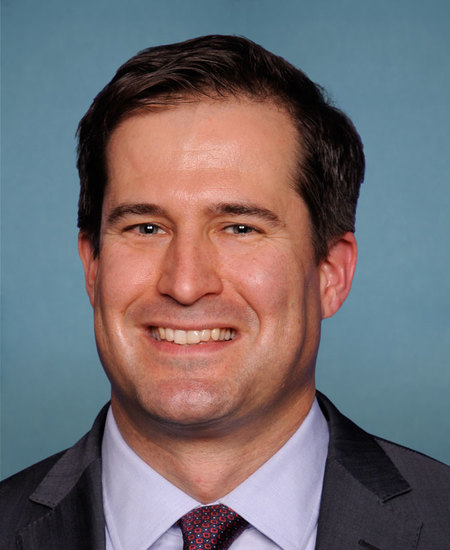
Rep. Seth Moulton
Sponsored bills
Maddy summaryThis symbolic resolution expresses congressional support for designating September 29, 2024, as "Veterans of Foreign Wars of the United States Day" to honor the organization's 125th anniversary. It requests the President issue a proclamation encouraging government agencies and the public to observe the day with ceremonies, though it creates no new laws or policy changes. The resolution recognizes the VFW's historical service to veterans but does not directly affect any individuals or programs.
Maddy summaryHRES 1432 designates September 10, 2024, as "National Firearm Suicide Prevention Day" to raise public awareness about firearm suicides and promote safe storage practices. The resolution encourages healthcare professionals to discuss safe firearm storage with patients and supports the day's goals of reducing firearm suicides through education. It directly affects the general public and healthcare providers by highlighting evidence that safe storage lowers suicide risk, referencing statistics like 54.6% of U.S. suicides in 2022 involving firearms. The bill is symbolic, with no new legal requirements, and aligns with existing awareness efforts like Firearm Suicide Prevention Day.
Maddy summaryHRES 1436 is a symbolic resolution (not a law) introduced in the U.S. House of Representatives. It recognizes suicide as a preventable public health crisis by citing statistics from the CDC, VA, and SAMHSA showing rising suicide rates across age groups, including veterans and adolescents. The resolution formally supports designating September as "National Suicide Prevention Month" and September 10, 2024, as "World Suicide Prevention Day." It does not create new policies, allocate funding, or directly affect any individuals - its purpose is solely to express congressional support for suicide prevention awareness and efforts.
Maddy summaryThe BIOSECURE Act prohibits U.S. federal agencies from contracting for or using biotechnology equipment and services from designated "biotechnology companies of concern," such as BGI, MGI, Complete Genomics, WuXi AppTec, and WuXi Biologics, and bans federal funds for these purposes. It requires the Office of Management and Budget to create and update a list of these companies based on national security risks, with implementation phased in over 60-180 days after regulations are issued. Exceptions include intelligence activities, overseas health care for U.S. personnel, and publicly available multiomic data, while limited waivers for national security or overseas health care are permitted with congressional notification. The law does not require new funding and mandates annual reviews of the designated companies.
Maddy summaryHR 9408, the Pedestrian Protection Act, requires the U.S. Secretary of Transportation to establish new safety standards for motor vehicles to reduce collisions and injuries involving pedestrians, bicyclists, and other vulnerable road users. The bill mandates rulemaking within 3-4 years to set standards for vehicle design features (like hood, bumper, and windshield design) and minimum visibility requirements, with full compliance required 2 years after final rules are issued. It also directs the creation of public comparative ratings for vehicle safety technology and driver visibility features, with a report to Congress due within 5 years. The law directly affects vehicle manufacturers by requiring design changes and new safety disclosures, while prioritizing the safety of pedestrians and cyclists in vehicle design.
Maddy summaryThis bill amends the Older Americans Act to explicitly address loneliness among seniors by adding it to existing provisions about social isolation. It requires the federal government to prepare a report within five years, examining how current programs tackle loneliness's health impacts, geographic prevalence, and preventive services. The report must also analyze multigenerational family connections' role in reducing loneliness and recommend policy improvements. The bill directly affects older individuals served by programs under the Older Americans Act, focusing on health outcomes linked to social isolation. It does not create new funding but directs existing programs to coordinate services addressing loneliness.
Maddy summaryThis non-binding House resolution expresses the House's support for keeping guns out of schools by stating federal funds should not be used to arm school personnel or provide them firearm training. It references existing laws like the STOP School Violence Act (2018) and research showing arming staff does not improve safety, citing data on failed interventions and disproportionate impacts on students of color. The resolution affirms current policy guidance without creating new legal requirements. It serves as a formal statement of the House's position based on evidence and existing legislative frameworks.
Maddy summaryThe Active Shooter Alert Act of 2024 establishes a national coordination system for active shooter alerts by designating a Department of Justice Coordinator. The Coordinator will work with federal agencies (FEMA, FCC, Transportation) and state/local governments to develop voluntary best practices for alert systems, including geotargeted notifications, multilingual messaging, and training for transportation authorities. The bill requires annual reports to Congress on state adoption of protocols and mandates a Comptroller General study on state response times to active shooter alerts, funded by $2 million for the Department of Justice. It does not mandate state adoption but encourages coordination to improve alert effectiveness.
Maddy summaryThe New England Coastal Protection Act of 2024 prohibits the federal government from leasing any area of the outer Continental Shelf off the coasts of Maine, New Hampshire, Massachusetts, Rhode Island, and Connecticut for oil and gas exploration, development, or production. It amends the Outer Continental Shelf Lands Act to explicitly block such leases, overriding any existing or future laws that might permit them. This policy change directly affects the oil and gas industry by eliminating potential new drilling opportunities in these coastal waters and restricts the federal government’s authority to issue offshore energy leases in the region. The bill creates a permanent ban on new oil and gas leasing in this specific coastal zone.