

Maddy summaryThis bill extends current Medicare payment rates for durable medical equipment (like wheelchairs and oxygen) in non-rural areas through December 2025. It delays implementing a new payment rule for all areas until January 2026. The law directly affects Medicare beneficiaries needing equipment and the suppliers who provide it by maintaining existing reimbursement rates for an additional year. This avoids immediate payment reductions for non-rural areas while postponing the full transition to new rates.
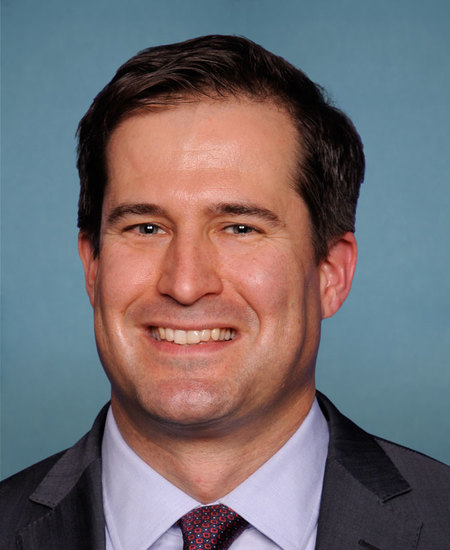
Rep. Seth Moulton
Sponsored bills
Maddy summaryThe Feed Our Families Act of 2025 ensures SNAP (Supplemental Nutrition Assistance Program) benefits continue for 90 days during the first government funding lapse in a fiscal year. It appropriates emergency funds from the Treasury to cover SNAP operations for the initial 90 days of a lapse in discretionary appropriations for the program. These funds are held in reserve and can only be used to maintain SNAP program services during that period. The bill directly affects millions of low-income households relying on SNAP benefits by preventing immediate disruptions during early government shutdowns.
Maddy summaryThis bill amends Medicare eligibility rules to clarify that beneficiaries needing occupational therapy *or* speech therapy qualify for home health services. It updates two sections of the Social Security Act (Parts A and B) to replace "need occupational therapy or speech therapy" with "need occupational, or speech therapy," ensuring both therapies are explicitly covered. The change directly affects Medicare beneficiaries requiring either therapy for home-based care, removing potential confusion about eligibility. The updated rules will take effect for services provided on or after January 1, 2026.
Maddy summaryThe MATCH IT Act of 2025 establishes national standards to improve patient matching accuracy in healthcare, directly affecting hospitals, clinics, health IT vendors, and federal agencies like CMS and HHS. It requires the Secretary of Health and Human Services to develop a uniform definition for measuring patient match rates within 180 days, accounting for duplicate records, overlaid records, and mismatch rates. The bill mandates health IT vendors to incorporate a standardized data set into their systems to support 99.9% matching accuracy, with Medicare providers earning voluntary bonus payments for achieving at least 90% matching accuracy through anonymous reporting. This aims to reduce medical errors, prevent unnecessary tests, and cut costs linked to patient misidentification, which currently cost the healthcare system over $6.7 billion annually.
Maddy summaryThis bill (HR 1988) provides unemployment benefits eligibility for certain federal workers and military members during government shutdowns. It deems eligible employees - such as military personnel, NOAA Commissioned Corps members, and excepted civilian workers performing emergency duties - as "totally separated from federal service" during funding gaps. This allows them to access unemployment benefits immediately, without waiting periods, for weeks of unemployment starting March 14, 2025. The bill directly affects federal employees who remain on duty but are unpaid due to shutdowns.
Maddy summaryHR 1939, the U.S. Engagement in Sudanese Peace Act, requires the U.S. government to develop a comprehensive strategy supporting peace in Sudan, including sanctions on individuals responsible for atrocities and restrictions on arms sales to entities supporting the Rapid Support Forces (RSF) and Sudanese Armed Forces (SAF). The bill mandates reports on international crimes, violations of humanitarian aid access, and U.S. weapons used in Sudan, while directing the U.S. to advocate for unimpeded humanitarian access and support for Sudanese women and youth in peace processes. It establishes a Special Envoy for Sudan with a 5-year term and requires the President to impose sanctions on foreign persons who commit or enable genocide, war crimes, or crimes against humanity in Sudan. The legislation prohibits the sale of major defense equipment to countries supporting the RSF or SAF, with limited waiver authority, directly affecting U.S. foreign policy implementation and humanitarian efforts in Sudan.
Maddy summaryThis bill amends the calculation method for the Basic Allowance for Housing (BAH) for uniformed service members living off-base in the United States. It requires the Secretary of Defense to set BAH amounts based directly on the actual monthly cost of adequate housing in each area, matching the member's pay grade and dependency status. This change ensures BAH rates more accurately reflect local housing expenses rather than using a previous formula. The bill directly affects all service members receiving BAH for off-base housing across the U.S., particularly those in high-cost areas where current rates may not cover actual rent.
Maddy summaryHR 1909 reauthorizes federal funding and updates programs to reduce maternal deaths. It requires maternal mortality review committees to include obstetricians/gynecologists and improves death certificate reporting by coordinating with death certifiers. The bill mandates the CDC to share annual best practices for preventing maternal mortality with hospitals, state health groups, and perinatal programs. It also increases annual funding from $58 million to $100 million for these initiatives, covering fiscal years 2025 through 2029. The law directly affects hospitals, state health agencies, and maternal health programs receiving these federal funds.
Maddy summaryThis bill creates a process for establishing Medicare payment rates for pediatric-specific medical devices. It requires the Medicare program (via the Secretary of Health and Human Services) to set national payment rates (called "relative value units") for qualifying pediatric technologies upon manufacturer request, starting in 2026. A "qualifying pediatric technology" is defined as a covered medical device that is FDA-approved/cleared, has a temporary HCPCS code, and is either predominantly used for pediatric procedures or specifically designed for children. Manufacturers must submit detailed data with their requests, and the timeline for setting rates depends on when the request is received (by May 1 for same-year implementation). The bill does not mandate coverage but ensures payment mechanisms exist for these devices once approved.
Maddy summaryHR 1918, the Farewell to Foam Act of 2025, prohibits the sale of most foam food containers, packaging peanuts, and foam coolers starting January 1, 2028. It directly affects restaurants, grocery stores, food vendors, manufacturers, and retailers who sell these items, excluding medical coolers used for drugs or medical products. The bill imposes escalating civil penalties for violations: $250 for the second offense, $500 for the third, and $1,000 for fourth or subsequent violations, with reduced penalties for small businesses under specific revenue thresholds. Enforcement is led by the EPA Administrator, with states allowed to enforce under federal guidelines.