

Maddy summaryHRES 996 is a resolution introduced by multiple House members to impeach Kristi Lynn Arnold Noem, the Secretary of Homeland Security, for alleged violations of law and the Constitution. It outlines three articles of impeachment: obstructing congressional oversight by denying access to detention facilities and withholding funds, violating public trust through warrantless arrests and excessive force (including tear gas on children), and self-dealing by awarding federal contracts to associates without competitive bidding. If approved by the House, this resolution would formally charge Noem, triggering a Senate trial to determine her removal from office. The resolution itself does not enact new policy but initiates the constitutional impeachment process against a sitting Cabinet official.
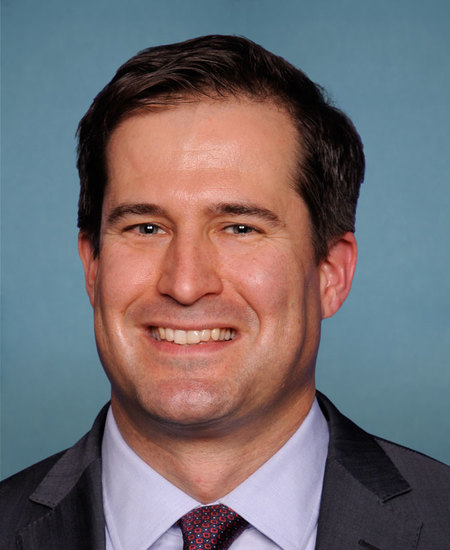
Rep. Seth Moulton
Sponsored bills
Maddy summaryHR 7072, the FAIR Justice Act, aims to prevent political interference in federal prosecutions by prohibiting certain high-level government officials from requesting criminal investigations or prosecutions for political reasons. It directly affects the President, Vice President, their senior staff, and specific executive branch appointees (as defined in federal law). The bill requires officials who receive such politically motivated requests to report them to the Department of Justice Inspector General within 45 days, and imposes penalties including fines or up to five years in prison for violations. This legislation creates new legal safeguards against using the Justice Department for political advantage.
Maddy summaryThis symbolic House resolution expresses U.S. congressional support for Iranian protesters demanding democracy and human rights. It condemns the Iranian regime's violent suppression of protests, including killings, mass arrests, and internet restrictions, while urging the regime to release political prisoners and restore communication access. The resolution reaffirms the Iranian people's right to self-determination through free elections and echoes a 2023 resolution (HCR 7) that similarly praised protesters. As a non-binding expression of support, it does not impose new policies or alter U.S. government actions.
Maddy summaryThis bill would increase the base pay for Federal Bureau of Prisons correctional officers by 35 percent, replacing their current base rate for all pay calculations (including retirement and locality adjustments). It applies to officers whose duties involve inmate custody, control, or direct custodial contact, including certain supervisory staff and lower-grade Bureau of Prisons employees with similar duties. The pay increase is capped at the Executive Schedule level V rate and would expire after five years unless a Department of Justice Inspector General review finds progress in reducing non-custodial staff use for custodial duties and excessive overtime. The review, required 180 days before expiration, would assess impacts on recruitment, retention, and institutional safety.
Maddy summaryThis bill prohibits the interstate trade and possession of captive mink raised for fur production, directly affecting fur farmers and businesses involved in the mink fur supply chain. It includes an exception for entities covered under existing Lacey Act provisions and authorizes the Secretary to buy out mink farms at a price based on the farmer's recent mink population and farm infrastructure value. The law aims to end commercial mink farming for fur by banning related commerce while offering a voluntary transition option for affected farms. It does not apply to wild mink or non-fur-related mink uses.
Maddy summaryHR 6088, the *Restoring Food Security for American Families and Farmers Act of 2025*, repeals specific sections (10101-10108) from a prior reconciliation law. This action revives previous provisions related to food security programs that were modified by those repealed sections. The bill directly affects federal food assistance and agricultural support programs by restoring their prior legal framework. It does not create new policies but reverses recent changes to existing food security measures.
Maddy summaryThis bill updates federal nutrition law to include Puerto Rico in the Supplemental Nutrition Assistance Program (SNAP), allowing it to transition from its current funding method to the same SNAP benefits available to U.S. states. Puerto Rico must submit a 180-day plan to the USDA detailing its transition to SNAP, with approval required within another 180 days. The transition period lasts up to 5 years from the bill's effective date, during which Puerto Rico would continue receiving block grants while preparing for full SNAP participation. This change directly affects Puerto Rico's 1.4 million residents who currently receive nutrition assistance under a separate funding structure.
Maddy summaryHR 909, the Crime Victims Fund Stabilization Act of 2025, modifies how funds from the False Claims Act are deposited into the Crime Victims Fund. It specifies that from 2025 through 2029, certain False Claims Act proceeds (specifically those for qui tam plaintiff payments and government damage reimbursements) cannot be deposited into the fund. This change directly affects the composition of the Crime Victims Fund by excluding these specific revenue streams during the specified period. The bill does not create new benefits or alter victim services; it only adjusts fund allocation rules for existing False Claims Act revenues.
Maddy summaryHR 7016, the "No Funds for NATO Invasion Act," blocks federal funding for any U.S. military invasion of a North Atlantic Treaty Organization (NATO) member country or territory covered by NATO's Article 5 mutual defense clause. The bill prohibits using any federal funds for such invasions and bans U.S. officials from executing these actions. It directly affects U.S. military operations and funding decisions involving NATO members. The law applies to all federal spending, preventing the use of existing budgets for this specific purpose.
Maddy summaryHR 7004 prohibits federal elected officials, congressional staff, political appointees, and executive branch employees from trading prediction market contracts using material nonpublic information about government policy, actions, or political outcomes. It bans any purchase, sale, or exchange of these contracts when the individual possesses or could reasonably obtain such nonpublic information - defined as important investment details not available to the public. The bill directly affects government insiders who might otherwise trade on inside knowledge of upcoming decisions or election results through prediction markets. Key provisions clarify that covered transactions include any financial instrument tied to future government events, listed on platforms operating across state lines. This creates a specific insider trading rule for prediction markets, distinct from general securities laws.