

Maddy summaryThe IDEA Full Funding Act (HR 4519) mandates specific annual increases in federal funding for special education programs under the Individuals with Disabilities Education Act (IDEA). It requires Congress to appropriate increasing amounts each fiscal year - from $5.87 billion for 2024 up to $55.53 billion for 2033 - to reach 40% of the national average per-pupil expenditure for public schools by 2033. This directly affects all public school districts serving students with disabilities, as federal IDEA funding supports their special education services. The bill sets fixed dollar amounts or percentage targets (whichever is greater) for each fiscal year, aiming to gradually close the long-standing gap between promised and actual federal funding. It does not alter eligibility for services but mandates higher, phased funding levels to meet the 40% target.
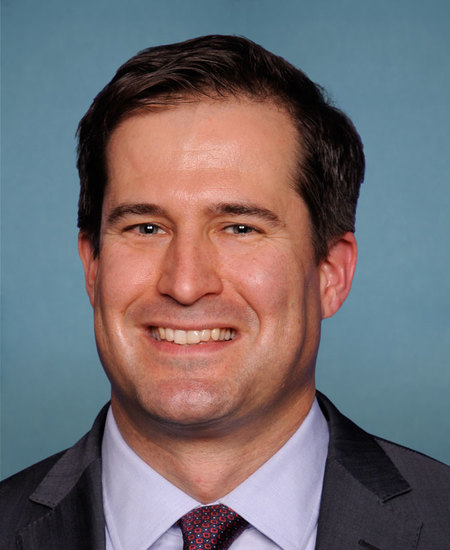
Rep. Seth Moulton
Sponsored bills
Aircraft Noise Reduction Act This bill allows a general aviation airport to make reasonable adjustments to air traffic and training patterns of noncommercial charter flights for the purposes of implementing aircraft noise limitations. A general aviation airport is a public-use airport that does not have scheduled service or that has scheduled service with less than 2,500 passenger boardings per year. Specifically, upon the request of a general aviation airport, the Federal Aviation Administration (FAA) must consult with the airport and provide for reasonable adjustments to air traffic and training patterns that do not otherwise violate law. No federal funds may be withheld from, withdrawn from, or denied to a general aviation airport based solely on an activity carried out under this bill. In the case of an emergency, the FAA may reject or temporarily restrict an accommodation to a general aviation airport to implement aircraft noise limitations. Further, the Department of Transportation must update current regulations, as necessary, to allow general aviation airports to implement effective noise abatement measures, as determined appropriate by general aviation airport owners and operators.
This resolution expresses the sense of the House of Representatives that (1) lesbian, gay, bisexual, transgender, queer, intersex, and asexual (LGBTQIA+) rights are human rights and protected by the U.S. Constitution; (2) LGBTQIA+ Pride Month should be celebrated; and (3) all Americans should be treated equally regardless of sexual orientation, sex characteristics, or gender identity.
Maddy summaryHRES 561 is a non-binding House resolution opposing state laws that criminalize access to essential health care. It specifically condemns using criminal penalties against people for pregnancy outcomes (such as miscarriages), seeking abortion or contraception, or receiving gender-affirming care, and disapproves of punishing health care providers or supporters for facilitating such care. The resolution affirms that patients deserve access to reproductive and gender-affirming health services without fear of prosecution or discrimination. It emphasizes that criminalizing these health care decisions violates patient rights and ethical provider obligations, without creating new legal requirements.
Maddy summaryThis bill prohibits defendants in federal criminal cases from using a victim's LGBTQ+ identity (sexual orientation, gender identity, or expression) as a legal excuse for violence or to reduce sentences - a practice known as the "LGBTQ+ panic defense." It specifically bans arguments that a "nonviolent sexual advance or perception" of the victim's identity justified the crime, while allowing evidence of the defendant's past trauma under standard evidence rules. The law directly affects federal criminal trials where defendants attempt to justify violence against LGBTQ+ victims using prejudice-based excuses. It also requires the Attorney General to report annually on federal prosecutions involving bias-motivated crimes against LGBTQ+ individuals.
Maddy summaryHR 4340, the Therapeutic Fraud Prevention Act of 2023, prohibits paid providers from offering conversion therapy - defined as any commercial service attempting to change a person's sexual orientation or gender identity - and bans advertising that claims such therapy is effective or harmless. It directly affects therapists, counselors, or organizations offering paid conversion therapy services, including those advertising such services. Key provisions make it unlawful to provide, advertise, or facilitate paid conversion therapy, with enforcement led by the Federal Trade Commission (FTC) under consumer protection laws and allowing states to pursue civil actions. The bill explicitly excludes supportive care for gender transition or identity exploration from its definition of prohibited therapy.
Maddy summaryHRES 535 is a symbolic resolution designating November 12, 2023, as "National Warrior Call Day" to raise awareness about veterans' mental health and connection to support systems. It does not create new programs or funding but encourages Americans to call veterans or military members for meaningful conversation and to connect them with resources. The resolution cites rising veteran suicide rates (6,261 in 2019) and aims to address isolation through public engagement. It directly affects veterans, active-duty service members, and first responders by promoting community support. This is a non-binding awareness measure with no concrete policy changes.
Maddy summaryHR 4329 establishes a new Title X Clinic Fund to expand federal support for family planning clinics. It allocates $512 million annually (2024-2033) for clinic grants/contracts and $50 million for clinic infrastructure (construction/renovation) under the Public Health Service Act. The bill requires all pregnancy counseling at funded clinics to be nondirective, providing patients with neutral, factual information about all options - including prenatal care, adoption, and pregnancy termination - without bias. This directly affects Title X clinics serving low-income patients and ensures funding cannot restrict providers based on unrelated factors.
Maddy summaryHR 4325, the Historically Underserved Veterans Inclusion Act of 2023, expands the Department of Veterans Affairs' Center for Minority Veterans to include "historically underserved" veterans and modifies its advisory committee. The bill broadens the definition of "covered veterans" to include veterans facing barriers based on sexual orientation, gender identity, English language proficiency, citizenship, religion, or other factors identified through a biennial review. Key provisions require the VA Secretary to conduct biennial reviews of benefit disparities and submit reports to Congress, while the expanded advisory committee must advise on improving benefits, health care, homelessness services, and outreach for these veterans. The bill directly affects veterans who experience systemic barriers in accessing VA services, aiming to make VA programs more inclusive through concrete policy adjustments.
Maddy summaryHR 4335, the VA Loan Informed Disclosure Act of 2023, requires mortgage lenders to include specific information about VA home loan programs in standard mortgage disclosures. The bill amends the National Housing Act to mandate that lenders provide details on VA loans (guaranteed under Title 38) alongside other loan options, including assumptions about prevailing interest rates. This change directly affects lenders processing VA-guaranteed mortgages, ensuring borrowers receive clearer comparisons between VA loans and other financing. The law does not require lenders to verify borrower eligibility for VA loans, only to include the specified disclosure language.