

Maddy summaryHRES 874 is a symbolic resolution expressing the House's support for designating November as "Prematurity Awareness Month." It does not create new laws or alter funding but urges the public, organizations, and communities to observe the month through events, promote awareness, and support preterm birth prevention programs. The resolution highlights statistics on preterm births (383,000 babies born preterm in 2021) and health disparities, but its sole action is endorsing the awareness designation. As a non-binding resolution, it has no direct impact on policy or affected individuals beyond raising public visibility.
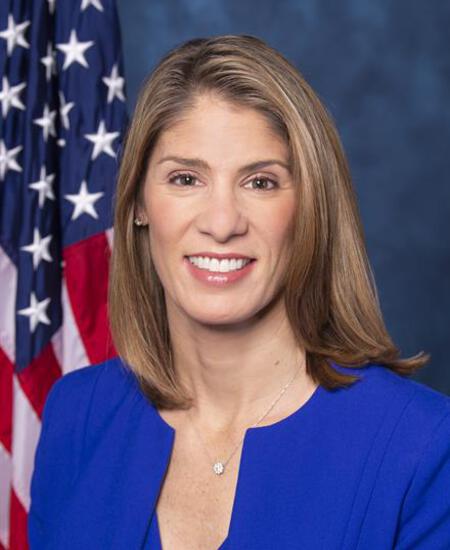
Rep. Lori Trahan
Sponsored bills
Billionaire Minimum Income Tax Act This bill imposes a minimum tax on individual taxpayers whose net worth for the taxable year exceeds $100 million. The tax is equal to 25% of the sum of a taxpayer's taxable income, plus net unrealized gains for the taxable year. The tax may not exceed 40% of the amount by which the taxpayer's net worth exceeds $100 million.
Maddy summaryHRES 793 is a resolution passed by the U.S. House of Representatives calling on Hamas to immediately release all 199 hostages taken during Hamas' October 7, 2023 attack on Israel. The resolution condemns Hamas for the attack, the taking of hostages, and threats against hostages, while stating that holding hostages violates international humanitarian law under the Geneva Conventions. It demands the immediate release of all hostages and expresses sympathy for victims and their families. As a symbolic resolution, it does not create legal obligations but formally expresses the House's position.
Maddy summaryHR 6451, the Mental Health Justice Act of 2023, provides $250 million in federal grants to states, tribes, and localities to hire mental health professionals as first responders for specific emergencies. It directs these professionals to replace police in situations involving mental health crises, substance use, or intellectual/developmental disabilities - such as when a 911 caller describes a mental health emergency or a first responder identifies someone needing mental health support. The bill requires grantees to train responders in de-escalation techniques, link individuals to community-based services (not incarceration), and report on outcomes like reduced arrests or use of force. It also mandates data collection on demographics and prevents funneling people into institutional settings, with annual reports to Congress on program effectiveness.
Maddy summaryHR 6415, the CARE for First Responders Act, creates targeted mental health support for first responders, including law enforcement, firefighters, EMTs, and 911 operators (previously excluded from many services). It establishes a 24/7 confidential mental health hotline integrated with the 988 Suicide Lifeline, funds mobile crisis teams for disaster response, and mandates specialized training to reduce stigma and improve access to culturally competent care. The bill requires the development of peer support programs and education for responders and their families on mental health coping strategies. It authorizes $5 million annually (2024-2028) for grants to states and organizations to implement these services, specifically addressing the higher rates of mental health challenges and suicide among first responders compared to the general population.
Maddy summaryHR 4566, the PRESUME Act, changes how veterans exposed to radiation during military service qualify for medical benefits. It prohibits the Department of Veterans Affairs from requiring veterans to provide evidence of a specific radiation dose to be classified as "radiation-exposed." This directly affects veterans who served in roles involving radiation exposure, such as those participating in atomic testing or working with nuclear materials. The bill streamlines eligibility by removing a key barrier to accessing medical benefits they are already entitled to under existing law.
Maddy summaryHR 6282, the Humane Accountability Act, requires the Department of Homeland Security (DHS) and Department of Health and Human Services (HHS) to jointly submit a report to Congress within one year of the bill's enactment. The report must detail specific incidents in immigration detention, including assaults requiring medical care, sexual assaults with investigation findings, detainee deaths, and complaints about abuse, neglect, or lack of legal access. Following this report, the Government Accountability Office (GAO) must then provide Congress with recommendations to address these issues within 90 days. The bill focuses on increasing transparency and accountability in immigration detention facilities, directly affecting CBP, ICE, and ORR custody operations.
Maddy summaryThe REPAIR Act requires car manufacturers to provide vehicle owners and independent repair shops with free, unrestricted access to vehicle data and repair information. It bans manufacturers from using technological or legal barriers to block access to diagnostics, tools, or aftermarket parts, and prohibits mandating specific brands for repairs or restricting customers’ choice of repair facility. The law also prevents manufacturers from requiring waivers of these rights as a condition of purchase, lease, or warranty service. The Federal Trade Commission will enforce these provisions to ensure fair competition in vehicle repair.
Maddy summaryHRES 831 is a symbolic congressional resolution supporting October as "National Domestic Violence Awareness Month." It does not create new laws or allocate funding, but formally expresses the House of Representatives' support for the goals of raising awareness about domestic violence. The resolution urges Congress to continue highlighting domestic violence's impact and backing programs that prevent and address it. It directly affects public awareness efforts and serves as a non-binding statement of congressional support for victims and advocacy organizations.
Maddy summaryHR 5983, the Clean Water Act of 2023, redefines "protected water resources" under federal law to explicitly include all interstate and intrastate waters (such as intermittent and ephemeral streams), wetlands, and their tributaries. This directly affects federal agencies like the EPA, states managing water quality, and developers or landowners needing permits for activities near these waters. The bill eliminates the Supreme Court’s narrow "navigable waters" definition from Sackett v. EPA (2023), restoring protections for tens of millions of acres of wetlands and millions of miles of small streams. Key mechanisms require the EPA to annually review and adjust exclusions from protections based on scientific evidence, ensuring water bodies critical to drinking water, flood control, and ecosystems remain safeguarded.