

Realizing Efforts for Military Equity, Diversity, and Inclusion Act or the REMEDI Act This bill provides statutory authority for and expands the requirements regarding diversity and inclusion training for military personnel. The bill requires the Department of Defense (DOD) to ensure that each military department conducts ongoing training programs regarding human relations, diversity, equity, and inclusion for all members of the Armed Forces, civilian employees of DOD, and contractors or subcontractors providing support to DOD. Such training must be tailored to specific leadership levels and local area requirements. DOD must ensure that an individual preparing to enter an officer accession program, execute an original enlistment agreement, or serve as a civilian employee is (1) provided information concerning the meaning of the oath of office or oath of enlistment for service in the Armed Forces with regards to the equal protection and civil liberties guarantees of the Constitution, and (2) informed that if supporting such guarantees is not possible for that individual, the individual should decline to join the Armed Forces.
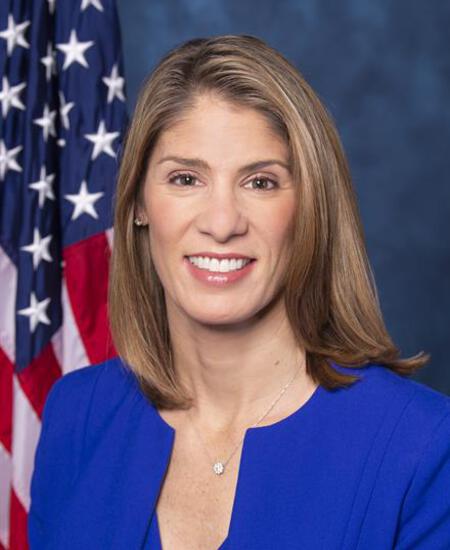
Rep. Lori Trahan
Sponsored bills
Harlem Hellfighters Congressional Gold Medal Act This bill provides for the award of a Congressional Gold Medal to the 369th Infantry Regiment, commonly known as the Harlem Hellfighters, in recognition of their bravery and outstanding service during World War I.
Puppies Assisting Wounded Servicemembers for Veterans Therapy Act or the PAWS for Veterans Therapy Act This bill implements a program and a policy related to service dog therapy for veterans. Specifically, the bill requires the Department of Veterans Affairs (VA) to implement a five-year pilot program to provide canine training to eligible veterans diagnosed with post-traumatic stress disorder as an element of a complementary and integrative health program. Eligible veterans are those who are enrolled in the VA health care system and have been recommended for participation by a qualified mental health care provider or clinical team. The VA must seek to enter agreements containing specified elements with accredited nongovernmental entities that have demonstrated ability to provide canine training. Veterans who participate in the program are authorized to adopt the dog they assisted in training if their health provider determines it is in the best interest of the veteran. The VA must establish processes to document and track the progress of participating veterans with respect to health benefits and improvements. The Government Accountability Office must brief Congress and submit a report on the program. The bill also authorizes the VA to provide service dogs to veterans with mental illnesses, regardless of whether they have a mobility impairment.
This resolution expresses the sense of the House of Representatives that policies concerning medication abortions should be grounded in science, be based on a review of medical evidence, and ensure equitable access for patients.
Twenty-First Century Dams Act This bill addresses dam infrastructure and safety. First, the bill provides resources for programs related to state dam safety, the rehabilitation of high hazard potential dams, and the inspection of dams. In particular, the bill reauthorizes through FY2026 the National Dam Safety Program. In addition, the bill reauthorizes through FY2026 a program related to the rehabilitation of structural measures and a program related to water infrastructure. Next, the bill allows a new tax credit for maintaining and enhancing hydroelectric dams that is equal to 30% of the basis of any qualified dam safety, environmental, and grid resilience enhancement property placed in service in a taxable year. It also allows a 30% credit for qualified obsolete river obstruction removal expenditures for demolishing and removing certain nonpowered or hydroelectric dams. The bill directs the Department of the Army to establish a program to carry out dam removal projects. Further, the bill establishes the Dam Removal Council to (1) coordinate with participating federal agencies to annually notify all known dam owners of the availability of dam removal funding and provide guidance on the existing programs of participating agencies; (2) evaluate and submit to Army recommendations for dam removal projects, technical assistance programs, and funding allocations; and (3) develop a dam removal strategy. The bill requires certain dam assessments, including a joint assessment by the U.S. Geological Survey and the Department of Energy. The bill also authorizes specified federal agencies to undertake certain activities related to federal dam infrastructure.
This resolution establishes a House Permanent Select Committee on Aging.
9/11 Responder and Survivor Health Funding Correction Act This bill increases funding for and otherwise modifies a federal program that provides medical monitoring and treatment to responders and survivors who suffer from health conditions related to the September 11, 2001, attacks on the World Trade Center. Among the changes, the bill allows certain health care providers other than physicians to determine whether an individual's health condition is related to the attacks, and it establishes a research program to study the impacts of the attacks on health and educational outcomes of individuals who were 21 years of age or younger when the attacks occurred.
Children's Mental Health Infrastructure Act of 2021 This bill provides funding through FY2026 to the Health Resources and Services Administration for grants to improve the capacity of children's hospitals to provide pediatric behavioral health services, including by modernizing sites of care and enhancing telehealth capabilities.
Helping Kids Cope Act of 2021 This bill provides funding through FY2026 to the Health Resources and Services Administration (HRSA) for grants to enhance access to and provider training in pediatric behavioral health care. Specifically, HRSA must award grants to pediatricians, children's hospitals, and other providers to support pediatric behavioral health integration and coordination within communities. Grant-funded activities may include hiring community navigators to assist families in accessing appropriate services, incorporating behavioral health services in pediatric practices, and delivering services via telehealth. In addition, HRSA must award grants to children's hospitals to expand training for providers in the pediatric behavioral health workforce.
Expanding Broadcast Ownership Opportunities Act of 2021 This bill requires the Federal Communications Commission (FCC) to take certain actions to increase diversity of ownership in the broadcasting industry and establishes a related tax incentive. Specifically, the bill requires the FCC to report to Congress regarding (1) recommendations for increasing the total number of broadcast stations that are owned or controlled by members of minority groups or women, (2) the total number of broadcast stations that are owned or controlled by members of minority groups or women, and (3) whether there is a nexus between diversity of ownership or control of broadcast stations and the diversity of the viewpoints expressed on the stations. In addition, the bill allows companies engaged in the qualifying sale of a broadcast station to receive favorable tax treatment by electing nonrecognition of the gain or loss resulting from the sale. To qualify for this treatment, the sale must result in or preserve ownership and control of a broadcast station by socially disadvantaged individuals.