

Medically Tailored Home-Delivered Meals Demonstration Pilot Act of 2021 This bill requires the Centers for Medicare & Medicaid Services to establish a demonstration program to allow hospitals to provide medically tailored, home-delivered meals to Medicare beneficiaries who have a diet-impacted disease (e.g., kidney disease) and have daily living limitations. Participating hospitals must (1) retain a physician, registered dietitian or nutrition professional, or clinical social worker to screen, monitor, and coordinate services for individuals who receive meals through the program; and (2) contract with experienced organizations for meal delivery. Hospitals may choose to also provide meals to an individual's primary caregiver or to a dependent under the age of 18 who resides in the same household.
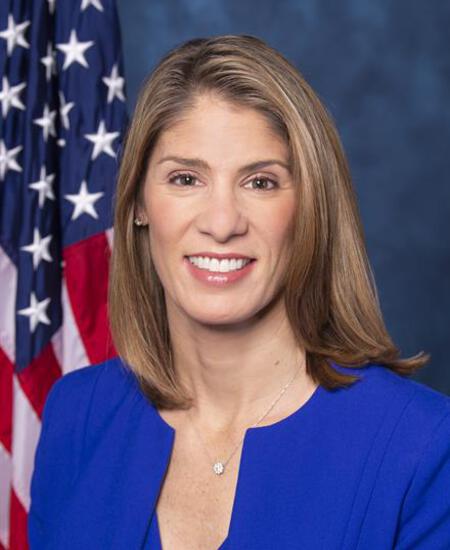
Rep. Lori Trahan
Sponsored bills
Streamlining Nutrition Assistance Paperwork Act of 2021 or the SNAP Act of 2021 This bill provides statutory authority for a Department of Agriculture (USDA) waiver that allows states to use a written record to document telephonic signatures for Supplemental Nutrition Assistance Program (SNAP) applications. Under current law, states may allow individuals to sign their SNAP applications over the telephone, but states must preserve audio recordings of those telephonic signatures. During the COVID-19 emergency, USDA waived the requirement to preserve the audio recording and allowed states to document the telephonic signatures through written records.
John R. Lewis Voting Rights Advancement Act of 2021 This bill establishes new criteria for determining which states and political subdivisions must obtain preclearance before changes to voting practices may take effect. Preclearance is the process of receiving preapproval from the Department of Justice (DOJ) or the U.S. District Court for the District of Columbia before making legal changes that would affect voting rights. A state and all of its political subdivisions shall be subject to preclearance of voting practice changes for a 10-year period if 15 or more voting rights violations occurred in the state during the previous 25 years; 10 or more violations occurred during the previous 25 years, at least 1 of which was committed by the state itself; or 3 or more violations occurred during the previous 25 years and the state administers the elections. A political subdivision as a separate unit shall also be subject to preclearance for a 10-year period if three or more voting rights violations occurred there during the previous 25 years. States and political subdivisions that meet certain thresholds regarding minority groups must preclear covered practices before implementation, such as changes to methods of election and redistricting. Further, states and political subdivisions must notify the public of changes to voting practices. Next, the bill authorizes DOJ to require states or political subdivisions to provide certain documents or answers to questions for enforcing voting rights. The bill also outlines factors courts must consider when hearing challenges to voting practices, such as the extent of any history of official voting discrimination in the state or political subdivision.
Collaborate in an Orderly and Cohesive Manner Act This bill requires the Department of Health and Human Services (HHS) to award grants for implementing and evaluating specified models of care that integrate the delivery of behavioral health and primary care services. Specifically, HHS must award grants to primary care providers for the initial costs (e.g., hiring staff) of implementing such models. In awarding the grants, HHS must prioritize recipients that provide care to medically underserved populations and in areas where the prevalence of behavioral health conditions exceeds the national average. HHS must also provide additional incentive payments to recipients that use appropriate billing codes and quality measures for behavioral health services. In addition, HHS must award grants to national and regional organizations for providing technical assistance to health care providers and systems to improve implementation of integrated behavioral health and primary care models. Furthermore, HHS may direct its agencies to expand efforts to evaluate current and emerging integrated behavioral health and primary care models.
This resolution expresses the sense of the House of Representatives that the United States shall recognize kind actions in our country, encourage kindness, spread love, and foster a culture of being kind to one another.
This resolution calls on all Americans to observe the 20th anniversary of the September 11 attacks and honor those who lost their lives.
Supporting Teachers with Residency Opportunities and New Grants Act of 2021 or the STRONG Act of 2021 This bill reauthorizes through FY2024 the Teacher Quality Partnership program and otherwise revises the program to allow certain undergraduate students with an academic major related to teaching to enter into teaching residency programs. (Currently, only recent graduates and certain mid-career professionals may participate in these programs.) In addition, the bill allows undergraduate students who enter into such a program to participate in the Public Service Loan Forgiveness program.
Improving Medicare Coverage Act This bill temporarily expands eligibility for Medicare. It also temporarily establishes a premium and cost-sharing assistance program for low-income beneficiaries. Specifically, the bill lowers the age of eligibility for Medicare from 65 to 60. The Centers for Medicare & Medicaid Services must establish procedures to provide for automatic enrollment of qualifying individuals. Enrollment must be completed within 11 months of the bill's enactment. The bill also establishes a program under Medicare to assist low-income Medicare beneficiaries with premiums, coinsurance, deductibles, and other costs. Currently, such assistance is provided through Medicare Savings Programs, which are administered by state Medicaid programs. The bill also establishes a related special enrollment period under Medicare, expands eligibility for assistance to beneficiaries with income up to 200% of the federal poverty line, and provides for joint eligibility determinations with respect to the bill's program and the low-income subsidy program under the Medicare prescription drug benefit. The bill's provisions generally take effect six months after the bill's enactment and terminate five years later.
Prohibition of Medicaid Funding for Conversion Therapy Act This bill prohibits state Medicaid programs from covering conversion therapy. The bill defines conversion therapy as any practice or treatment that seeks to change a person's sexual orientation or gender identity in exchange for monetary compensation.
This resolution expresses support for the 2021 National Recovery Month theme (Recovery is for Everyone: Every Person, Every Family, Every Community). National Recovery Month is an annual observance held in September to support the community of individuals in recovery from substance use, promote treatments and practices, and recognize service providers.