

Maddy summaryHR 8231, the James Earl Jones Congressional Gold Medal Act, authorizes a Congressional Gold Medal to be awarded to actor James Earl Jones in recognition of his distinguished career in theater and film, and his role in advancing inclusion and equal opportunities for people of all backgrounds in the entertainment industry. The Treasury will strike the medal with an image and inscription of Jones, and may produce and sell bronze duplicates to cover costs, with proceeds deposited into the U.S. Mint's public enterprise fund. This bill serves as a ceremonial honor with no new legal requirements or policy changes.
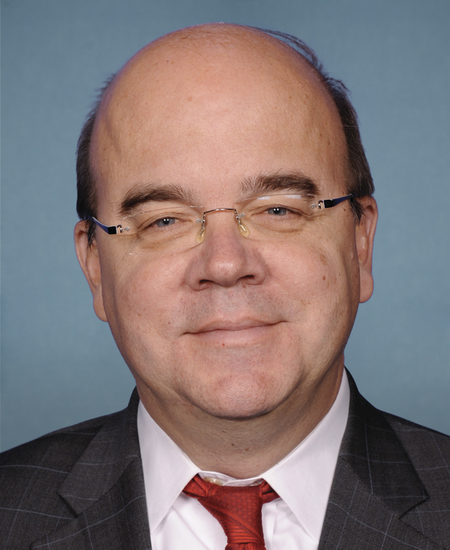
Rep. James P. McGovern
Sponsored bills
Maddy summaryHR 8212, the "End the Cyprus Embargo Act," would remove U.S. restrictions on defense exports to the Republic of Cyprus's government. It requires the Secretary of State to stop automatically denying exports of defense articles or services to Cyprus, unless credible human rights concerns exist or the President waives the change for national security. The bill includes a 5-year review period where the President must certify Cyprus complies with anti-money laundering reforms and denies Russian military vessels port access before any restrictions can be reinstated. This policy change aims to strengthen U.S.-Cyprus security cooperation, as referenced in the 2019 Eastern Mediterranean Security Act.
Maddy summaryHR 8196, the SCAM Debt Act, amends the Fair Debt Collection Practices Act to prevent deceptive debt collection practices, primarily affecting consumers facing debt collection lawsuits. The bill requires debt collectors to provide consumers with a 30-day written notice before legal action, including detailed debt information like the original debt amount, default dates, and payment history. It also mandates that debt collectors include specific evidence in court filings, such as the original debt agreement, chain of title documentation showing ownership transfer, and proof the statute of limitations hasn't expired. These changes aim to increase transparency and prevent misleading claims during debt collection proceedings.
Maddy summaryThe CROWN Act of 2024 prohibits discrimination based on hair texture or style commonly associated with race or national origin, such as braids, locs, cornrows, twists, or afros. It directly affects individuals - particularly people of African descent - who face workplace, school, housing, or public accommodation discrimination due to natural or protective hairstyles. The bill expands existing federal civil rights laws (like Title VI, the Fair Housing Act, and Title VII) to explicitly include hair-based discrimination, requiring compliance in federally funded programs, housing, employment, and public spaces. It clarifies that grooming policies targeting these hairstyles violate anti-discrimination protections without creating new legal standards.
Maddy summaryThe Captive Primate Safety Act prohibits the import, export, sale, transport, breeding, or possession of certain nonhuman primates - including chimpanzees, gorillas, monkeys, and their hybrids - in interstate or foreign commerce. It directly affects private owners, breeders, and commercial traders of these animals, with limited exceptions for pre-enactment animals (requiring registration with the U.S. Fish and Wildlife Service and restrictions on breeding/sale) and registered research facilities. The law amends the Lacey Act to add these primates to prohibited species lists, effective upon enactment, with regulations to be issued within 180 days. Enforcement remains active even if regulations are delayed, ensuring immediate prohibitions on commercial trade and possession.
Maddy summaryHRES 1171 is a non-binding resolution recognizing the 30th anniversary of the 1994 Rwandan Genocide, where an estimated 800,000 Tutsis and others were killed. It expresses the House’s regret for U.S. and international inaction during the genocide, reaffirms U.S. commitment to genocide prevention under the 1948 Convention, and joins Rwanda and global communities in mourning victims. The resolution has no direct policy impact or effect on specific groups, as it is purely commemorative. It was introduced in the U.S. House of Representatives on April 26, 2024, by Representatives Omar, Jackson, Norton, Carson, and McGovern.
Maddy summaryHRES 1166 is a symbolic resolution expressing congressional support for Earth Day. It urges the President to issue an Earth Day proclamation, encourages Americans to take specific environmental actions (like addressing pollution and supporting indigenous stewardship), and calls for global efforts to advance climate goals. The resolution does not create new laws or directly affect any groups - it serves as a non-binding statement of support for environmental action. It references historical environmental milestones but focuses on reaffirming the need for year-round climate and environmental protection efforts.
Maddy summaryThe Broadcast VOICES Act creates a new tax certificate program to encourage broadcast station ownership by socially disadvantaged individuals (defined as women or people who have faced racial/ethnic prejudice). It requires the Federal Communications Commission to submit biennial reports to Congress on the number of minority and women-owned broadcast stations and to provide recommendations for increasing such ownership. The program establishes rules including a $50 million limit on qualifying sales, a 2-3 year minimum holding period for stations owned by socially disadvantaged individuals, and tax benefits treating qualifying sales as "involuntary conversions" for tax purposes. The bill also creates a tax credit for contributions to entities training socially disadvantaged individuals in broadcast management. The tax provisions of the bill will expire 16 years after enactment.
Maddy summaryHR 8061, the Crime Victims Fund Stabilization Act of 2024, ensures stable funding for the Crime Victims Fund by directing certain False Claims Act collections into it from 2024 through 2029. Specifically, it adds a provision requiring that amounts collected under the False Claims Act (excluding whistleblower rewards and government reimbursement for damages) be deposited into the fund during this period. This directly affects crime victims who rely on the fund for services like counseling and emergency aid, as it prevents potential shortfalls in funding. The bill makes a concrete policy change by redirecting specific federal civil penalties into the fund, rather than altering the fund's existing purposes or eligibility rules.
Maddy summaryHRES 1154 is a symbolic resolution supporting "Financial Literacy Month" to raise public awareness about the importance of personal financial education. It calls on the Federal Government, states, schools, businesses, and communities to observe the month with programs highlighting how financial literacy helps individuals manage money, credit, and debt. The resolution references statistics on financial challenges (like 37% of adults struggling with emergency expenses) but does not create new laws or funding. As a non-binding resolution, it has no direct effect on policy or affected individuals.