

Madeleine K. Albright Democracy in the 21st Century Act This bill establishes programs to promote democracy abroad, authorizes Department of State and U.S. Agency for International Development (USAID) democracy programs from FY2023 through FY2027, and addresses related issues. The State Department must establish programs (1) to defend democracy globally, including by enhancing the ability of the State Department and USAID to respond quickly and flexibly to democratic openings and backsliding; (2) to support efforts to enhance government transparency and other activities related to reducing corruption; and (3) for democracy research and development, such as activities to drive innovation in State Department, USAID, and National Endowment for Democracy (NED) responses to complex challenges to democracy. The bill establishes the Democracy in the 21st Century Fund, to be administered by the State Department, to support the programs established by this bill and other related activities. U.S. government assistance for democracy programs shall not be subject to the prior approval of any foreign government. The bill also protects the identities of implementing partners of certain State Department, USAID, and NED assistance programs in countries that are undemocratic or have engaged in gross violations of civil and political rights, including by exempting the names of partners for democracy programs in such countries from Freedom of Information Act requests. The President must report to Congress a comprehensive strategy to promote democracy abroad.
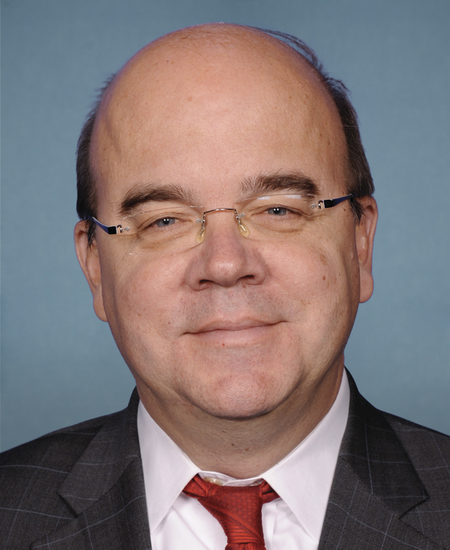
Rep. James P. McGovern
Sponsored bills
Emergency Price Stabilization Act of 2022 This bill creates the Sub-Task Force on Emergency Price Stabilization under the White House Supply Chains Disruption Task Force. The new task force must monitor the price of essential goods and services, investigate corporate price increases, make recommendations to the President, and report plans and research to the public. The bill also grants the President the authority to enact or adjust price controls and regulations in accordance with these recommendations.
Harriet Tubman Bicentennial Commemorative Coin Act This bill directs the Department of the Treasury to mint and issue 50,000 $5 gold coins, 400,000 $1 silver coins, and 750,000 half-dollar clad coins emblematic of the legacy of Harriet Tubman as an abolitionist. The Secretary may issue coins under this bill only during the period of January 1, 2024, through December 31, 2024. All surcharges received by Treasury from the sale of such coins must be paid equally to the National Underground Railroad Freedom Center in Cincinnati, Ohio, and The Harriet Tubman Home, Inc. in Auburn, New York, for the purpose of accomplishing and advancing their missions.
National World War II Memorial Commemorative Coin Act This bill directs the Department of the Treasury to mint and issue up to 50,000 $5 coins, 400,000 $1 silver coins, and 750,000 half-dollar clad coins in commemoration of the National World War II Memorial in the District of Columbia. The design of the coins shall be emblematic of the memorial and the service and sacrifice of American soldiers and civilians during World War II. All surcharges received from the sale of such coins shall be paid to the Friends of the National World War II Memorial to support the National Park Service in maintaining and repairing the memorial, and for educational and commemorative programs.
Cash Refunds for Flight Cancellations Act of 2022 This bill requires air carriers and ticket agents to offer full cash refunds for airline tickets if (1) an airline cancels or significantly delays a flight, or (2) a passenger cancels their ticket for a flight up until 48 hours of the scheduled departure time. The bill permits air carriers and tickets agents to offer alternative forms of compensation, including credit, or vouchers, provided that such offer is valid indefinitely and the offer includes a clear and conspicuous notice of the passenger's right to a cash refund. Additionally, the bill requires air carriers and ticket agents to disclose to passengers, prior to the sale of airline tickets, that they can cancel their tickets and receive a full refund.
Assault Weapons Ban of 2022 This bill makes it a crime to knowingly import, sell, manufacture, transfer, or possess a semiautomatic assault weapon (SAW) or large capacity ammunition feeding device (LCAFD). The prohibition does not apply to a firearm that is (1) manually operated by bolt, pump, lever, or slide action, except for certain shotguns; (2) permanently inoperable; (3) an antique; (4) only capable of firing rimfire ammunition; or (5) a rifle or shotgun specifically identified by make and model. The bill also exempts from the prohibition the following, with respect to a SAW or LCAFD: importation, sale, manufacture, transfer, or possession related to certain law enforcement efforts, or authorized tests or experiments; importation, sale, transfer, or possession related to securing nuclear materials; and possession by a retired law enforcement officer. The bill permits continued possession, sale, or transfer of a grandfathered SAW, which must be securely stored. A licensed gun dealer must conduct a background check prior to the sale or transfer of a grandfathered SAW between private parties. The bill permits continued possession of, but prohibits sale or transfer of, a grandfathered LCAFD. Newly manufactured LCAFDs must display serial number identification. Newly manufactured SAWs and LCAFDs must display the date of manufacture. The bill also allows a state or local government to use Edward Byrne Memorial Justice Assistance Grant Program funds to compensate individuals who surrender a SAW or LCAFD under a buy-back program.
This resolution waives a specified requirement of Rule XIII (Calendar and Committee Reports) to allow consideration of resolutions reported from the Committee on Rules through the legislative day of July 29, 2022, on the same day they are presented to the House of Representatives. Additionally, the resolution makes changes to requirements related to consideration of measures from the Consensus Calendar.
Maddy summaryHRES 1302 is a procedural resolution that establishes the rules for debating and voting on H.R. 1808, a bill proposing regulations on assault weapons. It waives all procedural objections to H.R. 1808 and sets specific debate parameters: one hour of equally divided debate between the Judiciary Committee chair and ranking member, plus one motion to recommit. This resolution does not alter the content of H.R. 1808 but streamlines its consideration on the House floor. It was adopted on July 29, 2022, to advance the assault weapons regulation bill.
Preserving Access to Home Health Act of 2022 This bill restricts the Centers for Medicare & Medicaid Services (CMS) from decreasing payments for Medicare home health services based on certain adjustments until 2026. Current law requires the CMS to make certain permanent and temporary payment adjustments under the Medicare prospective payment system for home health services based on behavioral assumptions for 2020 through 2026. The bill restricts the CMS from making adjustments that decrease payments until 2026; the CMS must also ensure that any such necessary decreases are made before 2032.
Billionaire Minimum Income Tax Act This bill imposes a minimum tax on individual taxpayers whose net worth for the taxable year exceeds $100 million. The tax is equal to 20% of the sum of a taxpayer's taxable income, plus net unrealized gains for the taxable year. The tax may not exceed 40% of the amount by which the taxpayer's net worth exceeds $100 million.