

Maddy summaryHR 4076 establishes a joint U.S.-Israel program to fund health technology development, authorizing $4 million annually (2024-2026) through the U.S. Health and Human Services Department. It requires Israel to match U.S. funding and focuses on collaborative projects in artificial intelligence, vaccines, telemedicine, diagnostic tests, and data-driven personalized medicine for emerging infectious diseases. The program can either build on an existing U.S.-Israel agreement or create a new one under a 2008 science cooperation framework. This bill directly affects U.S. federal health agencies and the Israeli government, with funds restricted to joint projects meeting specific technological and health priorities.
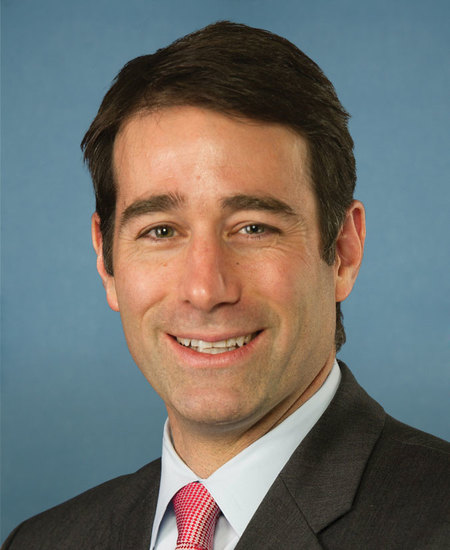
Rep. Garret Graves
Sponsored bills
Maddy summaryHR 3969 requires the Federal Aviation Administration (FAA) to create new safety rules for drones operating beyond visual line of sight (BVLOS) below 400 feet above ground level. The bill mandates the FAA to establish airworthiness standards, remote pilot qualifications, and processes for third-party safety approvals within 4 months of enactment, with a final rule due in 16 months. Key provisions include enabling drone use for agriculture, setting protocols for network-based identification, and clarifying operational requirements for testing. This directly affects drone manufacturers, agricultural operators, and remote pilots seeking to expand BVLOS drone operations in the national airspace system.
Maddy summaryHR 3792 extends U.S. security funding for Israel through 2028 (Section 3) and expands energy cooperation to include advanced nuclear technologies and carbon capture (Section 5). It requires annual reports on regional security partnerships involving Israel (Section 6) and ensures countries in the Abraham Accords can access U.S. development programs (Section 8). The bill also mandates reports on diplomatic efforts against ICC investigations targeting the U.S. and Israel (Section 10) and encourages people-to-people programs to strengthen the Abraham Accords (Sections 7, 9). These provisions directly affect Israel’s diplomatic engagement, security partnerships, and economic cooperation in the Middle East.
This bill directs the Council on Environmental Quality to study the potential for online and digital technologies, including a unified permitting portal, to address any delays in environmental reviews of federal actions and improve public accessibility and transparency under the National Environmental Policy Act of 1969.
Maddy summaryHJRES 39 is a joint resolution disapproving a specific rule issued by the Department of Commerce. The rule (87 Fed. Reg. 56868) outlined procedures for suspending import duties and estimated duties under Presidential Proclamation 10414, which related to certain imported goods. This resolution blocks the rule from taking effect, meaning the Department of Commerce’s procedures for suspending duties under that proclamation will not be enforced. The action directly affects importers and customs operations that would have relied on the suspended duty procedures. As a disapproval resolution, it does not create new policy but formally rejects an existing agency rule.
Maddy summaryHR 3593, the Drone Infrastructure Inspection Grant Act, creates two federal grant programs to support the use of domestic drones for inspecting critical infrastructure. It provides grants to state and local governments (e.g., for inspecting bridges, power grids, or water systems) and to eligible educational institutions (e.g., for training drone operators) to purchase or lease U.S.-made drones that avoid foreign-controlled components. The bill limits federal funding to 50-75% of project costs and allocates $2 million for 2024 and $12 million annually through 2028. It requires grant recipients to use drones manufactured in the U.S. by non-foreign-controlled companies, with priority given to projects addressing safety risks across diverse communities.
Access to Safe Contraception Act of 2023 This bill prohibits states from banning any form of contraception that is approved by the Food and Drug Administration. The bill does not preempt state laws that protect the right of any entity to opt out of providing contraception due to the entity's religious or moral beliefs.
Maddy summaryThis bill requires that AM radio receivers be included as standard equipment in all new motor vehicles (such as cars and trucks) sold in the United States, with a rule to be issued by the Department of Transportation within one year. The rule must ensure AM radio is easily accessible on the dashboard and allows manufacturers to use digital AM radio technology instead of traditional AM. During the one-year period between the bill's enactment and the rule's effective date, manufacturers must clearly label vehicles without AM radio. The bill also directs a study to evaluate whether an alternative system could deliver emergency alerts as reliably as AM radio across the country, especially during crises.
Maddy summaryHRES 363 is a resolution expressing support for recognizing National Police Week, an annual observance established by law to honor law enforcement officers who have died in the line of duty. The resolution acknowledges 556 officers killed in the line of duty during 2022 and calls for ensuring law enforcement officers have necessary equipment, training, and resources to protect both themselves and the public. It encourages the American public to observe National Police Week by honoring law enforcement personnel and recognizing their essential mission in serving communities across the United States. This resolution does not create new law but formally expresses congressional support for an existing observance.
Maddy summaryHR 3238, the Affordable Housing Credit Improvement Act of 2023, updates the Low-Income Housing Tax Credit (LIHTC) program to increase the availability of affordable housing across the United States. The bill makes several key changes including increasing state funding formulas, modifying tenant eligibility rules to better serve vulnerable populations (such as domestic violence victims and students), and expanding credit eligibility for projects in rural and Native American communities. Specific provisions raise the credit for properties serving extremely low-income households, clarify rules around tenant income increases, and require housing providers to protect victims of domestic violence. The bill also updates terminology from "low-income" to "affordable" throughout the tax code and enhances program transparency through data sharing requirements. These changes aim to make the LIHTC program more effective at creating and preserving affordable housing units for low-income households nationwide.