

Maddy summaryHR 6734 prohibits the use of federal funds to finalize, implement, or enforce the Bureau of Alcohol, Tobacco, Firearms, and Explosives' (ATF) proposed rule (2022R-17) defining "engaged in the business as a dealer in firearms." This bill directly affects the ATF by blocking funding for this specific regulatory rule, which was proposed in August 2023. The legislation does not create new requirements but prevents federal resources from being used to advance this particular ATF regulation.
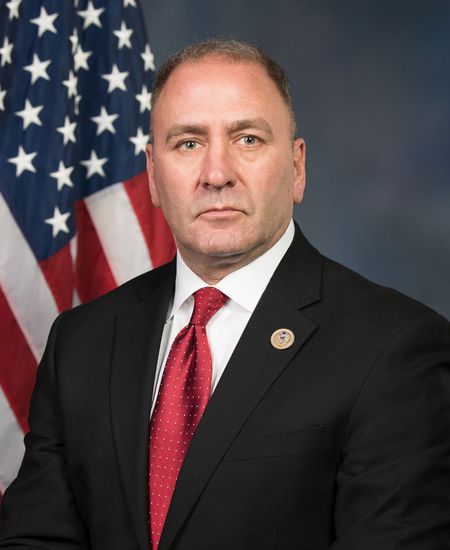
Rep. Clay Higgins
Sponsored bills
Maddy summaryHR 6728, the Save Women’s Sports Act of 2023, requires schools receiving federal funding to designate athletic teams as male, female, or coed based strictly on biological sex at birth. Female-designated teams must be composed exclusively of students biologically female at birth. Schools failing to comply risk losing all federal financial assistance. The bill directly affects public and private schools participating in federally funded sports programs.
No Regulation Through Litigation Act of 202 3 This bill specifies that a federal agency may not enter into a consent decree that exceeds the authority of the court that enters the order related to the decree. It also limits the inclusion of attorney fees or litigation costs in consent decrees or settlement agreements that result in a regulation or guidance document.
Maddy summaryHR 6477 amends immigration law to tighten border inspection procedures and reform parole eligibility. It restricts parole for applicants deemed inadmissible under specific sections, mandates return to contiguous countries (like Mexico) for certain land-border arrivals pending processing, and limits parole to narrowly defined urgent humanitarian cases (e.g., critical medical needs, funerals) or significant public benefits (e.g., law enforcement cooperation). The bill also requires states to sue the federal government if detention/return rules are violated and mandates annual reporting on parole use. These changes directly affect applicants arriving at land borders, particularly those seeking parole for medical, family, or law enforcement reasons.
Maddy summaryThe BOP Direct-Hire Authority Act (HR 6628) allows the Bureau of Prisons to hire qualified candidates for positions that would normally require competitive hiring without following standard federal hiring procedures, such as public announcements or competitive exams. This directly affects the Bureau of Prisons' ability to fill vacancies at its facilities more quickly. The authority expires once 96% of competitive service positions across all Bureau of Prisons facilities are filled. The bill changes the hiring process for existing positions but does not alter the total number of positions available.
Maddy summaryHR 6625, the Chinese Spy Balloon Assessment Act, requires the Secretary of Defense to submit a report to Congress within 90 days of the bill's enactment. The report must detail the national security effects of surveillance conducted by China via a high-altitude balloon shot down in U.S. airspace in February 2023, including impacts on military installations and an analysis of recovered technology's country of origin. This bill directly affects the Department of Defense and Congress by mandating a specific, time-bound assessment of a single incident. It does not create new policies or funding but establishes a procedural requirement for transparency about the 2023 balloon event. The report must be unclassified, though it may include a classified annex.
Maddy summaryThis resolution censures Representative Jamaal Bowman (NY-16) for pulling a fire alarm during a critical House vote on federal funding in September 2023. It follows Bowman's guilty plea to violating D.C. law (section 22-1319) for falsely reporting a fire, which forced the evacuation of the Cannon Building and disrupted congressional business. The resolution requires Bowman to appear in the House chamber for the public reading of the censure and formally accepts his $1,000 fine and apology letter as part of the disciplinary action. This is a procedural House disciplinary measure, not a policy change affecting constituents or legislation.
Maddy summaryHR 6580, the LAND Act, restricts foreign purchases of U.S. agricultural land by requiring foreign buyers to follow the land ownership rules of their home country (or the most restrictive country they hold citizenship in). It mandates sellers to report such sales to the Secretary of Agriculture, who must then notify relevant congressional members. The bill establishes a Task Force (including the Agriculture Secretary and Justice Department) to monitor compliance and report quarterly to Congress on sale details, locations, costs, and proximity to military installations. This directly affects foreign individuals, companies, and governments purchasing agricultural land in the U.S., shifting restrictions from U.S. standards to the buyer's home country rules.
Maddy summaryHRES 905 is a House resolution commemorating the 200th anniversary of the Monroe Doctrine, first articulated by President James Monroe in 1823. The resolution formally recognizes the doctrine's historical significance in establishing U.S. policy against foreign colonization in the Western Hemisphere and its enduring influence on U.S. foreign policy. It resolves that the House will "commemorate" the anniversary, "reassert" the U.S. position against foreign malign influence threatening Western Hemisphere democracies, and "recognize" the doctrine's principles as a foundational element of U.S. foreign policy. This is a purely ceremonial resolution with no new policy or funding implications.
Maddy summaryHR 6558, titled the "END the DEEP STATE Act," requires the Office of Personnel Management (OPM) to withdraw a specific proposed rule titled "Upholding Civil Service Protections and Merit System Principles" (published in the Federal Register on September 18, 2023). The bill directly affects OPM by mandating the withdrawal of this proposed rule and prohibiting the agency from finalizing, implementing, or enforcing it or any substantially similar rule. The key mechanism is a mandatory withdrawal of the 2023 proposed rule, which aimed to strengthen civil service protections and merit-based hiring standards. This is a procedural bill focused on halting a specific regulatory action, not on creating new policy.