

Maddy summaryHR 7118, the "Halt the Invasion Act," prohibits federal funding for any efforts to regain control of Shelby Park in Eagle Pass, Texas, without Texas's consent. It requires the federal government to reimburse Texas annually for border security costs at Shelby Park, capping reimbursements at the cost the federal government would have incurred if it maintained control. The bill's provisions sunset one year after enactment if Texas fails to publicly report monthly border security data (including arrests and drug seizures) for two consecutive months. This bill directly affects Texas state government and federal agencies managing border funding, creating a specific funding mechanism tied to Texas's data reporting.
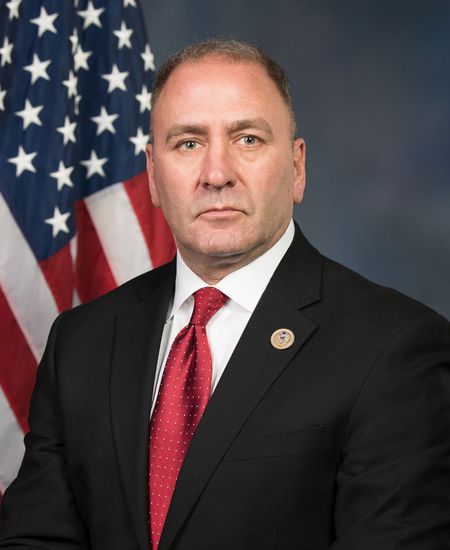
Rep. Clay Higgins
Sponsored bills
Maddy summaryThe Death Tax Repeal Act would eliminate the federal estate tax and generation-skipping transfer tax for estates of people who die on or after the bill's enactment date, and for generation-skipping transfers made after that date. It would also establish a new $10 million lifetime gift tax exemption (adjusted annually for inflation) and replace the existing gift tax rate schedule with a revised structure. These changes would primarily affect high-net-worth individuals and their heirs, as the estate tax and gift tax typically apply to large estates or gifts exceeding the new exemption threshold. The bill's provisions would take effect on the date of enactment, with transitional rules for the year the bill is signed into law.
Maddy summaryH.J.Res. 92 seeks congressional disapproval of a 2022 rule from the Food and Nutrition Service (FNS) that updated how discrimination complaints are processed in federal nutrition programs (like SNAP) following the *Bostock v. Clayton County* Supreme Court decision. The bill aims to block the rule’s implementation, which would have required agencies to handle discrimination complaints under the expanded protections established by *Bostock* (covering LGBTQ+ individuals). If passed, the resolution would make the FNS policy update ineffective, maintaining the previous complaint processing approach. This affects how federal nutrition programs address discrimination claims but does not change the underlying anti-discrimination law.
Maddy summaryHR 6980, the DOCTORS Act, reallocates unused J-1 visa waivers that states did not use for foreign medical graduates. Each state must report unused waivers by September 30 annually, and the State Department will redistribute them equally over three years for the next fiscal year. Ten percent of redistributed waivers must support doctors working in facilities serving medically underserved communities. This directly affects state agencies managing visa waivers and impacts foreign doctors seeking permanent U.S. residency after training.
Maddy summaryHR 6941, the Criminalize Fleeing from Immigration Enforcement Act of 2024, would make it a federal crime for individuals to flee or evade law enforcement officers enforcing specific immigration laws, including unauthorized entry (INA §275), re-entry after deportation (INA §276), or document fraud (INA §274). It directly affects people who flee officers identified as enforcing these immigration provisions or flee immigration checkpoints. The bill would impose penalties of up to five years in prison or fines for fleeing, with up to eight years for fleeing in a vehicle exceeding the speed limit. This amendment to Title 18, U.S. Code, creates a new criminal offense without changing existing immigration enforcement procedures.
Maddy summaryHR 6934, the Families’ Rights and Responsibilities Act, protects parents' fundamental right to direct their child's upbringing, education, and health care without government interference. It prohibits government actions that substantially burden these parental rights - including withholding benefits, imposing penalties, or excluding families from programs - unless the government proves a "compelling interest" and uses the "least restrictive means." The bill explicitly applies to all federal laws and requires courts to consider parental rights as a fundamental right under the Constitution, with exceptions only for actions causing serious child injury or death. It also adds parental rights to existing legal frameworks for recovering attorney fees in court cases involving these protections.
Maddy summaryHR 6926, the Safe and Open Streets Act, makes it a federal crime to intentionally block public roads or highways to disrupt the movement of goods or commerce. The bill adds a specific offense under federal law for purposefully obstructing, delaying, or affecting commerce by blocking roads, with penalties including fines or up to five years in prison. It directly affects individuals who block roads to interfere with transportation or delivery of goods, such as during protests or demonstrations. The law updates existing statutes to clarify and strengthen penalties for this specific type of obstruction, without changing broader traffic or protest laws.
Maddy summaryThe TAG Act requires federal agencies to be transparent when using automated systems (like AI) for critical decisions affecting individuals, such as housing, healthcare, benefits, or employment. It mandates agencies to provide clear, plain-language notices to people when an AI system influences decisions about them, explain how the decision was made, and offer appeal options. Agencies must also track system accuracy and reliability, with oversight reports to Congress. The law takes effect after OMB issues guidance within 270 days and expires after 10 years.
Maddy summaryThis bill would amend federal law to require the rejection of a state's electoral votes for president if a candidate nominated by a major political party did not appear on that state's ballot. It defines "major political party" using the IRS's criteria for "major party" status under the Internal Revenue Code. The change directly affects states' ability to certify presidential election results, as electoral votes from any state failing to include a major party candidate would be disqualified from counting. The bill does not alter voting procedures or ballot access but modifies the federal process for certifying electoral votes.
This resolution expresses the sense of the House of Representatives that regular journalistic activities, including the obtainment and publication of information, are protected under the First Amendment and that the federal government should drop all charges against and attempts to extradite Julian Assange.