

Maddy summaryHR 756, the 287(g) Program Protection Act, makes it easier for state and local law enforcement agencies to partner with federal immigration authorities under the 287(g) program. It requires the Secretary of Homeland Security to enter written agreements with any state or local agency that requests participation within 90 days, prohibits arbitrary denials without 180 days' notice to Congress, and bans termination of existing agreements without compelling reasons and 180 days' notice. The bill also mandates uniform federal training standards for participating officers, requires annual reports on program performance (including apprehensions, removals, and compliance), and establishes dedicated funding for the program. This directly affects state and local police departments seeking to enforce federal immigration laws within their jurisdictions.
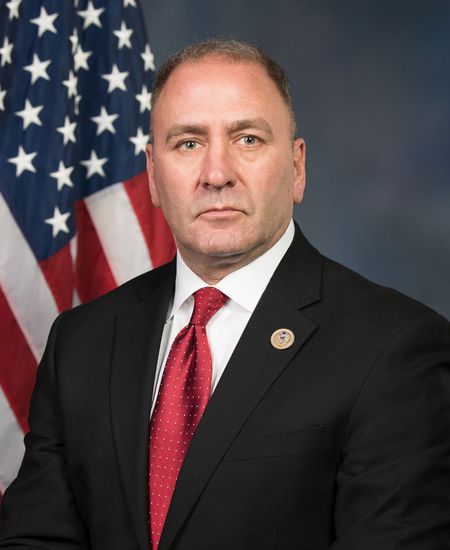
Rep. Clay Higgins
Sponsored bills
Illegitimate Court Counteraction Act This bill imposes sanctions against foreign persons (individuals and entities) who assist the International Criminal Court (ICC) in investigating, arresting, detaining, or prosecuting certain individuals. The bill categorizes as protected persons (1) any U.S. individual, U.S. entity, or person in the United States, unless the United States is a state party to the Rome Statute of the ICC and provides formal consent to ICC jurisdiction; and (2) any foreign person that is a citizen or lawful resident of a U.S. ally that is not a state party to the Rome Statute or has not consented to ICC jurisdiction. If the ICC attempts to investigate, arrest, detain or prosecute a protected person, the President must impose visa- and property-blocking sanctions against the foreign persons that engaged in or materially assisted in such actions, as well as against foreign persons owned by, controlled by, or acting on behalf of such foreign persons. The President must also apply visa-blocking sanctions to the immediate family members of those sanctioned. Upon enactment, the bill rescinds all funds appropriated for the ICC and prohibits the subsequent use of appropriated funds for the ICC.
Maddy summaryThis bill requires the Congressional Budget Office (CBO) to publicly publish the models, data, and detailed methodology it uses to estimate the costs and effects of legislation. Specifically, it mandates that the CBO make available all fiscal models, data routines, and the underlying assumptions behind its cost estimates, allowing independent verification. This applies to all CBO analyses of proposed bills, including the specific data and computational details needed for others to replicate the results. The requirement applies to all users of CBO reports - lawmakers, researchers, and the public - except for data legally restricted from disclosure, which would still require a public list of variables and descriptive statistics.
Maddy summaryHR 720, the "Protecting Life in Health Savings Accounts Act," prohibits using Health Savings Accounts (HSAs), Archer MSAs, health flexible spending accounts, and retiree health accounts to pay for abortions, except in specific cases. The bill defines "excluded abortion" to include abortions related to rape or incest, or those necessary to prevent a life-threatening physical condition caused by pregnancy (as certified by a physician). This change would affect individuals relying on these tax-advantaged accounts for healthcare expenses, making most abortion costs non-reimbursable through such plans. The provisions would take effect for taxable years beginning after December 31, 2025.
Life at Conception Act This bill declares that the right to life guaranteed by the Constitution is vested in each human being at all stages of life, including the moment of fertilization, cloning, or other moment at which an individual comes into being. Nothing in this bill shall be construed to authorize the prosecution of any woman for the death of her unborn child.
Maddy summaryHR 21, the Born-Alive Abortion Survivors Protection Act, requires medical staff at abortion facilities to provide the same immediate care and hospital admission to any infant born alive during an abortion as they would for any newborn. It mandates reporting failures to provide this care to law enforcement and imposes penalties of up to 5 years in prison for violations, with harsher penalties for intentional killing. The bill also allows women who undergo abortions to sue for civil damages, including triple the abortion cost, and provides for attorney fees. It defines "abortion" to exclude procedures performed after viability to preserve a live birth. This law directly affects healthcare providers at abortion facilities and creates new federal legal obligations for them.
Maddy summaryHR 679 nullifies specific changes the Food and Drug Administration (FDA) made in January 2023 to the safety rules (REMS) for the abortion pill mifepristone. The bill prohibits the FDA from implementing any future safety rules for mifepristone that are substantially similar to the nullified changes. This directly affects the FDA's regulatory authority over mifepristone, which could impact how healthcare providers prescribe the medication and how patients access it. The bill focuses solely on reversing the FDA's 2023 modifications without altering the drug's broader approval status.
Maddy summaryHR 697 (the "End the Deep State Act") creates a new "Schedule Policy/Career" for federal positions involving confidential, policy-making, or policy-advocating work that are not typically replaced during presidential transitions. Agencies must review their roles by 2025 to identify such positions for this streamlined hiring process, which bypasses standard competitive exams and reduces civil service protections for these roles. The bill revokes a 2021 executive order protecting federal workforce hiring practices and requires agencies to adjust appointment rules accordingly. This affects thousands of federal employees in policy-focused roles across executive agencies, shifting their classification from competitive hiring to a non-competitive, politically aligned appointment system.
Maddy summaryHR 685, the SAVE Moms and Babies Act of 2025, prohibits the FDA from approving new abortion drugs or allowing investigational use of existing ones. It restricts existing abortion drugs to in-person administration by certified healthcare providers in clinics or hospitals (not pharmacies), limits use to pregnancies under 70 days gestation, and requires providers to certify they can handle complications like severe bleeding or ectopic pregnancies. The bill mandates reporting of adverse events (such as hospitalizations or infections) to the FDA without patient identifiers and defines "abortion drug" broadly as any drug intended to terminate pregnancy, excluding specific medical exceptions. This directly affects FDA approval processes, healthcare providers prescribing these drugs, and drug manufacturers.
Maddy summaryHR 645, the National Constitutional Carry Act, would prevent all U.S. states and localities from requiring permits or imposing penalties for carrying firearms in public. It directly affects eligible U.S. citizens (including non-residents) who legally possess firearms under state and federal law, removing current permit requirements for public carry. The bill’s key provision amends federal law to invalidate any state or local law that criminalizes or discourages public firearm carry, except where private property owners clearly prohibit firearms or security screening occurs. This would override existing state permit laws, making permitless carry legal across all states and territories for qualified individuals.