

Maddy summaryHR 6499, the Beyond the Box for Higher Education Act of 2023, directs the U.S. Department of Education to create guidance for colleges and universities to remove criminal and juvenile justice history questions from their standard admissions applications. The bill requires institutions to either eliminate these questions entirely or, if necessary, ask them only after an initial admission decision, with clear transparency and opportunities for applicants to explain their history. It mandates training for staff on handling such information fairly and provides resources to help schools develop policies supporting students with justice system involvement. This policy change directly affects applicants with criminal or juvenile records, aiming to reduce barriers to higher education access for these individuals.
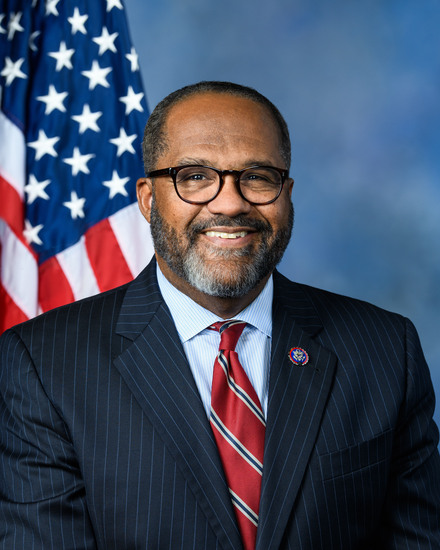
Rep. Troy A. Carter
Sponsored bills
Maddy summaryHRES 793 is a resolution passed by the U.S. House of Representatives calling on Hamas to immediately release all 199 hostages taken during Hamas' October 7, 2023 attack on Israel. The resolution condemns Hamas for the attack, the taking of hostages, and threats against hostages, while stating that holding hostages violates international humanitarian law under the Geneva Conventions. It demands the immediate release of all hostages and expresses sympathy for victims and their families. As a symbolic resolution, it does not create legal obligations but formally expresses the House's position.
Maddy summaryThis bill expands eligibility for VA-furnished headstones, markers, or medallions to include two groups: (1) enslaved individuals who accompanied military personnel during service, and (2) people who performed military functions despite being barred from service due to discrimination based on race, gender, sex, or ethnicity. The VA must create regulations within one year, defining "military function" and accepting evidence like pay records, diaries, or family bibles to verify eligibility. Requests must be made by direct descendants or approved representatives acting on their behalf. The bill requires the VA to submit an implementation report to Congress within 15 months of enactment.
Maddy summaryHR 6451, the Mental Health Justice Act of 2023, provides $250 million in federal grants to states, tribes, and localities to hire mental health professionals as first responders for specific emergencies. It directs these professionals to replace police in situations involving mental health crises, substance use, or intellectual/developmental disabilities - such as when a 911 caller describes a mental health emergency or a first responder identifies someone needing mental health support. The bill requires grantees to train responders in de-escalation techniques, link individuals to community-based services (not incarceration), and report on outcomes like reduced arrests or use of force. It also mandates data collection on demographics and prevents funneling people into institutional settings, with annual reports to Congress on program effectiveness.
Maddy summaryHRES 881 is a symbolic House resolution commemorating the 50th anniversary of the Endangered Species Act of 1973. It honors the Act's role in preventing the extinction of species like the bald eagle and humpback whale, citing its success in protecting 99% of listed species. The resolution does not create new legal requirements or affect any specific group, as it serves solely as a ceremonial recognition of the Act's conservation achievements.
Maddy summaryHRES 886 is a non-binding House resolution supporting Transgender Day of Remembrance (TDoR) by recognizing the epidemic of violence against transgender people and memorializing those lost in the year ending September 30, 2023. It specifically acknowledges the disproportionate impact of violence on transgender women of color, citing 33 documented deaths in the U.S. during that period (with estimates suggesting the actual number is higher due to underreporting). The resolution calls for Congress to prioritize studying and preventing such violence while affirming that all transgender people deserve dignity and respect. As a symbolic resolution, it does not create new laws or allocate funding but serves to raise awareness and honor victims.
Maddy summaryHR 6415, the CARE for First Responders Act, creates targeted mental health support for first responders, including law enforcement, firefighters, EMTs, and 911 operators (previously excluded from many services). It establishes a 24/7 confidential mental health hotline integrated with the 988 Suicide Lifeline, funds mobile crisis teams for disaster response, and mandates specialized training to reduce stigma and improve access to culturally competent care. The bill requires the development of peer support programs and education for responders and their families on mental health coping strategies. It authorizes $5 million annually (2024-2028) for grants to states and organizations to implement these services, specifically addressing the higher rates of mental health challenges and suicide among first responders compared to the general population.
Maddy summaryThe Business Uninterrupted Monetary Program Act of 2023 requires project sponsors receiving federal transportation grants to establish a "BUMP Fund" to reimburse businesses negatively impacted by construction disruptions. For highway projects costing $50 million or more and transit projects costing $100 million or more, sponsors must contribute up to 25% or 10% of non-Federal funds respectively to the fund. The fund covers specific expenses like utilities, rent, payroll, and lost income for affected private businesses or nonprofits. Unused funds can be used for project enhancements or other eligible purposes. This policy provides direct financial relief to businesses facing economic hardship due to transportation construction projects.
Maddy summaryHCONRES 77 designates the week of November 13-19, 2023, as "National Caregiving Youth Week" to raise public awareness about children and adolescents under 18 who provide primary or secondary care for family members with health conditions like chronic illness, disability, or aging. It recognizes these young caregivers as an underserved group facing challenges balancing care duties with school, mental health, and well-being. The resolution encourages educators, health professionals, and policymakers to acknowledge their contributions and supports new federal research to better understand their needs. As a symbolic gesture, it does not create new laws, funding, or services but aims to foster national recognition of this population.
This resolution supports the designation of National Microtia and Atresia Awareness Day. Microtia is a congenital condition affecting the outer ear; it is often accompanied by aural atresia (the absence or closure of the external ear canal resulting in hearing loss).