

Maddy summaryThis bill requires the Federal Reserve to publicly disclose the models, assumptions, and methodologies used to calculate banks' stress capital buffer requirements within 90 days of enactment (Section 2). It mandates the Fed to publish all stress test scenarios at least 30 days before testing begins, while prohibiting the use of climate-related scenarios for nonbank financial companies (Section 3). The bill also directs the Government Accountability Office (GAO) to annually evaluate the robustness and effectiveness of stress tests every three years, assessing their ability to identify risks to financial institutions and system stability (Section 4). These provisions directly affect large bank holding companies and nonbank financial institutions subject to Federal Reserve stress testing.
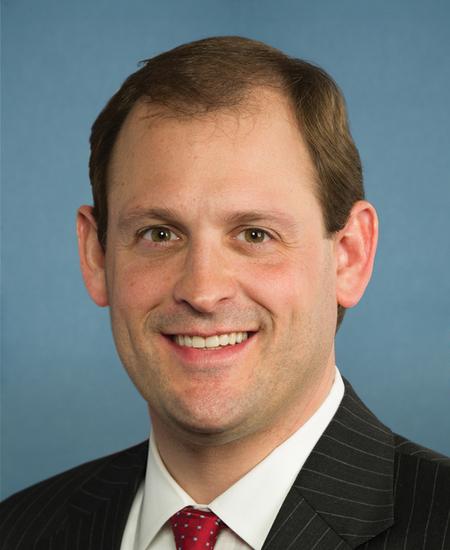
Sponsored bills
Maddy summaryThis bill requires the Federal Reserve Board to review its discount window lending program - where banks borrow short-term funds during financial stress - within 240 days of enactment. The review must assess the program’s effectiveness, technology, cybersecurity, communications, operating hours, and coordination with other liquidity providers, while also seeking public input. After the review, the Fed must create a written remediation plan to address deficiencies, including specific actions, timelines, and metrics for improvement. The Fed must then report findings and the plan to Congress within one year, followed by annual progress updates. This applies directly to the Federal Reserve and financial institutions relying on the discount window for emergency liquidity.
Maddy summaryHJRES 98 is a congressional resolution seeking to block a National Labor Relations Board (NLRB) rule that defined how businesses are considered "joint employers" for labor law purposes. The bill targets the NLRB's October 2023 rule (88 Fed. Reg. 73946), which would have changed how companies like franchisors or staffing agencies are held responsible for workers' rights. If passed, this resolution would cancel the rule, directly affecting businesses managing multiple employer relationships and labor organizations enforcing workplace standards. The measure uses a standard process under federal law to disapprove an agency rule, not creating new policy but reversing an existing regulation.
Maddy summaryThe Bank Supervision Appeals Improvement Act of 2024 establishes specific timeframes for regulatory examinations and appeals processes for banks and credit unions. It requires federal banking agencies to complete examinations within 270 days (with possible extension), hold exit interviews with management within 30 days of completion, and provide final examination reports within 60 days. The bill also creates an Office of Supervisory Appeals with specific appointment requirements and details a formal appeals process for institutions challenging regulatory decisions. Additionally, it mandates the FDIC to review resolution actions causing material losses to the Deposit Insurance Fund and report findings to Congress.
Maddy summaryHR 8231, the James Earl Jones Congressional Gold Medal Act, authorizes a Congressional Gold Medal to be awarded to actor James Earl Jones in recognition of his distinguished career in theater and film, and his role in advancing inclusion and equal opportunities for people of all backgrounds in the entertainment industry. The Treasury will strike the medal with an image and inscription of Jones, and may produce and sell bronze duplicates to cover costs, with proceeds deposited into the U.S. Mint's public enterprise fund. This bill serves as a ceremonial honor with no new legal requirements or policy changes.
Maddy summaryHR 8222, the RACE Act of 2024, amends the Securities Act of 1933 to streamline the approval process for certain small securities offerings. It allows companies that have previously issued exempt securities to automatically have subsequent "substantially similar" offerings approved by the SEC upon filing, without additional review, if each new offering is under $5 million and the total annual offerings under this rule stay under $5 million. This primarily affects small businesses and startups using specific exemptions for securities offerings, reducing administrative burdens for repeat issuers of similar securities. The bill defines "substantially similar" broadly, allowing securities to share key features without identical terms or structure. It does not change the underlying exemption rules but simplifies the process for qualifying repeat offerings.
Maddy summaryThis bill directs the Department of Education to use the International Holocaust Remembrance Alliance (IHRA) definition of antisemitism when enforcing Title VI of the Civil Rights Act in federal education programs. It clarifies that discrimination against Jewish individuals based on actual or perceived shared ancestry or ethnic characteristics may violate Title VI protections, requiring agencies to consider antisemitism intent during investigations. The law affects schools and universities receiving federal funds by guiding how they handle discrimination complaints related to antisemitism. It does not create new legal standards or expand the Department of Education's authority, as explicitly stated in the bill.
Maddy summaryThe Investing in All of America Act of 2023 amends the Small Business Investment Act to expand eligibility for a leverage exclusion, allowing Small Business Investment Companies (SBICs) to count more investments toward their leverage limits when funding businesses in low-income or rural areas, or in critical technology sectors vital to national security. It requires the Small Business Administration to adjust exclusion limits annually using the Consumer Price Index to account for inflation and to submit annual reports to Congress on economic activity and jobs generated by these investments. This bill directly affects SBICs and the businesses they support in designated underserved communities and strategic technology industries.
Maddy summaryHR 8060, the CALL Act, requires refugee resettlement agencies to notify specific elected officials before placing refugees in a community. It directly affects resettlement agencies and requires them to notify Senators from the state, the local House representative, and applicable state legislators prior to making a placement within a state. The key provision amends immigration law to mandate this pre-placement notification, replacing a previous requirement with a clearer, multi-tiered notification process. This change aims to ensure local elected officials are informed about refugee placements in their jurisdictions.
Maddy summaryHR 8061, the Crime Victims Fund Stabilization Act of 2024, ensures stable funding for the Crime Victims Fund by directing certain False Claims Act collections into it from 2024 through 2029. Specifically, it adds a provision requiring that amounts collected under the False Claims Act (excluding whistleblower rewards and government reimbursement for damages) be deposited into the fund during this period. This directly affects crime victims who rely on the fund for services like counseling and emergency aid, as it prevents potential shortfalls in funding. The bill makes a concrete policy change by redirecting specific federal civil penalties into the fund, rather than altering the fund's existing purposes or eligibility rules.