

Maddy summaryHR 9543 establishes a 22-member commission to study the feasibility of creating a U.S. sovereign wealth fund. The commission, including Treasury, Commerce, SEC, and Fed representatives plus academic experts, will examine funding sources, management structures, potential investments, and economic impacts over a two-year period. It must submit a public report with findings and recommendations to Congress, the President, and relevant agencies, but the bill itself does not create the fund or make any policy changes. The commission's work is purely exploratory and does not authorize any new spending or programs.
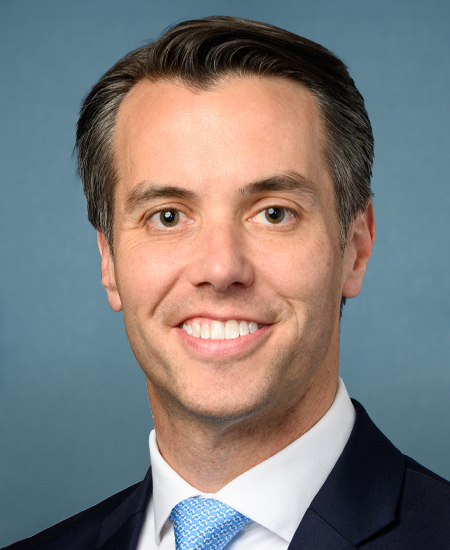
Rep. Morgan McGarvey
Sponsored bills
Maddy summaryThis symbolic resolution expresses congressional support for designating September 29, 2024, as "Veterans of Foreign Wars of the United States Day" to honor the organization's 125th anniversary. It requests the President issue a proclamation encouraging government agencies and the public to observe the day with ceremonies, though it creates no new laws or policy changes. The resolution recognizes the VFW's historical service to veterans but does not directly affect any individuals or programs.
Maddy summaryThe SAVES Act establishes a 5-year pilot program where the VA awards competitive grants to accredited nonprofits (e.g., Assistance Dogs International or International Guide Dog Federation members) to provide service dogs to veterans with specific disabilities like mobility issues, PTSD, TBI, or visual/hearing impairments. It requires veterans with mental health conditions to undergo a VA mental health evaluation to confirm the dog is the optimal treatment, prohibits nonprofits from charging veterans fees, and mandates VA-provided veterinary insurance for the dogs. The program is funded with $10 million annually for five years and directly affects eligible veterans enrolled in VA care with qualifying disabilities and participating nonprofit service providers.
Maddy summaryHR 5870, the Veteran Appeals Transparency Act of 2023, streamlines the appeals process for veterans seeking benefits from the Department of Veterans Affairs. It allows veterans to take only one appeal action at a time within one year of a decision, replacing previous sequential requirements. The bill also requires the Board of Veterans’ Appeals to publish weekly docket dates showing when cases assigned to specific board members will be decided. These changes directly affect veterans navigating appeals and aim to increase clarity and predictability in the timeline for benefit decisions.
Maddy summaryThis bill allows non-supervisory attorneys working at the Board of Veterans’ Appeals to be promoted to the GS-15 federal pay grade, a higher level typically reserved for senior roles. It directly affects attorneys handling veterans' appeals cases by creating a clearer career path to advance within the Board. The key mechanism is amending federal law to add this specific promotion opportunity, aiming to improve retention of these attorneys. The goal is to reduce the backlog of veterans' appeals by making the position more attractive and stable.
Maddy summaryHR 6531, the TRAIN VA Employees Act, requires the Department of Veterans Affairs (VA) to create mandatory training for all VA supervisors and certain other designated employees. The training program, to be developed within one year of enactment, covers key supervisor duties like performance appraisals, addressing workplace issues (including hostile environments), and managing employee conduct. All affected employees must complete the initial training within 18 months and refresher sessions every two years. The bill directly impacts VA supervisors and specific leadership roles, focusing on improving management practices through structured, adult-learning-based instruction.
Maddy summaryThe LET'S Protect Workers Act increases civil penalties for employers who violate labor and workplace safety laws. It significantly raises fines for child labor violations (up to $700,000 for serious injuries/deaths), wage and hour violations (up to $50,000 per violation for repeated/willful violations), and workplace safety violations (up to $800,000). The bill also increases penalties for farmworker protections (to $30,000), mine safety violations, and unfair labor practices (up to $100,000). New provisions require employers to pay penalties, with withdrawal orders for mines that fail to pay fines. These changes apply to violations occurring on or after January 1, 2025, with some provisions taking effect immediately.
Maddy summaryH.J. Res. 193 proposes a constitutional amendment to eliminate legal immunity for federal officials, including the President, from criminal prosecution for actions taken while performing official duties. It also prohibits the President from granting a pardon to themselves. The amendment would apply to all federal officers (such as the President, Vice President, and members of Congress) except for Congress members acting in their legislative role as defined in the Constitution. If ratified by 38 states, this change would become part of the U.S. Constitution, requiring no further congressional action.
Maddy summaryHR 9104, the Access to Birth Control Act, requires pharmacies that normally stock contraception to provide birth control or related medications without delay if in stock, or immediately offer alternatives like referrals to other pharmacies or expedited orders if unavailable. It prohibits pharmacists from intimidating customers, misrepresenting availability, breaching confidentiality, or refusing to fill valid prescriptions for birth control. Pharmacies violating these rules face civil penalties up to $1,000 per day or private lawsuits. The law specifically applies to pharmacies that routinely carry contraception and excludes cases where a valid prescription is missing or payment cannot be made. It aims to address documented refusals to dispense birth control, particularly following the Dobbs decision.
Maddy summaryHR 2971, the Veterans Claims Education Act of 2023, requires the Department of Veterans Affairs (VA) to provide veterans filing claims with clear information about free or low-cost assistance. Specifically, it mandates that veterans not represented by an accredited person receive notice about free help from veterans service organizations, an online directory of trained representatives, and how to report unaccredited representatives charging fees. The VA must also include fee warnings and links to these resources on its claim-filing websites. Additionally, the bill requires the VA to review and report on its processes for recognizing accredited representatives within 180 days of enactment.