

Maddy summaryThis bill requires the Service Corps of Retired Executives (SCORE) to provide nationwide entrepreneurship counseling and training to people recently released from federal prisons. It mandates mentoring, business planning assistance, and help accessing capital to help them start or grow small businesses. Annual reports to Congress will track participation, demographics, and program effectiveness. The law directly affects formerly incarcerated individuals in federal custody, not state prisons.
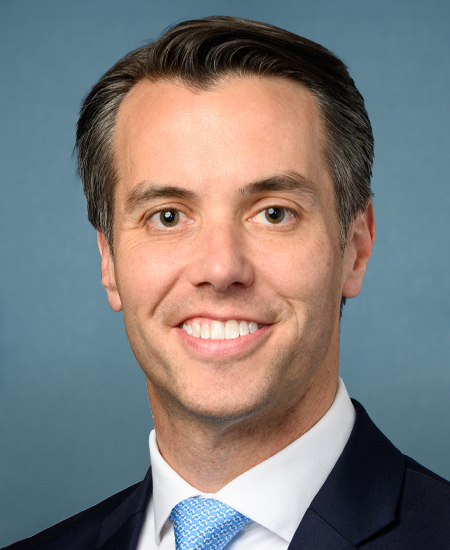
Rep. Morgan McGarvey
Sponsored bills
Maddy summaryHR 7323, the Montgomery GI Bill Selected Reserves Tuition Fairness Act of 2024, ensures Selected Reserve service members (like National Guard and Reserve members) using Chapter 1606 benefits receive in-state tuition rates at public colleges. It amends existing law to require public institutions to charge these veterans the same in-state tuition rate as state residents, rather than higher out-of-state rates. This change applies to academic periods starting August 1, 2024, directly affecting Selected Reserve members pursuing education through the Chapter 1606 program. The bill expands a long-standing tuition fairness provision previously limited to other GI Bill programs (like Chapter 30) to cover Chapter 1606 recipients.
Maddy summaryHR 1719, the Honoring Our Fallen Heroes Act of 2023, establishes a presumption that certain cancers diagnosed in public safety officers (like police and firefighters) are work-related if linked to their duties. It defines 22 specific cancers (including lung, mesothelioma, and WTC-related cancers) as "exposure-related," allowing officers or their families to receive benefits without proving direct work connection, provided they were diagnosed within 15 years of leaving active service. The bill also creates a process for adding new cancers to the list based on scientific evidence, requiring the Bureau to review petitions and make decisions within 180 days. This applies to deaths or disabilities occurring on or after January 1, 2023, directly affecting officers who developed covered cancers during service.
Maddy summaryHRES 1498 is a non-binding House resolution supporting the designation of September as "National Bourbon Heritage Month." It recognizes bourbon as America’s Native Spirit (as declared in 1964), highlights Kentucky’s role as the birthplace of bourbon (producing 95% of the world’s supply), and emphasizes the industry’s $9 billion annual economic impact. The resolution aims to celebrate bourbon’s cultural significance and Kentucky’s contributions to U.S. heritage, without creating new laws or altering existing policies. It was introduced by Rep. McGarvey and co-sponsors on September 24, 2024.
Maddy summaryHR 3433, the "Give Kids a Chance Act of 2024," requires pharmaceutical companies developing certain cancer drugs to conduct pediatric studies if the drugs target molecular pathways relevant to childhood cancers. It directly affects drug manufacturers submitting new applications for cancer treatments, particularly those combining previously approved adult cancer drugs or containing a single new active ingredient. The bill amends FDA regulations to mandate these pediatric investigations only when specific conditions are met, such as when a drug's molecular target is relevant to pediatric cancer growth. The FDA must issue implementing guidance within 12 months, and reports to Congress will track implementation and effectiveness starting 2 years after enactment.
Maddy summaryHR 9733, the School Bus Driver Shortage Relief Act, creates a National School Bus Driver Shortage Task Force within the Department of Education to address gaps in school bus driver availability. The Task Force must publish accessible resources for schools within 180 days, make quarterly recommendations on improving driver supply, and submit annual reports analyzing disparities in driver shortages by geography, student demographics, and working conditions like pay and safety. These reports will include root-cause analysis of the 20-year driver shortage trend and specific recommendations for federal and state action. The bill does not provide new funding or mandate changes but requires systematic data collection and guidance to help schools and policymakers address the shortage.
Maddy summaryHRES 1473 is a non-binding resolution passed by the U.S. House of Representatives that condemns racism, bigotry, and misinformation targeting Haitian people and their descendants. It celebrates the historical contributions of Haitian Americans to U.S. society, including founding cities (like Chicago via Jean Baptiste Point du Sable), advancing civil rights (W.E.B. Du Bois), and enriching healthcare, education, and culture. The resolution specifically calls on all Americans to reject racist tropes and misinformation, and urges elected officials to promote inclusivity and responsible communication. It was introduced in response to recent false claims that fueled threats against Haitian communities, such as the bomb threats in Springfield, Ohio.
Maddy summaryThe Veterans Accessibility Advisory Committee Act of 2024 establishes a new advisory committee within the Department of Veterans Affairs (VA) to improve accessibility for veterans and others with disabilities. The committee, composed of 15 voting members including veterans with disabilities, accessibility experts, VA staff, and veterans service organization representatives, will advise the VA Secretary on making services, facilities, information, and technology more accessible. It must meet at least twice yearly, assess accessibility barriers through reviews of complaints and facility assessments, and submit biennial reports to the VA Secretary and Congress detailing progress, unmet needs, and recommendations. These reports will guide the VA in complying with accessibility laws like the Americans with Disabilities Act and Section 508 of the Rehabilitation Act. The committee will operate for 10 years from the bill’s enactment.
Maddy summaryThis bill modifies Medicaid and CHIP rules to let eligible out-of-state healthcare providers enroll without extra state screening. It applies to providers already in Medicare or their home state program, with low fraud risk, serving children under 21 with complex medical conditions. Providers would receive 5 years of enrollment under this streamlined process, eliminating state-level barriers. The change directly affects children seeking specialized care across state lines and the providers who serve them.
Maddy summaryHRES 1448 is a non-binding House resolution stating that the House believes every person has the right to emergency health care, including abortion care, during medical emergencies. It specifically addresses concerns that abortion restrictions force medical providers to choose between treating patients in life-threatening situations or risking criminal charges. The resolution highlights that such restrictions disproportionately harm Black, Indigenous, people of color, immigrants, low-income individuals, and LGBTQI+ patients. It does not change existing laws but expresses congressional support for ensuring access to emergency care without legal barriers. The resolution was introduced by multiple House members and referred to the Energy and Commerce Committee.