

Domestic Workers Bill of Rights Act This bill provides rights and protections for domestic workers (e.g., housekeepers, nannies, caretakers, personal assistants, and chauffeurs), including pay and leave rights, and health and safety protections. Specifically, the bill repeals the exemption of domestic live-in employees from certain minimum wage and maximum hour requirements. Employers must provide written notice of termination and provide at least 30 days of lodging and two weeks of severance pay to terminated live-in employees. Live-in employees also must be provided with reasonable access to telephone and internet service during their employment. The bill requires employers to provide domestic workers with a written agreement covering wages, sick leave, benefits, and other matters. Further, domestic workers may request and be granted changes to work schedules due to personal events. The bill also provides domestic workers with certain privacy rights, extends to domestic workers protections against discrimination in employment, and increases the federal medical assistance percentage (FMAP) for certain Medicaid-funded medical services provided by domestic workers. The Department of Labor must (1) award grants for a domestic worker national hotline for reporting emergencies, training on hazards facing domestic workers, and workforce investment activities for domestic workers; and (2) establish a Domestic Worker Wage and Standards Board to investigate standards in the domestic workers industry. Labor must publish online a document that describes the rights and protections for domestic workers under this bill.
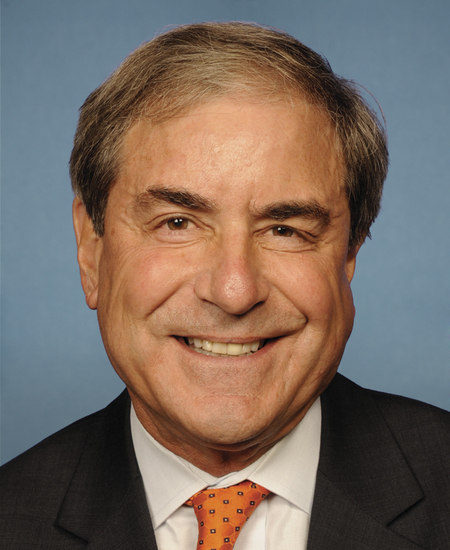
Rep. John A. Yarmuth
Sponsored bills
Protecting Renters from Evictions Act of 2021 This bill extends through December 31, 2021, the order issued by the Centers for Disease Control and Prevention titled Temporary Halt in Residential Evictions To Prevent the Further Spread of COVID–19 and published on September 4, 2020.
Captive Primate Safety Act This bill limits the trade and possession of nonhuman primates. For example, the bill prohibits most individuals from owning a nonhuman primate as a pet.
Mississippi River Restoration and Resilience Initiative Act or the MRRRI Act This bill establishes the Mississippi River Restoration and Resilience Initiative to protect and restore the Mississippi River Corridor. The Environmental Protection Agency (EPA) must establish the initiative and the Mississippi River National Program Office to carry out the initiative. The office must (1) coordinate agency actions to protect and restore the Mississippi River Corridor; (2) develop, implement, and update the initiative, actionable goals, and an action plan required by the bill; (3) make updates and information available on a public website; and (4) submit annual reports to Congress. Additionally, the bill outlines the focus areas that each project carried out under the initiative must address, such as improving water quality and protecting wildlife habitat. The office may make grants to certain nonfederal entities to carry out eligible projects. The bill directs the EPA to include the initiative as a separate budget line item in its annual budget submission. Next, the bill directs the Department of the Interior to coordinate with the office to establish four Mississippi River Corridor research centers within the U.S. Geological Survey (USGS). These research centers must, among other duties, conduct scientific research on the focus areas of the initiative. The bill also directs the USGS to host a science forum to share current science and identify data gaps related to the ecological health of the Mississippi River Corridor. The USGS must, within two years of the forum, develop a science plan for the initiative.
Rebuilding Economies and Creating Opportunities for More People Everywhere To Excel Act or the RECOMPETE Act This bill establishes a grant program to assist economically distressed local communities and labor markets that meet specified economic criteria, including employment criteria. The Economic Development Administration (EDA) must award 10-year grants to a local government, tribal government, economic development district, or consortium of local government units located in such areas. Each grant recipient must develop and implement a comprehensive strategy to address the economic challenges specific to the area. The grants may be used to increase employment opportunities, increase local per capita income, support economic development, and develop infrastructure and housing. Additionally, the EDA must periodically evaluate each grant recipient based on certain benchmark criteria and annually report on the implementation of the program. The bill specifies formulas for determining the grant amount for each community or market and the federal share of the cost of each program or activity conducted under the program.
Strengthening the Vaccines for Children Program Act of 2021 This bill modifies vaccination programs and coverage for children under Medicaid and the Children's Health Insurance Program (CHIP). Specifically, the bill expands and otherwise modifies the Vaccines for Children Program, which provides free vaccinations to individuals 18 years of age or younger who are uninsured or underinsured (i.e., with limited or no insurance for vaccines), are eligible for Medicaid, or are American Indians or Alaskan Natives. The bill expands the program to include children enrolled in CHIP and temporarily provides for additional payments to incentivize provider participation. The Government Accountability Office must report on the related effects of the bill's changes. The bill also expands coverage under Medicaid and CHIP to include vaccine counseling and educational services for children and temporarily requires payments to be made at a rate that is no less than the rate under Medicare for equivalent services. It also temporarily increases the Federal Medical Assistance Percentage (i.e., federal matching rate) for states that conduct culturally appropriate outreach regarding the benefits of vaccinations for children.
Health Enterprise Zones Act of 2021 This bill provides for the designation of Health Enterprise Zones in certain geographic areas with documented and measurable health disparities. This designation, which expires 10 fiscal years after the bill's enactment, confers eligibility for certain grants, student loan repayment programs, and tax credits for those working to reduce health disparities and improve health outcomes in these zones. Specifically, community-based nonprofits or local government agencies, in coalition with health care providers, social service organizations, and others, may apply to the Department of Health and Human Services (HHS) for the designation. The application must include a plan to reduce health disparities and achieve other outcomes. In implementing the program, HHS must consult with, among others, the Department of Housing and Urban Development. When approving applications, HHS shall consider factors including geographic diversity and the commitment of supporting funds from the private sector. HHS (1) may award grants to organizations or agencies that applied for the designation to support activities aligned with their plans, and (2) must carry out a student loan repayment program for health care providers who agree to provide services in a Health Enterprise Zone. In addition, the bill establishes tax credits for employers that hire, and individuals who work as, Health Enterprise Zone workers.
Green New Deal for Public Schools Act of 2021 This bill provides environmental and educational resources to public elementary and secondary schools and Bureau of Indian Education (BIE) schools. Specifically, the bill requires the Department of Energy's (DOE's) Office of Energy Efficiency and Renewable Energy to provide climate capital facilities grants to eligible entities (e.g., public schools and BIE schools). Grant recipients must use these funds to construct new, or convert existing facilities into, healthy zero-carbon schools. Healthy zero-carbon school refers to a school with highly energy-efficient facilities that produce or procure sufficient carbon-free and pollution-free renewable energy to meet the school's needs. Next, the bill directs the Department of Education (ED) to award resource block grants to qualified local educational agencies (LEAs) to hire and retain educators and support staff in high-need schools. ED must award grants to eligible consortia of LEAs for educational equity planning and implementation. In addition, ED must establish the Climate Change Resiliency Program to increase the resiliency of public and BIE schools during climate change-related events, natural disasters, and public health crises. Further, ED must establish a related grant program for state educational agencies. Grant recipients must use these funds for certain activities (e.g., green infrastructure projects). The bill establishes the Office of Sustainable Schools within ED to (1) administer the resource block grant and educational equity grant programs, and (2) coordinate with DOE and the White House Office of Domestic Climate Policy on climate capital facilities grants and the Climate Change Resiliency Program.
Social Determinants Accelerator Act of 2021 This bill establishes the Social Determinants Accelerator Interagency Council to increase coordination among health and social service programs and provide technical assistance to increase the impact of such programs. The council must also assist the Centers for Medicare & Medicaid Services to award up to 25 grants to state, local, or tribal health or human services agencies for social determinants accelerator plans. These plans must address at least one health and one social outcome for a specified target population.
Cancer Care Planning and Communications Act of 2021 This bill provides for Medicare coverage and payment of cancer care planning and coordination services for individuals who are diagnosed with or treated for cancer, including the development of treatment plans, follow-up care, and any necessary revisions.