

Keep Americans Safe Act This bill establishes a new criminal offense for the import, sale, manufacture, transfer, or possession of a large capacity ammunition feeding device (LCAFD). The bill does not prohibit certain conduct with respect to an LCAFD, including the following: importation, sale, manufacture, transfer, or possession related to certain law enforcement efforts, or authorized tests or experiments; importation, sale, transfer, or possession related to securing nuclear materials; and possession by a retired law enforcement officer. The bill permits continued possession of, but prohibits sale or transfer of, a grandfathered LCAFD. Newly manufactured LCAFDs must display serial number identification and the date of manufacture. Additionally, the bill allows a state or local government to use Edward Byrne Memorial Justice Assistance Grant Program funds to compensate individuals who surrender an LCAFD under a buy-back program.
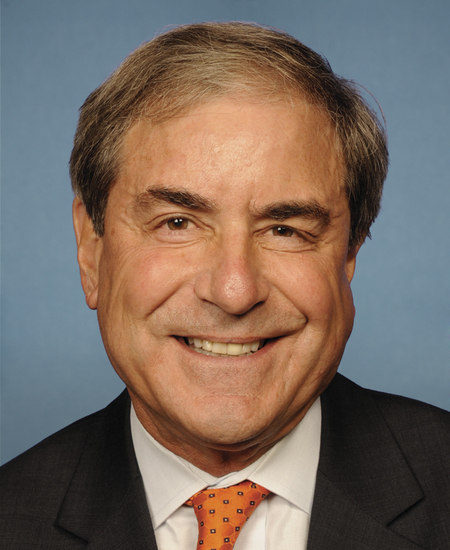
Rep. John A. Yarmuth
Sponsored bills
Khalid Jabara and Heather Heyer National Opposition to Hate, Assault, and Threats to Equality Act of 2021 or the Jabara-Heyer NO HATE Act of 2021 This bill creates grants for state and local governments to combat hate crimes. It also authorizes additional penalties for hate crime offenses. Specifically, it establishes grants for states to create state-run hate crimes reporting hotlines. It also authorizes grants for states and local governments to implement the National Incident-Based Reporting System and to conduct law enforcement activities or crime reduction programs to prevent, address, or respond to hate crimes. Finally, in the case of an individual convicted of a hate crime offense and placed on supervised release, the bill allows a court to order that the individual participate in educational classes or community service as a condition of supervised release.
Camp Lejeune Justice Act of 2021 This bill allows certain individuals to sue and recover damages for harm from exposure to contaminated water at Camp Lejeune in North Carolina between August 1, 1953, and December 31, 1987. This action is available only to individuals who were exposed to contaminated water for at least 30 days. The bill prohibits the U.S. government from asserting specified immunity from litigation in response to such a lawsuit. The bill also prohibits an individual who brings such an action from bringing a separate tort action against the United States based on the same harm.
Guaranteed Refugee Admission Ceiling Enhancement Act or the GRACE Act This bill establishes that the maximum number of refugees admitted each fiscal year shall be no less than 125,000 and that the maximum number shall be treated as the numerical goal for refugee admissions for the applicable fiscal year. The President may set a higher number if it is justified by humanitarian concerns or is otherwise in the national interest. Currently, the number admitted each fiscal year may not exceed 50,000 unless the President determines that a higher number is justified by humanitarian concerns or is otherwise in the national interest. The bill directs the President to take into consideration information from the United Nations High Commissioner for Refugees when establishing the maximum admission number and making certain other related decisions. The President shall report to Congress quarterly on (1) the number of refugees admitted during the preceding quarter, (2) the number of aliens who were security-cleared during the preceding quarter, (3) a plan to reach the numerical goal for admitted refugees for that fiscal year, and (4) other related information.
Healthcare Workforce Resilience Act This bill makes previously unused immigrant visas available to nurses and physicians who petition for such a visa before the date that is 90 days after the end of the declared national emergency relating to the COVID-19 (i.e., coronavirus disease 2019) outbreak. The number of visas available shall be the total number of unused employment-based immigrant visas from FY1992-FY2020, up to 40,000. Of such visas, 25,000 shall be reserved for nurses and 15,000 for physicians. Certain family members may accompany the principal beneficiary of a visa provided under this bill, and visas for such family members shall (1) be made available from the unused visas from FY1992-FY2020, and (2) not be counted against the 40,000 cap. Visas provided under this bill shall be exempt from per-country limitations.
Dignity for Detained Immigrants Act of 2021 This bill directs the Department of Homeland Security (DHS) to establish standards for facilities holding aliens in its custody, phases out using non-DHS facilities for such purposes, and contains other related provisions. The standards shall comply with the American Bar Association's Civil Immigration Detention Standards. The DHS Office of Inspector General (OIG) shall conduct periodic unannounced inspections of each facility and shall take various actions against noncompliant facilities, including imposing fines, cancelling contracts, and closing facilities. DHS shall report to Congress any death of an alien in its custody within 24 hours and conduct an investigation within 30 days that identifies policy changes that could reduce the likelihood of such a death. DHS is prohibited from entering into contracts for third parties to operate detention facilities or alternatives to detention programs and shall terminate existing contracts within three years of the bill's enactment. The bill establishes that OIG facility inspection reports and contracts for an outside entity to operate a detention facility are records available to the public under the Freedom of Information Act. DHS shall maintain certain information relating to detained aliens, including the alien's location and whether the alien was separated from family. The bill provides for various requirements and procedures related to detaining aliens, including (1) prohibiting DHS from detaining children, (2) imposing a presumption that an alien should be released, and (3) establishing that aliens in custody shall be subject to the least restrictive conditions. The bill also abolishes mandatory detention for asylum seekers.
Help Extract Animals from Red Tape Act of 2021 or the HEART Act of 2021 This bill modifies notice requirements in a civil forfeiture proceeding that involves the seizure of an animal involved in animal fighting. Specifically, the government must notify interested parties of an animal's seizure within 30 days (currently, 60 days). The notice period may be extended only if a delay is warranted after considering certain factors, including the cost to the government of providing shelter for the animal, the health of the animal and the effect of a delay on its rehabilitation, any increased risk that a delay could necessitate the euthanasia of the animal, and any psychological harm incurred by the animal's owner due to the delay in disposition. Additionally, the bill authorizes amounts in the Department of Justice Assets Forfeiture Fund to be used to pay for costs associated with a seized animal, including transportation, shelter, care, veterinary services, and humane euthanasia.
Animal Freedom from Testing, Experiments, and Research Act of 2021 or the AFTER Act of 2021 This bill requires federal research facilities to facilitate the adoption or nonlaboratory placement of certain warm-blooded animals (e.g., dogs, cats, monkeys, guinea pigs, hamsters, and rabbits) with animal rescue organizations, animal sanctuaries, animal shelters, or individuals. In order to be adopted or placed, the animals must (1) no longer be needed for research; (2) be suitable for release; (3) not be birds, rats, or mice.
Minks in Narrowly Kept Spaces are Superspreaders Act or the MINKS are Superspreaders Act This bill makes it unlawful to import, export, transport, sell, receive, acquire, or purchase American mink ( Neovison vison ) raised in captivity for fur production, whether dead or alive.
This bill requires the Department of Defense (DOD) to conduct outreach to build awareness among former members of the Armed Forces of the process established for the review of discharge characterizations related to sexual orientation (i.e., on the basis of Don't Ask, Don't Tell or a similar policy). DOD must also provide for specified relief for former members of the Armed Forces who were impacted by the discharge characterizations and ensure that DOD oral historians review related facts and receive testimony from affected individuals.