

This bill restores the limitation on downward attribution rules to 50% of stock ownership in applying constructive ownership rules to controlled foreign corporations.
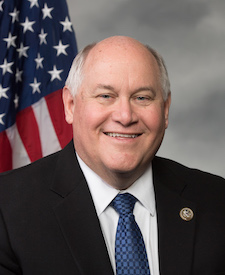
Rep. Ron Estes
Sponsored bills
Maddy summaryThis bill amends the Internal Revenue Code to change how certain insurance companies account for debt instruments (like notes or bonds). It excludes these debts from being treated as "capital assets" for tax purposes, meaning gains or losses from selling them won't be taxed as capital gains. It applies only to specific insurance companies, excluding those with certain tax elections (like Section 831(b) companies) or foreign entities. The change affects tax calculations for these insurers but does not create new family-focused policies, despite the bill's misleading title. The amendment applies to dispositions after enactment, with transition rules for existing losses.
Maddy summaryHR 5337, the Retirement Proxy Protection Act, amends ERISA to clarify how retirement plan fiduciaries (like 401(k) plan managers) must handle voting on company shareholder proxies. It requires fiduciaries to act solely in participants' financial interest when deciding whether to vote, considering economic impact and costs, while allowing them to skip voting on proposals affecting less than 5% of plan assets in a company. The bill establishes "safe harbor" rules that protect fiduciaries from liability if they follow policies limiting voting to proposals with material economic impact or asset thresholds. It also mandates recordkeeping of voting decisions and monitoring of third-party advisors managing these votes, effective January 1, 2024.
Maddy summaryHR 1435, the Preserving Choice in Vehicle Purchases Act, amends the Clean Air Act to restrict states from implementing vehicle emissions rules that limit the sale or use of new gasoline-powered cars. It directly affects states with stricter emissions standards (like California) by adding a new definition that blocks state rules "directly or indirectly" limiting internal combustion engine vehicles as defined in federal regulations as of January 1, 2023. The bill requires the EPA to revoke existing state emissions waivers granted between January 2022 and the bill’s enactment if they don’t comply with this new definition. This creates a concrete federal standard preventing states from advancing policies that could reduce demand for conventional vehicles.
Maddy summaryHR 3152, the "Fight CRIME Act," aims to maintain international restrictions on Iran's missile-related activities by requiring diplomatic efforts to extend these restrictions before they expire in October 2023. The bill mandates annual reports detailing U.S. diplomatic strategies, potential impacts of expiration, and measures to deter missile technology transfers to Iran. It establishes sanctions against foreign individuals or entities that knowingly support Iran's missile or drone programs, including asset freezes and visa restrictions. These sanctions apply regardless of whether UN restrictions remain in effect after their expiration, directly affecting foreign entities involved in these activities.
This bill increases from 20% to 25% the value of the total assets represented by securities of one or more taxable Real Estate Investment Trust (REIT) subsidiaries (thus restoring the REIT subsidiary asset test).
Maddy summaryThis bill approves and implements a new trade agreement between the United States and Taiwan, negotiated by the American Institute in Taiwan and Taiwan's Taipei Economic and Cultural Representative Office. The agreement aims to strengthen economic ties by addressing areas like supply chain security, investment screening, health, science, technology, and the digital economy. The bill establishes requirements for the President to consult with Congress before implementation, submit reports on how the agreement benefits US workers and businesses, and provide transparency about future trade negotiations. It also clarifies that the agreement doesn't override US or state laws and requires any future agreements to follow a similar approval process with congressional review.
Maddy summaryThis bill provides grants to behavioral health providers (like psychiatrists, community mental health centers, and substance use treatment facilities) to adopt certified health information technology. Eligible providers can receive up to $2 million per grant for up to two years to purchase or upgrade software that meets federal certification standards, enabling electronic sharing of patient data with primary care doctors, hospitals, and emergency departments. The grants require providers to demonstrate improved care coordination for mental health and substance use disorders, including bidirectional data exchange and use of standardized quality metrics. The program requires annual reporting to Congress on outcomes like data-sharing rates and impacts on care access, with $20 million authorized annually for fiscal years 2025-2029.
Maddy summaryHR 5073, titled the "Promoting Domestic Energy Production Act," is a tax code amendment affecting oil and gas companies. It changes how businesses calculate adjusted financial statement income by removing specific deductions related to intangible drilling and development costs from their financial reports. The bill requires companies to disregard depreciation and depletion expenses taken into account on their financial statements for these costs when computing taxable income. This applies to tax years beginning after December 31, 2022, directly impacting oil and gas producers who use these accounting methods. The bill does not create new energy policies but alters tax accounting rules for the industry.
Maddy summaryThis bill would expand employee ownership opportunities by making it easier for S corporations to adopt Employee Stock Ownership Plans (ESOPs). It extends tax deferral benefits for selling company stock to ESOPs, establishes a Treasury Department office to provide technical assistance for ESOP adoption, and amends small business laws to ensure ESOP-owned businesses remain eligible for small business programs. The bill also creates a new "Advocate for Employee Ownership" position within the Department of Labor to promote employee ownership and assist with related issues. These changes would directly affect S corporations considering or already using ESOPs, as well as employees who would become partial owners of their companies through these plans.