

Maddy summaryHRES 546 is a symbolic House resolution commemorating the one-year anniversary of the Supreme Court's June 24, 2022, Dobbs v. Jackson Women's Health Organization decision, which overturned Roe v. Wade. The resolution expresses support for the Court's ruling that the Constitution does not guarantee a right to abortion and celebrates the decision's impact on returning abortion policy authority to state legislatures. As a ceremonial resolution, it does not create new laws or directly affect any individuals or policies. The resolution focuses solely on marking the anniversary and affirming the position that unborn life should be protected.
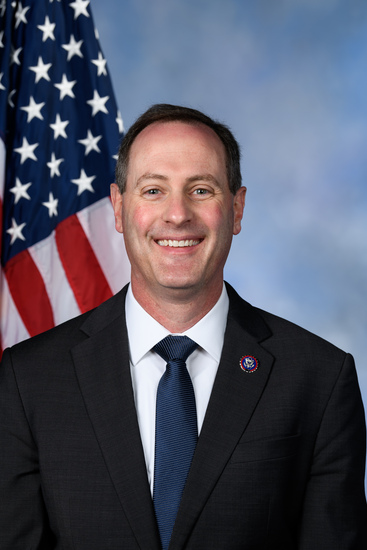
Rep. Tracey Mann
Sponsored bills
Maddy summaryThis bill renames the U.S. Food for Peace program after Peter O'Brien and makes key changes to how agricultural aid is delivered. It prohibits using cash, food vouchers, or foreign-sourced food for aid (section 2d), requires that at least 50% of annual funds be used for procuring U.S. agricultural commodities (section 2b(5)), and mandates annual reports to Congress on fund usage (section 2b(6)). These changes directly affect U.S. farmers supplying aid and international recipients of food assistance. The bill focuses on strengthening domestic agricultural exports within the Food for Peace program while adding transparency requirements.
Maddy summaryHJRES 45 is a congressional disapproval resolution targeting a specific Department of Education rule about federal student loans. It seeks to block the rule implementing "One-Time Federal Student Loan Debt Relief" (including modifications to Perkins, FFEL, and Direct Loan programs) by invoking the Congressional Review Act. If passed, this resolution would nullify the rule, preventing the Department of Education from using it to modify or waive student loan obligations. The bill directly affects borrowers who might have qualified for debt relief under the targeted rule.
Maddy summaryThis bill creates the "Boots to Business Program" to provide entrepreneurship training to military members, veterans (including those discharged under non-dishonorable conditions), and their spouses. It offers online courses, in-person classes, and business planning support to help these individuals start small businesses, with training covering topics like business plans, funding, and local resources. The program, running through 2028, requires collaboration with Veteran Business Outreach Centers and mandates sharing materials with the Departments of Defense, Labor, and Veterans Affairs. Annual reports will track participation, demographics, business startup rates, and program effectiveness.
Maddy summaryHR 277 would require Congress to approve major federal regulations before they take effect. Major rules are defined as those with significant economic impact ($100 million+ annually), major cost increases for consumers or industries, or significant adverse effects on competition, employment, or innovation. Agencies must submit detailed information about these rules to Congress, including cost-benefit analyses, before they can take effect. Congress would have 70 session days to approve the rule with a joint resolution; if they don't act within that timeframe, the rule would not take effect. This would increase congressional oversight of federal regulations and require more detailed information about proposed rules before they become law.
Maddy summaryThis bill bans displaying any flag other than the U.S. flag on the exterior or in hallways of public buildings, including government offices, military installations, and embassies. Exceptions allow specific flags like POW/MIA memorials, visiting diplomats' national flags, a member of Congress's home state flag, military unit flags, tribal flags, or local jurisdiction flags. It directly affects how public buildings display flags, requiring exclusive use of the U.S. flag in designated areas. The bill applies to all public buildings under federal definition, with limited exceptions for historical, diplomatic, or local displays.
Pre-Pilot Pathway Act This bill directs the Department of Transportation (DOT) to establish an apprenticeship program with flight schools in order to establish a commercial pilot pipeline; DOT must issue any necessary regulations to implement the program within one year of the bill's enactment. Each flight school participating in the program may select up to eight applicants per academic year to serve as apprentices. DOT must take appropriate actions to develop methods to incentivize pilots, including retired pilots, to become flight school instructors. This includes developing pathway programs for pilots to gain initial qualification or concurrent qualification as certified flight instructors.
Maddy summaryThe Protecting Veteran Community Care Act expands access to mental health and substance-use services through the Veterans Community Care Program for veterans who cannot get timely care in VA residential treatment facilities. It requires community providers to meet state licensing and accreditation standards and prohibits the VA from denying community care solely because community providers cannot meet the same wait time standards as VA facilities. The bill also mandates the VA to track and report on requests for mental health care, including approvals, denials, and appeals. This applies directly to veterans facing delays in accessing VA residential mental health programs.
Maddy summaryHR 3099 establishes a new Special Envoy for the Abraham Accords within the State Department, directly affecting U.S. diplomatic efforts and coordination. The envoy, appointed by the President with Senate confirmation, will coordinate U.S. government activities to expand diplomatic, economic, and security ties between Israel and Muslim-majority countries, including encouraging nations without formal relations with Israel to establish them. Key duties include strengthening existing Accords partnerships, fostering regional cooperation on issues like trade and water security, and providing diplomatic support for Israel’s regional engagement. The envoy must submit annual reports to Congress detailing specific diplomatic efforts and progress with partner countries.
Maddy summaryThe Telehealth Expansion Act of 2023 modifies the Internal Revenue Code to require health insurance plans to cover telehealth services without applying deductibles. It directly affects high deductible health plans (HDHPs) and their enrollees, ensuring telehealth visits aren’t counted toward annual deductibles. The key provision creates a "safe harbor" (Section 223(c)(2)(E)) so plans won’t lose HDHP status for excluding telehealth deductibles. This change applies immediately upon enactment and affects all plans offering telehealth services. It does not create new funding or services but adjusts tax code requirements for existing coverage.