

Maddy summaryThis bill prohibits the General Services Administration (GSA) from considering the legality or availability of abortion when acquiring, constructing, leasing, or entering into agreements for federal buildings or properties. It directly affects GSA's decisions regarding federal real estate, ensuring that such actions are not influenced by state abortion laws. The law amends specific sections of Title 40 (including building acquisition, construction, and leasing rules) to explicitly ban this consideration. It does not change abortion laws or apply to non-federal properties.
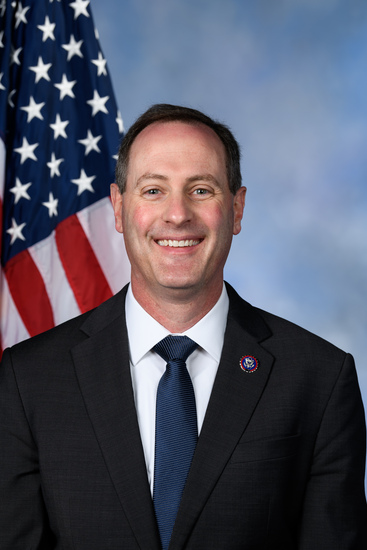
Rep. Tracey Mann
Sponsored bills
Maddy summaryThis bill, the Veteran Care Improvement Act of 2023, establishes new standards for when veterans can receive care from private providers instead of the Department of Veterans Affairs (VA). It requires the VA to allow veterans to seek community care if they cannot get an in-person appointment within 30 days for primary care or 60 days for specialty care at a VA facility within a 30 or 60-minute drive, respectively. The legislation also mandates that the VA notify veterans of their eligibility for community care within two business days, provide information about telehealth options, and explain reasons for denied care requests along with appeal instructions. Additional provisions include requiring the VA to conduct outreach to inform veterans about community care options, mandate the use of value-based reimbursement models for community care, and establish a pilot program to improve care administration through scheduling improvements and provider incentives. The bill also extends the deadline for health care entities to submit claims under the prompt payment standard from 180 days to one year, and requires the VA Inspector General to assess VA medical center performance in implementing community care programs within three years of enactment.
Maddy summaryHR 1639 establishes a 5-year pilot program at five VA medical centers to implement the Zero Suicide Institute's curriculum, aiming to improve suicide care for veterans. The program requires participating sites to train staff on standardized suicide screening, assessment, treatment protocols, and safety planning over ten weeks, with one site specifically serving rural veterans. It mandates annual reporting to Congress on staff training completion, policy alignment with the Institute's standards, and comparisons of suicide-related outcomes (like screening rates and hospitalizations) between pilot sites and other VA facilities. This directly affects veterans receiving care at the selected VA medical centers by changing how suicide risk is managed within their treatment.
Maddy summaryHR 4621, the Interactive Federal Review Act, requires the Transportation Secretary to encourage the use of interactive digital platforms for environmental reviews of highway projects funded by specific federal programs (like INFRA, Mega, and RAISE grants). It mandates the Secretary to publish best practice guidance within 90 days, select at least 10 projects to demonstrate digital tools for community engagement and environmental analysis, and prioritize applications that plan to use such platforms. The bill also requires a report to Congress within 180 days detailing efficiency metrics and examples of digital workflows used in environmental reviews under NEPA. This affects state and local highway project sponsors receiving federal funds, aiming to streamline reviews and improve public access to project information.
Protecting Kids from Fentanyl Act of 2023 This bill permits the use of the Preventive Health and Health Services Block Grant to address fentanyl in educational institutions. Specifically, grant funds may be used to (1) purchase naloxone or other opioid overdose reversal drugs for educational institutions, (2) train school nurses and other personnel on how to administer them, and (3) provide fentanyl awareness classes or materials to students.
This resolution expresses the sense of the House of Representatives that research and promotion boards support efforts to develop new markets and strengthen existing markets via research, education, and promotion.
Maddy summaryThe FRIDGE Act of 2023 authorizes $1 million annually (2024-2028) to provide technical assistance for improving cold chain infrastructure in developing countries. It directly affects U.S. agricultural exporters by addressing infrastructure gaps that cause food loss and export damage, and it targets developing nations needing upgrades to cold storage, transport, and port systems. The bill requires the Secretary of Agriculture to fund needs assessments, training, and infrastructure support through agreements with eligible trade organizations. This concrete funding mechanism aims to reduce food waste and expand U.S. agricultural exports by strengthening supply chains in key markets.
Maddy summaryHR 3358, the Mission not Emissions Act, prohibits federal contractors from being required to report greenhouse gas emissions or climate-related financial risks. The bill blocks compliance with the proposed Federal Acquisition Regulation rule that would have mandated contractors to disclose Scope 1, Scope 2, and Scope 3 emissions, create emissions inventories, or set emissions reduction targets for validation. It directly affects businesses holding federal contracts by removing these specific reporting obligations. The law focuses solely on eliminating disclosure requirements, not on changing emissions standards or reduction efforts.
Saving Organs One Flight at a Time Act This bill requires the Transportation Security Administration (TSA) and the Federal Aviation Administration (FAA) to jointly issue regulations, as necessary, to enable air carriers to transport human organs for transplant above wing (i.e., in the cabin of an aircraft). Among other things, the regulations must include consideration of protocols for air control outages; a requirement that air carriers implement a protocol for a person to accompany organs to and from the aircraft and between connecting flights; and a standardized process for commercial air carriers to accept, handle, and manage organs in transit. The TSA and the FAA must also consult with the Organ Procurement and Transplantation Network to identify metrics for the handling of organs and organ-related tissue by air carriers.
Maddy summaryHJRES 44 is a congressional resolution seeking to block a 2021 rule by the Bureau of Alcohol, Tobacco, Firearms, and Explosives (ATF). The rule classified firearms with stabilizing braces as "short-barreled rifles," which would have required additional licensing and regulation. This resolution uses a specific legal process (under Title 5, U.S. Code) to formally disapprove the ATF rule, meaning the rule would no longer be in effect. It directly affects firearm owners, manufacturers, and dealers who would have been subject to the rule’s requirements.