

Maddy summaryHR 5319, the Ban Offshore Abortion Tourism Act, prohibits performing abortions that result in fetal death within U.S. maritime jurisdiction (e.g., international waters under U.S. authority). It targets abortion providers in these zones, with exceptions for life-threatening medical conditions, pregnancies from rape (requiring 48 hours of counseling or treatment first), or pregnancies from rape/incest involving minors (requiring prior reporting to authorities). The bill allows civil lawsuits against providers for violations, awarding triple damages, medical costs, and attorney fees, but explicitly protects women from prosecution or financial liability. It does not restrict abortion access in foreign countries or U.S. territorial waters.
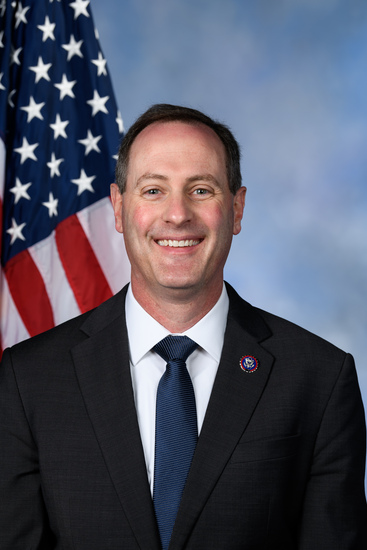
Rep. Tracey Mann
Sponsored bills
Maddy summaryThis bill requires the Bureau of Prisons to develop and implement a strategy for scanning all incoming mail at federal prisons to stop fentanyl and other synthetic drugs from entering facilities. It directs the Bureau to evaluate existing scanning technology within 180 days and submit a detailed plan to Congress within 90 days, including how to provide digital copies of mail to inmates within 24 hours and physical copies within 30 days (if safe). The strategy must achieve 100% mail scanning capacity at all federal prisons, prioritize high-security facilities, and include a budget proposal for fiscal years 2024-2026. This directly affects federal prisons, inmates, and Bureau employees by changing mail processing procedures to enhance safety and reduce staffing burdens from manual mail checks.
Maddy summaryThis bill amends the Fair Labor Standards Act to adjust child labor exemptions for teenagers. It allows employers to schedule teen workers (ages 14-17) for up to 24 hours per week during school sessions, provided they start no earlier than 7:00 a.m. and finish no later than 9:00 p.m. local time. The change directly affects teenage employees in school terms and their employers who comply with these specific hour and time limits. It modifies an existing exemption by adding these concrete work-hour parameters to prevent what the bill terms "oppressive child labor" related to excessive hours. The policy change is limited to these specific scheduling conditions within the current labor framework.
Investing in Rural America Act This bill allows Farm Credit System (FCS) institutions to provide financing and technical assistance for essential community facility projects as part of the Department of Agriculture's Community Facilities Direct Loan & Grant Program. (This program provides funding to develop essential community facilities in rural areas.) The FCS financing and technical assistance may be provided in order to make capital available to develop, build, maintain, improve, or provide other support for essential community facilities in rural communities (e.g., certain facilities that provide healthcare, community support, public safety, educational, or utility services). Under the bill, the financing provided by an FCS institution may not exceed 15% of the institution’s total assets unless the FCS institution offers at least one non-FCS lending institution an interest in the financing under reasonable terms and conditions acceptable to the borrower. The FCS institution must also report the offer to the Farm Credit Administration (FCA). The FCA must submit an annual report to Congress on the activities undertaken by FCS institutions under this bill, including through the partnerships between FCS institutions and other lending institutions. The FCA must post the report on the agency's website.
Rural Hospital Technical Assistance Program Act This bill provides statutory authority for the Rural Hospital Technical Assistance Program within the Department of Agriculture (USDA). Under the bill, USDA must establish and maintain (directly or by grant, contract, or cooperative agreement) a program to help eligible hospital facilities in rural areas with a population of 50,000 inhabitants or less. The program must provide tailored technical assistance and training to hospital facilities to identify development needs for maintaining essential health care services and support action plans for financial, operational, and quality improvement projects to meet these needs. Development needs include (1) constructing, expanding, and modernizing health care facilities; (2) increasing telehealth capabilities; and (3) acquiring or upgrading health care information systems (e.g., electronic health records). The program must also provide technical assistance and training to help hospital facilities to better manage their financial and business strategies and identify, and apply for assistance from, USDA loan and grant programs. In selecting eligible hospital facilities to participate in the program, USDA must give priority to borrowers and grantees of certain USDA rural assistance programs. USDA must also submit an annual report to Congress on the progress and results of the program.
Maddy summaryHR 4288, the Agricultural Labeling Uniformity Act, establishes national uniformity for pesticide labeling under federal law. It prohibits states, local governments, or courts from imposing additional or different labeling requirements on pesticides beyond those approved by the federal Administrator under the Federal Insecticide, Fungicide, and Rodenticide Act (FIFRA). The bill requires that all pesticide labeling aligns with federal human health assessments and carcinogenicity classifications, preventing states from creating separate rules for warnings or packaging. This directly affects pesticide manufacturers, distributors, and state regulatory agencies by eliminating conflicting state labeling standards. The key mechanism is a federal preemption of state labeling rules that differ from the nationally approved labeling.
Maddy summaryHR 5073, titled the "Promoting Domestic Energy Production Act," is a tax code amendment affecting oil and gas companies. It changes how businesses calculate adjusted financial statement income by removing specific deductions related to intangible drilling and development costs from their financial reports. The bill requires companies to disregard depreciation and depletion expenses taken into account on their financial statements for these costs when computing taxable income. This applies to tax years beginning after December 31, 2022, directly impacting oil and gas producers who use these accounting methods. The bill does not create new energy policies but alters tax accounting rules for the industry.
Maddy summaryHR 4956 establishes a 32-member advisory committee composed entirely of farmers and ranchers to study how Waters of the United States (WOTUS) regulations impact agriculture. The committee will examine specific issues like the prior-converted farmland exemption, common farming practices not covered by current exemptions, inconsistent regulatory rulings, and how to create clearer rules for jurisdictional waters. It must submit a report with recommendations to federal agencies and congressional committees within one year, focusing on improving WOTUS regulations for farmers. The bill does not change existing regulations but creates a formal process for farmer input.
Maddy summaryHR 4135, the AG RESEARCH Act, addresses long-neglected infrastructure needs at U.S. agricultural research facilities. It provides $200 million annually (2023-2027) for competitive grants to schools of agriculture to repair or modernize research facilities and equipment, with requirements for equitable geographic and institutional distribution (limiting any single state to 20% of funds). Additionally, it allocates $200 million annually for direct payments to USDA’s Agricultural Research Service (ARS) facilities to address deferred maintenance, prioritizing the most critical structures per their 2012 capital strategy. The bill also authorizes up to $1 billion per year (2024-2028) for planning and construction related to these facilities. These provisions target public research institutions directly affected by aging infrastructure, aiming to maintain U.S. competitiveness in agricultural science.
Maddy summaryThis bill establishes a USDA initiative (2024-2028) to prioritize funding for childcare improvements in rural and agricultural communities. It directs existing USDA programs - like the Essential Community Facilities program and RISE grants - to give priority to projects addressing childcare availability, quality, or cost in farming-dependent counties (using 2015 ERS county codes). Qualified applicants must be licensed childcare providers meeting state health/safety standards. The USDA must evaluate funded projects and report on impacts within three years.