

Maddy summaryThe SELF DRIVE Act of 2026 establishes federal safety standards for vehicles with automated driving systems (ADS), requiring manufacturers to develop detailed "safety cases" demonstrating their systems won't present unreasonable risks to road users. It creates a National Automated Vehicle Safety Data Repository to collect crash data from ADS-equipped vehicles, including information about vulnerable road users (pedestrians, bicyclists, etc.) and crash circumstances. The bill preempts state laws that conflict with these federal standards while allowing states to enforce identical requirements, and defines key terms related to automation levels (Level 3-5) and operational design domains. Manufacturers must demonstrate ADS capabilities for handling various driving scenarios, including detecting vulnerable road users and achieving minimal risk conditions during emergencies. The bill also establishes requirements for cybersecurity protections and reporting of crash data to the National Highway Traffic Safety Administration.
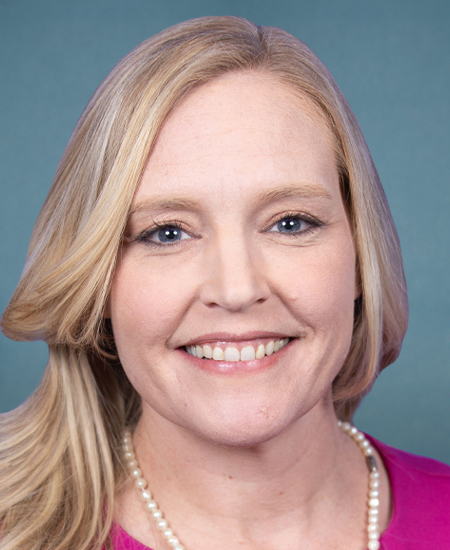
Rep. Erin Houchin
Sponsored bills
Maddy summaryThis bill modifies federal budget rules for unspent agency funds. It requires federal agencies to allocate 49% of unused funds to the next fiscal year, 49% toward paying the national debt, and 2% for retention bonuses (capped at 10% of an employee's base pay). Agencies must also limit future budget requests to the previous year's amount adjusted for inflation. The bill directly affects all executive branch agencies (excluding the Red Cross), altering how they manage leftover budget authority. It does not create new savings programs for individuals but changes government fiscal management procedures.
Maddy summaryThis bill establishes a Truth and Healing Commission to investigate the history and impacts of U.S. Indian Boarding School policies on Native American communities, including their cultural, emotional, and physical effects. The Commission will document these policies' history through research, public meetings across all 12 Bureau of Indian Affairs regions and Hawai'i, and consultation with survivors, tribes, and relevant Federal agencies. It will develop recommendations for federal action on memorialization, education, and addressing ongoing impacts, with a final report due six years after enactment. The Commission will include a Survivors Truth and Healing Subcommittee with 15 members representing boarding school survivors, their descendants, and tribal communities. The bill requires trauma-informed care at public meetings and mandates consultation with Native American communities throughout the process.
Maddy summaryThe Make Elections Great Again Act (HR 7300) would require voters to present photo identification to cast ballots in person or by mail for federal elections, with limited exceptions for religious objections or military voters. It would establish new requirements for proving U.S. citizenship during voter registration, including documentary proof of citizenship and proof of state residency. The bill would change mail-in ballot procedures by requiring voters to request mail-in ballots (rather than universal mail-in voting), implementing barcode tracking for mail-in ballots, and setting strict deadlines for ballot receipt. These provisions would apply to all states for federal elections held in 2027 or later, affecting how voters register, vote in person, and submit mail-in ballots for federal office elections.
Maddy summaryThis bill amends existing port infrastructure funding programs to require fair geographic distribution of projects across U.S. regions. It adds new requirements to two key programs: the Port and Intermodal Improvement Program (46 U.S.C. § 54301(a)(6)(B)) and assistance for small inland river/coastal ports (46 U.S.C. § 54301(b)(4)). The key provision mandates that selected projects must ensure equitable representation among all U.S. regions, preventing concentration of funds in specific areas. This directly affects how federal port funding is allocated, requiring the Department of Transportation to consider regional balance when approving projects.
Safeguard American Voter Eligibility Act or the SAVE America Act This bill requires individuals to provide documentary proof of U.S. citizenship when registering to vote, and requires photo identification to vote, in federal elections. Specifically, the bill prohibits states from accepting and processing an application to register to vote in a federal election unless the applicant presents documentary proof of U.S. citizenship. The bill specifies what documents are considered acceptable proof of U.S. citizenship, such as identification that complies with the REAL ID Act of 2005 that indicates U.S. citizenship. Further, the bill (1) prohibits states from registering an individual to vote in a federal election unless, at the time the individual applies to register to vote, the individual provides documentary proof of U.S. citizenship; and (2) requires states to establish an alternative process to demonstrate U.S. citizenship. Each state must take affirmative steps on an ongoing basis to ensure that only U.S. citizens are registered to vote, which shall include establishing a program to identify individuals who are not U.S. citizens using information supplied by certain sources. Additionally, states must remove noncitizens from their official lists of eligible voters. The bill (1) provides for a private right of action for certain violations, and (2) establishes criminal penalties for certain offenses. Individuals voting in federal elections must present an eligible photo identification document. An individual who votes by absentee ballot must submit a copy of their identification document with both the request for, and the submission of, the absentee ballot.
Maddy summaryThis symbolic House resolution expresses U.S. congressional support for Iranian protesters demanding democracy and human rights. It condemns the Iranian regime's violent suppression of protests, including killings, mass arrests, and internet restrictions, while urging the regime to release political prisoners and restore communication access. The resolution reaffirms the Iranian people's right to self-determination through free elections and echoes a 2023 resolution (HCR 7) that similarly praised protesters. As a non-binding expression of support, it does not impose new policies or alter U.S. government actions.
Maddy summaryHR 909, the Crime Victims Fund Stabilization Act of 2025, modifies how funds from the False Claims Act are deposited into the Crime Victims Fund. It specifies that from 2025 through 2029, certain False Claims Act proceeds (specifically those for qui tam plaintiff payments and government damage reimbursements) cannot be deposited into the fund. This change directly affects the composition of the Crime Victims Fund by excluding these specific revenue streams during the specified period. The bill does not create new benefits or alter victim services; it only adjusts fund allocation rules for existing False Claims Act revenues.
Maddy summaryThis bill repeals federal energy efficiency standards for manufactured housing that were set to take effect in 2022. It specifically nullifies a Department of Energy rule published in May 2022, removing requirements for energy conservation in manufactured homes. The change directly affects manufacturers and buyers of manufactured housing by eliminating these new efficiency mandates. The bill does not establish new standards but removes existing ones from the Energy Independence and Security Act of 2007.
Maddy summaryThis resolution (HRES 979) appoints Mr. Knott to the House Committee on Ethics, effective January 7, 2026. It is a routine procedural measure to fill a committee seat, directly affecting the composition of the Ethics Committee. The bill contains no policy changes or substantive provisions - only the formal designation of a representative for committee service. This type of resolution is standard practice for committee assignments in the U.S. House of Representatives.