

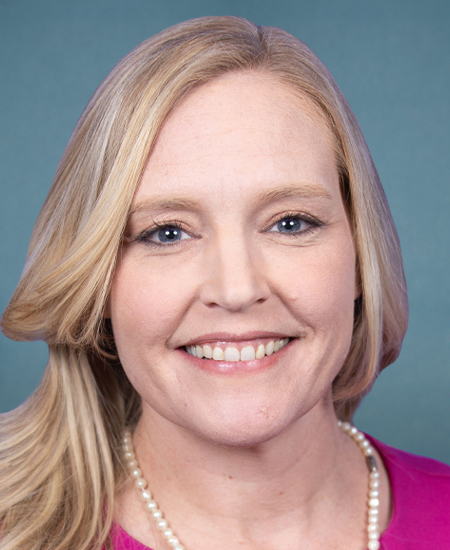
Photo of Erin Houchin
R United States House · District 9 · Indiana On the 2026 ballot

Rep. Erin Houchin

Compare
Total votes
1,879
all sessions
Attendance
99%
18 missed
Near the chamber average
With party
96%
of cast votes
Near the chamber average
Bipartisan score
2%
crosses aisle rarely
Near the chamber average
Sponsored
567
bills & resolutions
Near the chamber average
Committees
7
assignments
567 bills and resolutions

Sponsored bills

Total
567
Primary
71
Co-sponsor
496
This page
567
matching current filters
Primary HRES 977
Passed · United States House · Lead sponsor
Providing for consideration of the bill (H.R. 4593) to amend the Energy Policy and Conservation Act to revise the definition of showerhead; providing for consideration of the bill (H.R. 5184) to prohibit the Secretary of Energy from enforcing energy efficiency standards applicable to manufactured housing, and for other purposes; and providing for consideration of the bill (H.R. 6938) making consolidated appropriations for the fiscal year ending September 30, 2026, and for other purposes.

Maddy summaryHRES 977 is a procedural resolution that sets rules for the House of Representatives to consider three specific bills without procedural delays. It enables debate and voting on H.R. 4593 (which would revise showerhead definitions under energy law), H.R. 5184 (which would prohibit enforcement of energy efficiency standards for manufactured housing), and H.R. 6938 (which would allocate federal funding for fiscal year 2026). The resolution waives objections to these bills and limits debate time to one hour per side for each bill. This resolution itself does not change policy but streamlines the legislative process for these three measures.

Passed Jan 7, 2026 0 co-sponsors
Co-sponsor HRES 981
In committee · United States House · Co-sponsor
Expressing the sense of the House of Representatives that the United States should reduce and maintain the Federal unified budget deficit at or below 3 percent of gross domestic product.

This resolution expresses the sense of the House of Representatives that (1) Congress should adopt a fiscal target to reduce the federal budget deficit to 3% of gross domestic product or less as soon as possible and no later than the end of FY2030; and (2) after the target is achieved, Congress should continue to pursue further deficit reduction with the goal of achieving a balanced federal budget.

In committee Jan 7, 2026 1 co-sponsor
Primary HR 4886
In committee · United States House · Lead sponsor
Larry Barrett Veterans’ Memory Care Act of 2025

Maddy summaryThis bill creates new rules for veterans needing memory care services under the Veterans Community Care Program. It requires the VA to honor veterans' preferences about where, when, and how they receive care, and to assess if they need a caregiver, for three years after enactment. Veterans living more than an hour from approved providers can get faster approval (within 30 days) for care with non-network providers, with in-home care provided during the approval wait. It also ensures veterans already receiving care under these new rules can continue until their care episode ends, regardless of the three-year timeframe.

In committee Dec 19, 2025 0 co-sponsors
Primary HR 6750
In committee · United States House · Lead sponsor
To codify Executive Order 14388 (relating to improving our Nation through better design).

Maddy summaryHR 6750 codifies Executive Order 14388, which focuses on improving the nation through better design, by giving it the force and effect of law. This procedural bill does not create new policy but formally incorporates an existing executive order into statutory law. It directly affects federal agencies required to implement the order's provisions regarding design standards. The key mechanism is simply elevating the executive order to have the legal standing of an act of Congress. This change does not alter the substance of the order's goals but ensures its requirements are enforceable under law.

In committee Dec 16, 2025 0 co-sponsors
Primary HR 6749
In committee · United States House · Lead sponsor
Eliminating Information Silos Act of 2025

Maddy summaryThe Eliminating Information Silos Act of 2025 codifies Executive Order 14243 into law, requiring federal agencies to eliminate information silos that hinder efficient data sharing. This means agencies must implement specific measures to improve cross-departmental information flow, aiming to stop waste, fraud, and abuse through better coordination. The bill directly affects all federal agencies handling data, as they must now comply with these requirements under legal mandate. It does not create new policy but ensures the existing executive order becomes binding law.

In committee Dec 16, 2025 0 co-sponsors
Co-sponsor HR 452
Signed into law · United States House · Co-sponsor
Miracle on Ice Congressional Gold Medal Act

Miracle on Ice Congressional Gold Medal Act This act provides for the award of Congressional Gold Medals to the members of the 1980 U.S. Olympic men's ice hockey team in recognition of the team's achievement at the 1980 Winter Olympic Games.

Signed into law Dec 12, 2025 1 co-sponsor
Primary HR 6489
In committee · United States House · Lead sponsor
SAFE BOTs Act

Maddy summaryThe SAFE BOTs Act requires chatbot providers to clearly disclose when a chatbot is artificial intelligence (not a human) at the start of interactions and when users ask about its nature. It mandates providers to share crisis hotline resources if a minor mentions suicide or self-harm, and to automatically suggest breaks after 3 hours of continuous use. The law also requires policies to address harmful content like sexual material, gambling, or substance use during interactions with minors (under age 17). Violations are enforced by the FTC as deceptive practices, with states allowed to sue for additional protections.

In committee Dec 11, 2025 0 co-sponsors
Co-sponsor HR 6333
In committee · United States House · Co-sponsor
Parents Over Platforms Act

Maddy summaryHR 6333, the Parents Over Platforms Act, requires app stores (like the Apple App Store or Google Play) and app developers to implement age verification systems for applications that offer different experiences for minors versus adults. It mandates app stores to ask users for age during signup, provide parents with tools to block age-inappropriate apps, and prevent developers from showing personalized ads to minors. The bill directly affects app stores, developers of "covered applications" (such as games or social media apps targeting children), and parents seeking to control their children’s app access. Key provisions include requiring developers to confirm if their app treats minors differently, obtain parental consent for age-restricted content, and use age signals from app stores to verify user age. The law applies to apps on smartphones, tablets, and gaming consoles but excludes websites and browsers.

In committee Dec 11, 2025 1 co-sponsor
Primary HR 5360
In committee · United States House · Lead sponsor
AWARE Act

Maddy summaryHR 5360, the AWARE Act, requires the Federal Trade Commission (FTC) to create and publish public educational resources about AI chatbot safety within 180 days of the bill becoming law. These resources will specifically help parents, educators, and minors (under age 18) understand safe AI chatbot use, including how to identify risks, privacy practices, and supervision strategies. The FTC must model these materials after its existing Youville program. The bill defines "AI chatbot" as consumer-facing interactive AI systems but does not regulate or restrict chatbot development or use.

In committee Dec 11, 2025 0 co-sponsors
Co-sponsor HR 3149
In committee · United States House · Co-sponsor
App Store Accountability Act

Maddy summaryThe App Store Accountability Act requires major app stores (with over 5 million US users) to verify users' ages at account creation and obtain verifiable parental consent before minors can download apps or make in-app purchases. App stores must clearly display age ratings for apps, provide age verification data to developers, and notify parents of significant app changes affecting minors. App developers must verify user age and parental consent through the app store's system, use age data only for age-appropriate restrictions, and cannot enforce terms against minors without verified parental consent. The Federal Trade Commission and state attorneys general will enforce these requirements, with app developers potentially shielded from liability if they follow the rules and industry standards.

In committee Dec 11, 2025 1 co-sponsor
Showing 91 to 100 of 567 bills
Previous 1 … 9 10 11 … 57 Next