

Maddy summaryHR 6751 authorizes the U.S. Mint to produce commemorative coins honoring Roberto Clemente, a Hall of Fame baseball player and humanitarian, including 50,000 $5 gold coins, 400,000 $1 silver coins, and 750,000 half-dollar coins. The coins must feature Clemente's image and inscriptions like "Roberto Clemente" and "2027," with all sales including a surcharge ($5-$35 per coin) paid to the Roberto Clemente Foundation. The foundation, which supports youth sports, education, and disaster relief programs, will use these funds for its mission, while the U.S. Treasury must recover all production costs. The coins will be sold exclusively in 2027, with no net cost to the government.
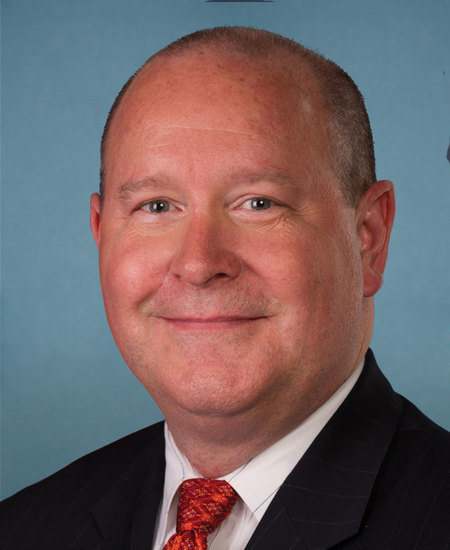
Rep. Larry Bucshon
Sponsored bills
Maddy summaryThe Working Dog Commemorative Coin Act (HR 807) directs the U.S. Treasury to mint three types of commemorative coins honoring working dogs' service: $5 gold coins, $1 silver coins, and half-dollar coins with specific weight and composition requirements. Each coin will carry a surcharge ($35 for $5 coins, $10 for $1 coins, $5 for half-dollars) that will be paid directly to America's VetDogs to support their programs providing service dogs for veterans, the disabled, and others. The coins will be issued in 2027 with designs reflecting working dogs' roles in military, detection, therapy, and assistance work. The legislation specifies that all surcharge revenue must fund America's VetDogs' operations without creating new government programs. This is a commemorative measure focused on honoring working dogs' contributions through coin sales, with all surcharge funds going to a specific nonprofit organization.
Maddy summaryThis bill enhances the existing American Battlefield Protection Program by expanding eligibility for grants to include Tribes, nonprofit organizations, and educational institutions, alongside States and local governments. It clarifies that eligible sites must be identified in the 1993 Civil War battlefield report or 2007 Revolutionary War/War of 1812 report, excluding sites already within National Park boundaries. The bill also requires the Secretary to submit updated battlefield condition reports to Congress every 10 years, starting two years after enactment, tracking preservation efforts and battlefield changes. These changes streamline program administration and ensure ongoing assessment of historic battlefield sites.
Maddy summaryHR 3290, the 340B Transparency Act, requires safety-net hospitals and clinics participating in the 340B drug discount program to report detailed data about their drug usage and patient demographics to the Department of Health and Human Services (HHS). Covered entities must track and report the number of patients receiving 340B drugs by insurance type (like Medicaid or private insurance), costs for charity care, and savings from discounted drugs. HHS will publish this data annually on a public website in an easily searchable format. The bill adds new reporting requirements for entities to demonstrate how they use savings from the 340B program and allows HHS to audit their records to ensure compliance.
Maddy summaryHJRES 218 is a congressional disapproval resolution targeting a specific Energy Department rule. It seeks to block the Department of Energy's 2023 rule establishing energy efficiency standards for commercial water heating equipment (published in the Federal Register on October 6, 2023). The resolution directs Congress to disapprove this rule under a specific legal process (Chapter 8 of Title 5, U.S. Code), which would prevent the rule from taking effect. This directly affects commercial water heater manufacturers and businesses required to meet the proposed efficiency standards. If passed, the rule would have no legal force or effect.
Maddy summaryHRES 1548 is a non-binding resolution supporting the designation of October 2024 as "National Learning Disabilities Awareness Month." It highlights that specific learning disabilities affect 34% of students receiving special education services and notes significant academic challenges, with over 95% of affected 4th and 8th graders not proficient in reading or math in 2022. The resolution calls on schools to continue providing appropriate support for students with learning disabilities but does not create new laws or funding. It aims to raise public awareness about learning disabilities, not to change educational policies.
Maddy summaryHR 9950, the "Miracle on Ice Congressional Gold Medal Act," authorizes three gold medals to be awarded to the members of the 1980 U.S. Olympic men's ice hockey team for their historic victory over the Soviet Union during the Winter Olympics. The medals, designed by the Treasury Secretary, will be presented by Congress to honor the team's achievement, which revitalized American morale during the Cold War. One medal will be displayed at the Lake Placid Olympic Center, one at the USA Hockey Hall of Fame in Eveleth, Minnesota, and one at the U.S. Olympic Museum in Colorado Springs. The bill also permits the sale of bronze duplicates to cover production costs. This is a ceremonial honor, not a policy change, directly recognizing the team members and their legacy.
Maddy summaryHR 9898 requires the Department of Energy to lead a federal task force that will analyze U.S. critical materials processing capacity and report to Congress within one year. The report must identify supply chain gaps, assess regulatory barriers (like Clean Air Act compliance), and evaluate opportunities for foreign investment from allied nations. It also mandates a GAO review of how current policies and permitting processes hinder domestic investment in processing critical minerals used in clean energy and technology. The bill directly affects federal agencies, domestic processing industries, and potential foreign investors seeking to build U.S. facilities.
Maddy summaryThis bill clarifies Medicare rules to allow doctors to provide certain critical medications directly in their offices without extra administrative hurdles. It specifically amends a Medicare provision (Section 1877(b)(2) of the Social Security Act) to remove a requirement that drugs furnished in-office must follow specific administrative rules, effective May 11, 2023. The bill also directs the removal of conflicting Medicare guidance published in 2021 and 2023, which had previously restricted this practice. This change directly affects Medicare beneficiaries (seniors) and doctors' offices that supply covered medications during patient visits. It streamlines access to necessary drugs by eliminating an unnecessary barrier to in-office medication administration under Medicare.
Maddy summaryHR 3433, the "Give Kids a Chance Act of 2024," requires pharmaceutical companies developing certain cancer drugs to conduct pediatric studies if the drugs target molecular pathways relevant to childhood cancers. It directly affects drug manufacturers submitting new applications for cancer treatments, particularly those combining previously approved adult cancer drugs or containing a single new active ingredient. The bill amends FDA regulations to mandate these pediatric investigations only when specific conditions are met, such as when a drug's molecular target is relevant to pediatric cancer growth. The FDA must issue implementing guidance within 12 months, and reports to Congress will track implementation and effectiveness starting 2 years after enactment.