Metropolitan Statistical Area Preservation Act This bill prohibits the Office of Management and Budget (OMB) from establishing, for purposes of designating areas as metropolitan statistical areas (MSAs), a minimum population for the urban area of such MSA that is more than 50,000. The OMB may, for statistical purposes only, establish other statistical area designations with higher minimum population requirements for such urban areas.
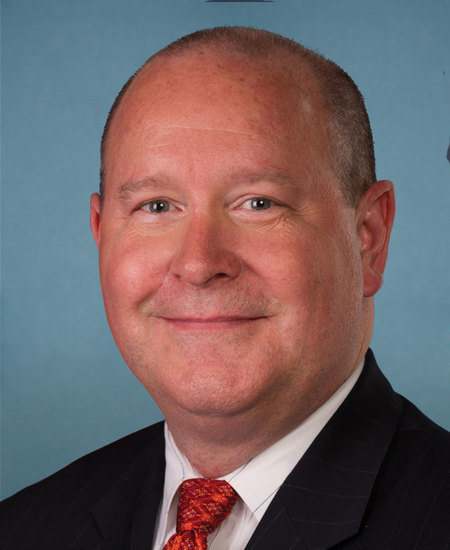
Rep. Larry Bucshon
Sponsored bills
Trillion Trees Act This bills establishes a variety of requirements and incentives to plant trees and conduct other land management practices for the purposes of capturing and storing carbon in domestic and international trees and forests. Additionally, the bill provides incentives to research or develop other carbon sequestration tools. Specifically, the bill directs the Department of Agriculture (USDA) to set targets to increase forest carbon stock through January 1, 2100, for the purposes of sequestering and storing carbon in U.S. forests. It also establishes and provides funding for the Trillion Trees Challenge Fund to provide grants to nonfederal entities for activities related to reforestation efforts on public or private lands. In addition, it raises the cap on the Reforestation Trust Fund to enhance forest health in the National Forest System and requires the USDA to establish a Tree City USA Grant Program. The bill also allows the U.S. Agency for International Development to enter into an agreement with a nonprofit organization to establish an International Forest Foundation to promote reforestation and prevent deforestation. Additionally, it establishes requirements and incentives to address seedling shortages and support nurseries. Finally, the bill provides market incentives to research or develop other carbon sequestration tools relating to biochar, sustainable building practices, biochemical and bioplastic products, and biomass energy.
Flexible Financing for Rural America Act This bill allows rural utility service providers to submit to the Department of Agriculture (USDA) a request to adjust the interest rate or modify the terms of certain loans. The request shall include a report summarizing how the adjustment or modification will assist the borrower in providing critical utility services to a rural community. Specifically, on receipt of a request, USDA or the Department of the Treasury (in the case of a loan owned by the Federal Financing Bank) must adjust the interest rate on the loan to match certain interest rates for obligations of comparable maturity to the term remaining on the loan (or a higher rate requested by the borrower), and make modifications to the loan terms as necessary to address changes in the financial position of the borrower due to the COVID-19 public health emergency and to promote the financial sustainability of the borrower. In carrying out the adjustments or modifications, USDA or Treasury shall not impose or collect any fee from, or impose any penalty on, a borrower. The bill also provides funding to implement the adjustments and modifications and for the liquidation of residual intragovernmental amounts owed by the Federal Financing Bank in connection with certain loans.

Pipeline and LNG Facility Cybersecurity Preparedness Act This bill requires the Department of Energy to implement a program to ensure the security, resiliency, and survivability of natural gas pipelines, hazardous liquid pipelines, and liquefied natural gas facilities.
Safely Ensuring Lives Future Deployment and Research In Vehicle Evolution Act or the SELF DRIVE Act This bill establishes the federal role in ensuring the safety of highly automated vehicles by encouraging the testing and deployment of such vehicles. A highly automated vehicle is a motor vehicle, other than a commercial motor vehicle, that is equipped with an automated driving system capable of performing the entire dynamic driving task on a sustained basis. The bill preempts states from enacting laws regarding the design, construction, or performance of highly automated vehicles or automated driving systems unless such laws enact standards identical to federal standards. The Department of Transportation (DOT) must require safety assessment certifications for the development of a highly automated vehicle or an automated driving system. Manufacturers of highly automated vehicles must develop written cybersecurity and privacy plans for such vehicles prior to offering them for sale. The bill applies certain safety exemptions and testing standards to highly automated vehicles. DOT must (1) inform prospective buyers of highly automated vehicles of the capabilities and limitations of such vehicles; (2) establish the Highly Automated Vehicle Advisory Council to, among other things, develop guidance regarding mobility access for the disabled, elderly, and underserved populations; (3) require all new passenger motor vehicles less than 10,000 pounds to be equipped with a rear seat occupant alert system; and (4) research updated safety standards for motor vehicle headlamps.
This resolution calls on the people of the United States to observe Memorial Day to honor the men and women who died in the pursuit of freedom and peace.
This resolution condemns the rocket attacks by Hamas against Israel beginning the week of May 9, 2021. It also states that the United States must continue to invest in and support Israel's security and sovereignty.
United States Army Rangers Veterans of World War II Congressional Gold Medal Act This bill provides for the award of a single Congressional Gold Medal to the U.S. Army Rangers Veterans of World War II in recognition of their dedicated service during World War II.
Coordinated Action To Capture Harmful Emissions Act This bill increases the applicable dollar amount of the carbon oxide sequestration tax credit for taxable years after 2021.
Air America Act of 2021 This bill establishes the service of Air America employees as qualifying service for purposes of the Civil Service Retirement System. (Air America was a government-owned airline that provided air transport for certain covert operations in Southeast Asia, including Laos and Vietnam, between 1950 and 1976.) The bill applies to U.S. citizens who were employees of Air America or another affiliated company, as specified, between January 1, 1950 and December 31, 1976. Benefit applications must be filed within two years of the date of enactment of this bill.