Protecting Seniors Through Immunization Act of 2021 This bill specifies that certain deductible, coinsurance, initial coverage limit, and cost-sharing requirements that apply under the Medicare prescription drug benefit shall not apply with respect to vaccines that are recommended by the Advisory Committee on Immunization Practices of the Centers for Disease Control and Prevention. The Centers for Medicare & Medicaid Services must provide to Medicare beneficiaries specified information regarding (1) coverage of vaccines for seniors, and (2) access to recommended vaccines without cost-sharing.
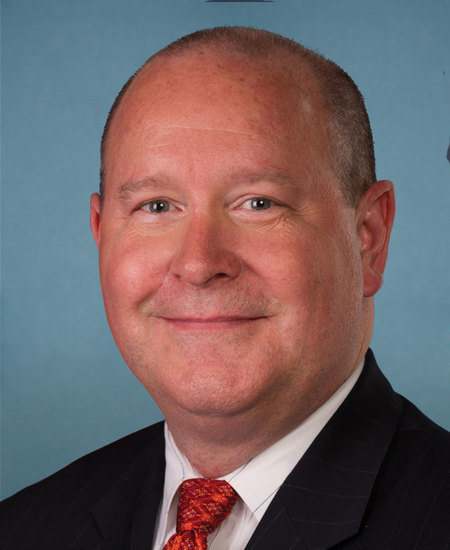
Rep. Larry Bucshon
Sponsored bills
This resolution expresses the sense of the House of Representatives that the Department of Homeland Security (DHS) provides essential protection for our country from foreign and domestic threats and that defunding DHS would be detrimental to our national security.
This resolution expresses support for the designation of Journeyman Lineworkers Recognition Day. (A journeyman lineworker is a person who builds and maintains electrical power systems.)
American Broadband Act This bill addresses broadband and other communications services. The bill limits applicable state and local regulatory authority. Limitations include setting (and providing statutory authority for) deadlines for reviews and decisions related to personal wireless and other telecommunication service facilities, as well as cable franchises and services. Further, a state or locality may not provide broadband services in areas with more than one other commercial provider. The bill exempts certain telecommunications infrastructure projects from environmental and historic preservation reviews, including projects carried out after a declared disaster or emergency (e.g., a wildfire). The bill also establishes a rebuttable presumption that a request for a review of the effects of deploying wireless service on historically, culturally, or religiously significant tribal or Native Hawaiian land is complete if the tribe or Native Hawaiian organization receives certain forms. The bill enhances criminal penalties for willful or malicious destruction of a communication facility. Furthermore, the General Services Administration must establish a common fee schedule for deploying wireless facilities that affect federal property. Additionally, the National Telecommunications and Information Administration must award grants for expanding high-speed broadband access, facilitate through an interagency strike force timely reviews of telecommunications-related requests that affect federal property (e.g., a request for an easement or right-of-way), and report on certain requests concerning communications facilities on federal real property. The bill also requires collaboration among federal agencies that support broadband deployment.
Taskforce Recommending Improvements for Unaddressed Mental Perinatal & Postpartum Health for New Moms Act of 2021 or the TRIUMPH for New Moms Act of 2021 This bill temporarily establishes within the Department of Health and Human Services the Task Force on Maternal Mental Health. The task force must develop a national strategy for maternal mental health and report on best practices, policies, and programs to prevent, screen for, diagnose, treat, and reduce disparities in maternal mental health conditions. The report must identify opportunities for state- and local-level partnerships to address maternal mental health, and the task force must share those opportunities with state governors.
Stop Inflationary Spending Act This bill requires the Congressional Budget Office (CBO) to provide inflation projections for bills that Congress considers using the budget reconciliation process. Specifically, the CBO must estimate the impact on inflation that will occur from implementing each reconciliation bill, including the impact on inflation that will occur during each of the first five years after the enactment of the bill.
Verifying Accurate Leading-edge IVCT Development Act of 2021 or the VALID Act of 2021 This bill requires the Food and Drug Administration (FDA) to regulate in vitro clinical tests (IVCTs). Currently, the FDA and the Centers for Medicare & Medicaid Services have authority to regulate in vitro diagnostic devices. The bill defines IVCTs, which includes in vitro diagnostic devices, as tests intended for the collection, preparation, analysis, or in vitro clinical examination of specimens from the human body to provide information about a disease, condition, or treatment. An IVCT may not be introduced into interstate commerce unless it has received FDA premarket approval or is covered by certain exemptions, such as an exemption for a test that (1) was developed and introduced before this bill's enactment and meets certain requirements, (2) is a low-risk test, (3) is solely for public health surveillance, (4) is covered by a technology certification issued under this bill, or (5) has received a humanitarian exemption or emergency use authorization. The FDA may grant upon application a technology certification. Generally, such a certification covers a group of tests that use a single technology and may be evaluated using a representative test. While such a certification is valid, a qualifying IVCT that falls within the scope of the certification shall be cleared for interstate commerce. The bill also imposes various requirements related to IVCTs, including those related to quality control, labeling, and reporting adverse events. The FDA shall have various enforcement authority, including authority to order the recall of an IVCT with a reasonable probability of causing serious adverse health consequences.

Reducing Hereditary Cancer Act of 2021 This bill provides for Medicare coverage of germline mutation testing for individuals with a personal or family history of a hereditary cancer gene mutation or suspected history of hereditary cancer, as well as for associated coverage of risk-reducing surgeries and screenings.
Physician Shortage GME Cap Flex Act of 2021 This bill excludes certain hospitals that establish shortage specialty programs from the cap on full-time equivalent residents that is otherwise applicable, and provides for a new building period, for purposes of graduate medical education payments under Medicare.
This resolution expresses the sense of the House of Representatives that the Indiana Veterans' Home is an example of Hoosiers' dedication to their veterans and should be recognized for its 125 years of care to the veterans of Indiana and their families.